How AI Qualifies Leads on WhatsApp: Complete 2026 Guide
 Abhyank Srinet
Sales teams often spend a lot of time talking to leads that never turn into customers. According to industry research, 50–70% of lead qualification effort is spent on prospects who never buy, especially when businesses try to filter leads manually. Sales reps keep following up with old conversations, while genuinely interested prospects sometimes wait too long for a reply and end up choosing another company.
"50–70% of lead qualification effort is wasted on unqualified prospects when manual processes are used, yet AI-driven systems can recover up to 60–75% of this lost productivity."
— Industry Sales Efficiency Report, 2024
This is where AI-led qualification WhatsApp systems are helping businesses work smarter. Instead of reading every chat manually, AI can analyze messages, response timing, and engagement patterns automatically. It studies the conversation in real time and gives each lead a score, helping sales teams quickly identify serious buyers while other prospects continue receiving automated follow-ups.
Because of this, many companies in industries like SaaS, real estate, and e-commerce have reduced manual qualification work by 60–75%. Sales teams can focus on the leads most likely to convert while automation handles early conversations and nurturing. In this blog, you will learn how AI analyzes WhatsApp conversations to identify lead quality, how to set up AI lead qualification systems, and the key tools and metrics businesses use to improve sales performance.
What Is AI Lead Qualification on WhatsApp?

AI lead qualification WhatsApp technology uses machine learning algorithms to evaluate the quality of prospects based on conversation patterns, engagement behavior, response timing, and keyword signals. The system assigns each prospect a score—typically on a scale from 1 to 100—to determine how likely they are to convert into a customer.
When a prospect sends a message on WhatsApp, the AI begins evaluating the conversation immediately. Messages containing signals such as pricing questions, timeline inquiries, or decision-making authority typically receive higher scores than general information requests.
For example, a prospect asking:
"What is the pricing for your service?"
"Can we schedule a call this week?"
"Do you offer enterprise plans?"
will receive a higher qualification score compared to someone asking a vague question like "Tell me about your service."
The goal of AI lead qualification WhatsApp systems is to help sales teams focus on the most valuable conversations instead of manually reviewing every enquiry.
In practical use, the process works as follows:
A prospect sends a message on WhatsApp.
The AI analyzes the message content and engagement signals.
A lead score is generated instantly.
High-scoring leads are routed to sales representatives.
Lower-scoring leads enter automated nurturing sequences.
This automated scoring system ensures that sales teams receive qualified prospects with full conversation context, allowing them to respond more effectively.
What you need to know
AI lead qualification assigns scores from 1 to 100 based on conversation signals.
Leads scoring 70 or higher are typically routed directly to the sales team.
Lower-scored leads enter automated follow-up or nurturing workflows.
Modern systems achieve 85–90% accuracy in identifying hot, warm, and cold prospects.
Advanced AI lead qualification WhatsApp platforms also analyze behavioral signals such as how quickly a prospect replies, whether they ask follow-up questions, and how detailed their responses are.
These signals help the system determine the difference between casual enquiries and genuine buying intent.
How Does AI Analyze WhatsApp Conversations for Lead Quality?
AI lead qualification systems rely on a combination of natural language processing, behavioral analysis, and machine learning models to evaluate conversations. These technologies allow the system to understand not only what a prospect says, but also how they interact during the conversation.
"Modern NLP systems can achieve around 85% accuracy in detecting user intent by analyzing language patterns, message structure, and engagement behavior."
— Forrester's 2025 Conversational AI Research
When a new conversation begins, the AI analyzes multiple data points simultaneously. This is what allows AI lead qualification of WhatsApp systems to determine lead quality quickly and accurately.
Core Technologies Used in AI Lead Qualification
Three primary technologies power modern conversation analysis systems:
1. Natural Language Processing (NLP)
NLP helps the system interpret the meaning behind a message. It identifies words and phrases that indicate buying intent such as:
Budget discussions
Timeline questions
Feature comparisons
Implementation queries
For example, in the real estate industry, a question like "What is the down payment?" indicates stronger purchase intent than a general enquiry about available properties.
2. Sentiment Analysis
Sentiment analysis evaluates the emotional tone of a conversation. Messages expressing urgency or enthusiasm often receive higher scores.
Positive sentiment examples include:
"This looks interesting."
"Can we start this soon?"
"How quickly can we implement it?"
Negative or uncertain sentiment lowers the qualification score.
3. Behavioral Engagement Scoring
AI also studies engagement patterns such as:
How quickly prospects reply
Whether they ask follow-up questions
The number of messages exchanged
Conversation depth
Prospects who respond quickly and ask multiple questions typically show stronger purchase intent.
Key AI Technologies Used
| Technology | Function | Accuracy Impact |
|---|---|---|
| Natural Language Processing (NLP) | Interprets intent from message content and keyword signals | 85% accuracy in intent detection |
| Sentiment Analysis | Evaluates emotional tone and urgency indicators | Improves qualification by 15–20% |
| Behavioral Engagement Scoring | Analyzes response speed, question depth, and conversation patterns | Predicts conversion with 85–90% accuracy |
| Machine Learning Models | Continuously learns from past closed deals to refine predictions | Improves accuracy over time by 5–10% quarterly |
Important insight: AI-led qualification WhatsApp systems combine natural language processing, sentiment analysis, and behavioral scoring to evaluate prospect conversations. These systems can analyze thousands of data points across a conversation and achieve around 85% accuracy in identifying qualified prospects.
Machine learning models also improve over time by studying which conversations lead to closed deals. As the system learns from past outcomes, it becomes better at predicting which prospects are likely to convert.
AI systems can also perform automated lead screening by identifying warning signals such as unrealistic expectations, unclear timelines, or extremely generic enquiries.
This automated screening process ensures that sales teams spend their time only on prospects with genuine interest.
Related: How to Qualify Leads on WhatsApp: Full Framework
See also: AI Lead Qualification: How It Saves 20+ Hours Per Week
What Are the Key Benefits of AI Lead Qualification on WhatsApp?
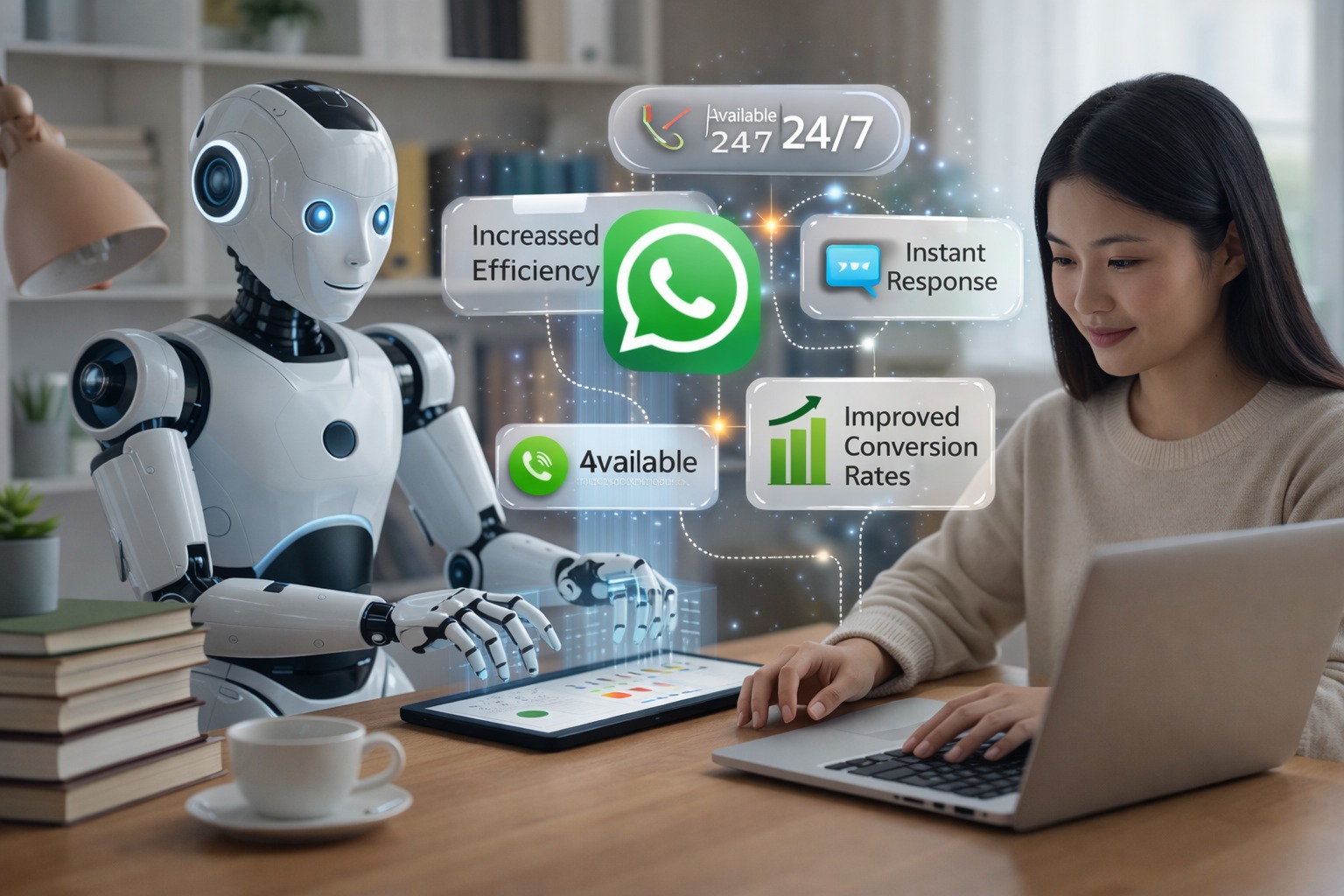
"Companies implementing AI lead qualification report 60–75% reduction in manual qualification work, response times under 5 minutes, and 25–40% improvement in conversion rates for qualified leads."
— B2B Sales Technology Implementation Study, 2024
Businesses implementing AI lead qualification WhatsApp systems typically see improvements in three major areas: time efficiency, response speed, and conversion performance.
In multiple industry implementations, companies have reported:
60–75% reduction in manual qualification work
Response times under five minutes
25–40% improvement in conversion rates for qualified leads
These improvements occur because the sales team spends their time on high-intent prospects rather than low-value conversations.
Major Benefits of AI Lead Qualification
1. Significant Time Savings
Manual lead qualification requires reviewing conversations, asking repetitive questions, and filtering prospects manually. AI automates this process completely.
Sales teams receive pre-qualified leads with conversation summaries, saving hours every week.
2. Faster Response Times
Speed matters in sales. According to lead response time research, responding to leads within 5 minutes increases conversion probability by 900%.
AI lead qualification WhatsApp tools instantly identify hot prospects and alert sales teams immediately.
3. Higher Conversion Rates
When sales teams focus only on qualified prospects, their conversations become more productive.
Instead of chasing uninterested leads, they engage with prospects who already show buying intent.
4. Consistent Qualification Standards
Human qualifications often vary between team members. AI uses the same criteria for every conversation.
This consistency ensures that:
High-intent leads are never ignored
Qualification standards remain uniform
Sales teams receive reliable lead scores
5. Scalability for High Message Volumes
Whether your business receives 10 or 1,000 messages per day, AI systems can evaluate every conversation without delays.
This allows companies to scale their lead generation without increasing manual workload.
6. Automated Lead Nurturing
Not every lead is ready to buy immediately. AI systems automatically place lower-scoring leads into nurturing sequences.
These sequences keep prospects engaged until they become qualified buyers.
Related: How to Qualify Leads on WhatsApp: The Complete System to Turn Enquiries into High-Intent Buyers
```Frequently Asked Questions

Written by
Founder & CEO, Kraya AI
Abhyank Srinet is the Founder and CEO of Kraya AI, a WhatsApp CRM and sales automation platform serving 600+ Indian businesses. He is also the founder of MiM-Essay, one of India's largest Masters admissions consulting firms.
More from Abhyank