Missed Messages Are Costing You More Than Bad Leads
 Abhyank Srinet
Most founders and sales leaders think slow sales mean bad leads. When deals don't close, marketing or ad quality is blamed. But in many businesses, the bigger problem is missed sales messages. Every day, interested customers reach out on WhatsApp, website chat, Instagram, calls, or email. They are already warm. But when these messages are seen late, replied to slowly, or not followed up properly, the opportunity fades away. No rejection. No complaint. Just silence. This blog is written to build awareness around how missed sales messages quietly cost more revenue than poor-quality leads. It is for founders, CEOs, managing directors, and sales managers who generate inquiries but still feel conversions are stuck.
In most cases, sales don't fail because of demand. They fail because response speed, ownership, and follow-ups are unclear. If leads are coming in but results aren't improving, missed sales messages may be the real reason.
Why This Problem Is Bigger Than "Bad Leads"

Most sales teams lose deals after a lead shows interest, not before. A bad lead is easy to identify and discard. But a missed sales message comes from someone who was ready to talk and never got the response they expected. This makes missed sales messages far more damaging than poor-quality leads, because the cost has already been paid, and the intent was already there.
"According to sales response time studies, 78% of customers choose the business that responds first, regardless of price point. Missed sales messages within the first 10 minutes can reduce conversion rates by up to 40%."
— Sales Engagement Research, 2024
Here's why missed sales messages hurt more than bad leads:
Bad leads waste ad spend once: They waste ad spend and a ready buyer.
Bad leads are visible: They disappear quietly and get mislabelled as "not interested."
Bad leads don't expect a reply: It comes from people actively waiting for one.
Bad leads don't choose competitors: It usually happens within minutes.
Bad leads don't damage brand trust: They make your business feel slow or careless.
When this happens repeatedly, teams assume lead quality is the issue. In reality, the lead was fine — the response wasn't. This is why improving ads or targeting doesn't fix sales when missed sales messages remain part of the process.
Lead Type | Cost Impact | Visibility | Recovery Chance |
|---|---|---|---|
Bad Leads | Single ad spend loss | Easily identified | Low |
Missed Sales Messages | Ad spend + lost revenue + brand damage | Hidden in dashboards | Critical within 10 min window |
The Real Cost of Missed Sales Messages (Beyond One Lost Deal)
A missed sales message doesn't just cost you one conversation. It creates a chain reaction of losses that most teams never track. That's why this problem stays hidden for so long. When a potential customer messages you, the money is already spent — ads, content, referrals, or brand effort. If that message is missed or delayed, the cost doesn't stop at that one lead.
Here's what a missed sales message actually costs you:
Paid acquisition wasted: You paid to bring the lead in. A missed reply turns that spend into zero return.
Lost first-mover advantage: The customer doesn't wait. They message the next business and buy from whoever replies first.
Future revenue lost: One missed sales message can mean:
No upsell
No repeat purchase
No referral
False data decisions: The lead gets marked as "cold" or "bad," pushing teams to change ads instead of fixing response gaps.
Team time wasted later: Sales reps chase leads that already moved on — because no one closed the loop early.
"In India's e-commerce and SaaS sectors, according to WhatsApp Business analytics, missed sales messages in the first 5 minutes result in a 65% lower conversion rate compared to immediate responses. Businesses using unified messaging platforms see a 35% improvement in response rates."
— WhatsApp Business Impact Report, 2023
In simple terms:
Bad leads cost you money
Missed sales messages cost you money, trust, and future growth
And because missed sales messages don't show up clearly in dashboards, founders often underestimate the damage. The loss doesn't look dramatic — it just shows up as slower growth month after month.
Also read: Cold Lead Follow-ups
Why Teams Misses Messages (It's Usually a System Issue)
Most founders assume missed replies are due to sales teams being careless or slow. In reality, missed sales messages usually happen because the system is broken, not because people aren't working hard.
In many businesses, messages come in from too many places at once — WhatsApp, website chat, Instagram, email, and calls. When there is no clear system, missed sales messages become normal and no one even notices.
Common reasons teams miss sales messages:
No clear ownership: Everyone thinks someone else will reply. The message sits unread.
Multiple inboxes: Sales teams jump between personal WhatsApp, shared numbers, emails, and DMs. Missed sales messages get buried.
No response rules: There is no clear time limit for replying. "Later" becomes hours.
After-hours messages: Leads come in at night or on weekends, but no system picks them up.
No follow-up visibility: A reply is sent once, then forgotten. Missed sales messages happen during follow-ups, not just first replies.
"According to Kraya AI's analysis of Indian SME sales operations, 58% of missed sales messages occur due to unclear ownership rather than unavailability. Teams using centralized inbox systems through platforms like Kraya AI report a 40% reduction in response time delays."
— Kraya AI Sales Operations Study, 2024
When this continues, leaders think lead quality is poor. But the truth is simple: good leads are being lost due to unclear processes.
Missed sales messages are not a people problem. They are a visibility, ownership, and response-time problem. Fixing the system fixes the outcome.
Next, let's understand why the first 10 minutes decide the sale — and what fast response really means in practice.
Also read:Why WhatsApp Leads go Cold
The First 10 Minutes Decide the Sale (What "Fast Response" Really Means)
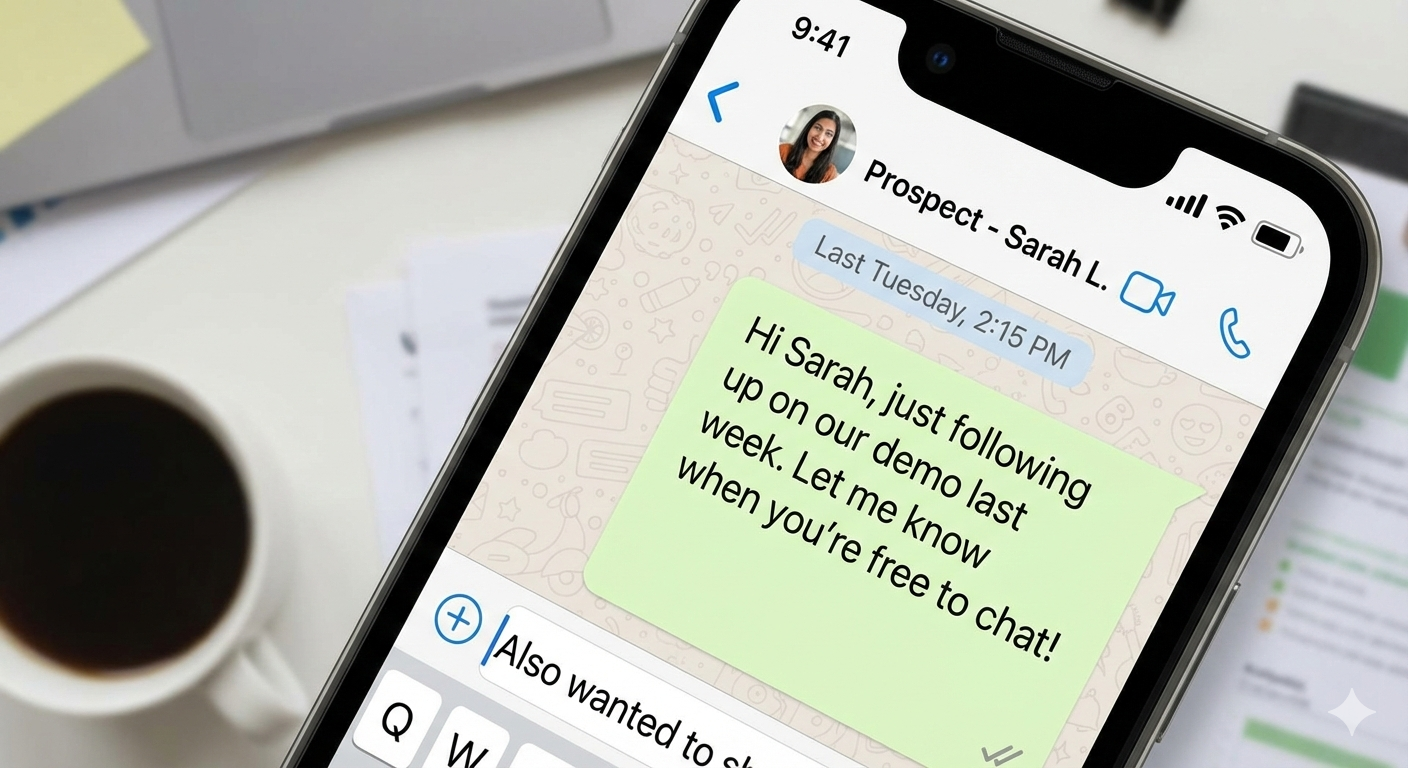
When a customer sends a message, their intent is at its highest. They are actively looking, comparing, and ready to talk. If your response doesn't come quickly, that intent drops fast. This is where most missed sales messages happen.
Fast response does not mean replying instantly with a long pitch. It means acknowledging the message and taking control of the next step before the customer moves on.
What "fast response" actually means in sales:
0–2 minutes: An acknowledgement that the message is received and someone is handling it.
5–10 minutes: A human response that asks the right question or shares the next step.
Beyond 10 minutes: The lead starts checking alternatives. Missed sales messages become likely.
Most customers don't wait. They message multiple businesses at the same time. The one that replies first sets the tone, builds trust, and often wins the deal — even if their offer isn't the cheapest.
Slow responses create doubt:
"Are they serious?"
"Will support be slow later?"
"Should I talk to someone else?"
This is why missed sales messages are not about reply quality alone. They are about timing. If the first response is late, the sale is already slipping.
Fixing response speed doesn't require more people. It requires clear rules, ownership, and basic automation — which we'll break down next in the No Missed Message process.
Also Read: How Many Follow-Ups Does It Take to Close a Sale on WhatsApp
The 5-Point "No Missed Message" Process (Simple, Founder-Friendly)
You don't need more leads or more sales reps to stop missed sales messages. You need a clear, repeatable process that makes sure every message is seen, owned, and moved forward.
Here's a simple 5-point process founders and sales managers can apply immediately:
1) One shared inbox
All inbound messages flow into one place
No selling from personal WhatsApp or scattered DMs
This alone reduces missed sales messages drastically
2) One clear owner per message
Every new message is assigned to one person
No confusion, no "I thought someone else replied"
3) Clear lead stages
New → Contacted → Follow-up → Won / Lost
If a message is not in a stage, it's getting ignored
4) Fixed follow-up rules
Day 0: First reply
Day 1: Follow-up
Day 3: Reminder
Day 7: Final check
Most missed sales messages happen during follow-ups, not the first reply.
5) Escalation for delays
If no reply is sent within a set time, the message is flagged
Managers see missed sales messages before deals are lost
This process works because it removes dependence on memory and discipline. When the system is clear, people don't need reminders to do the right thing.
What to Automate (and What NOT to Automate)
Automation helps reduce missed sales messages, but only when used in the right places. Automating everything creates robotic conversations. Automating nothing creates delays and dropped leads. The goal is to use automation for speed and control, not for closing.
What you should automate:
Instant acknowledgements: A quick "We've received your message and will get back to you shortly" prevents missed sales messages in the first few minutes.
Lead routing: Automatically assign messages to the right salesperson based on source, product, or location.
Follow-up reminders: Alerts when a lead hasn't been replied to or followed up within the defined time.
Missed-message alerts: Notifications for managers when missed sales messages cross a set limit.
Basic information replies: Working hours, booking links, or next steps without delay.
What you should NOT automate:
Pricing discussions: These need context and flexibility.
Objection handling: Automated replies here increase drop-offs.
Final decision conversations: Closing needs a human, not a script.
Sensitive or high-ticket conversations: Over-automation reduces trust.
Automation should protect speed and visibility. Humans should handle judgment and trust. When this balance is right, missed sales messages drop without hurting the customer experience.
Related: Why WhatsApp Leads Go Cold and How to Stop It
See also: Lead Response Time Guide: The 5-Minute Rule Explained
The Tracking Dashboard Every Founder / Sales Manager Should Watch Weekly
Missed sales messages stay invisible because most dashboards don't track them clearly. Revenue looks slow, but the reason isn't obvious. That's why founders and sales managers need a simple weekly tracking view, not complex reports.
You don't need dozens of metrics. You need the right few.
These are the key numbers to track every week:
Related: WhatsApp Sales Follow-Up Automation: How to Stop Missing Leads and Close More Deals
```
Frequently Asked Questions

Written by
Founder & CEO, Kraya AI
Abhyank Srinet is the Founder and CEO of Kraya AI, a WhatsApp CRM and sales automation platform serving 600+ Indian businesses. He is also the founder of MiM-Essay, one of India's largest Masters admissions consulting firms.
More from Abhyank