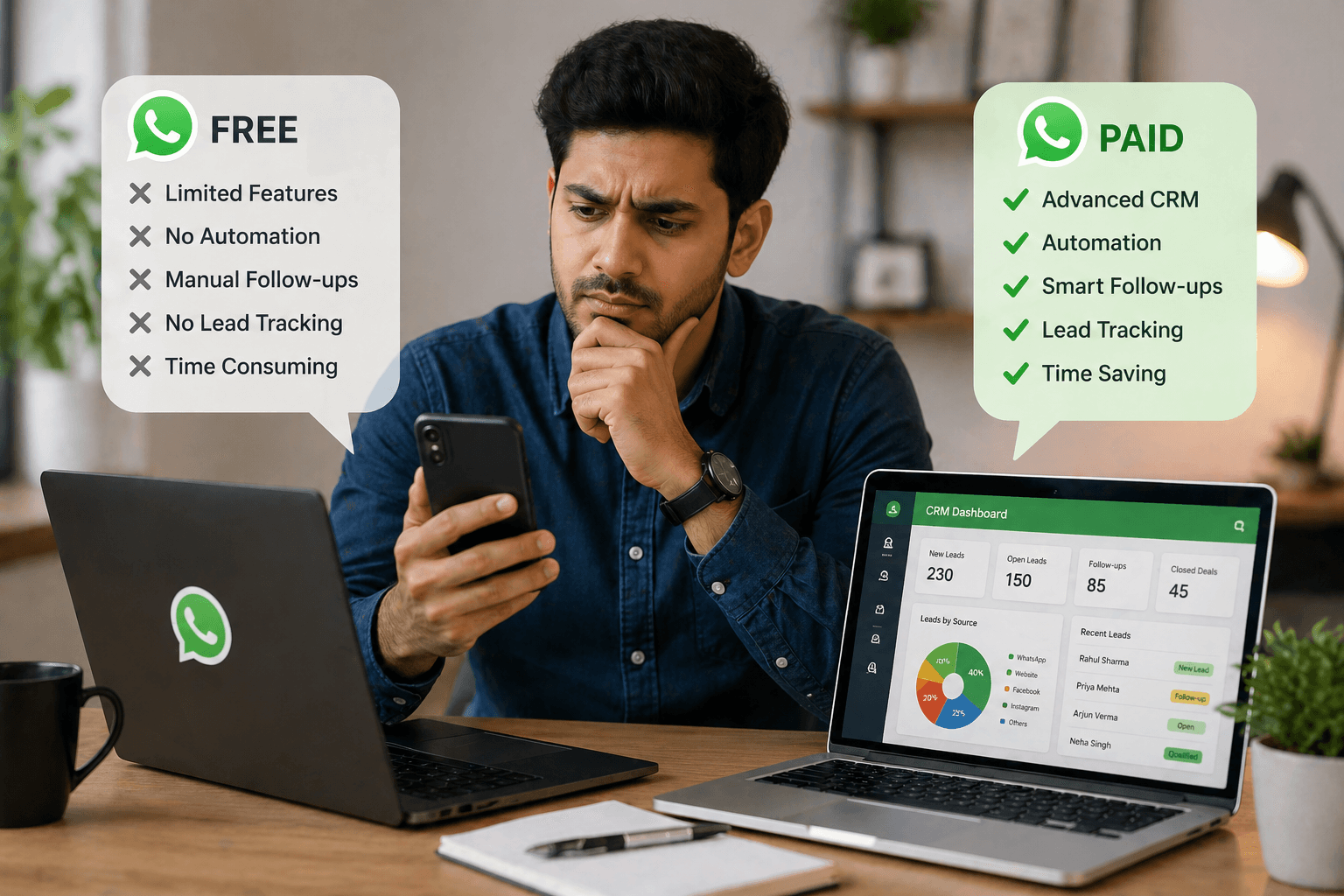
WhatsApp Sales Follow-Up Automation: How to Stop Missing Leads and Close More Deals
 Abhyank Srinet
Introduction
WhatsApp has become a primary channel for sales conversations. According to recent industry data, WhatsApp is used by over 98 million businesses in India for customer communication. Many teams use it to share pricing, schedule demos, and respond to enquiries. However, follow-ups on WhatsApp are still handled manually in most businesses. Sales reps rely on memory, personal reminders, or scattered notes. As a result, follow-ups are delayed, inconsistent, or missed.
"Businesses using WhatsApp for sales report a 40% increase in response rates when follow-ups are structured and timely rather than manual."
— Sales automation industry benchmark, 2026
This is where WhatsApp sales follow-up automation becomes important. It brings structure to WhatsApp follow-ups by automating reminders, nudges, and check-ins at the right time.
In this blog, we explain what WhatsApp sales follow-up automation is, the different types of follow-ups that can be automated, how the system works, and why structured follow-ups perform better than manual efforts.
What Is WhatsApp Sales Follow-Up Automation?
WhatsApp sales follow-up automation is a system that helps sales teams send timely follow-ups on WhatsApp without relying on memory. It ensures reminders, nudges, and check-ins are sent at the right time, so leads stay engaged, and conversations do not drop.
It is designed to support sales teams, not replace them. Automation handles routine follow-ups, while humans handle replies, questions, and closing conversations.
What WhatsApp sales follow-up automation includes:
• Automated messages: Sent based on time, sales stage, or inactivity
• Follow-up reminders: Gentle nudges after pricing, demos, or calls
• Lead recovery messages: Re-engagement for silent or cold leads
• Structured timing: Messages go out when they matter most
What WhatsApp sales follow-up automation is not:
• Bulk messaging: No random or spam-like broadcasts
• Sales replacement: Human conversations still drive decisions
• One-time setup: Follow-ups need regular review and refinement
Also read: Why WhatsApp Auto Reply Is Essential for Customer Engagement
Types of WhatsApp Sales Follow-Up Automation
Different sales situations need different follow-ups. WhatsApp sales follow-up automation works best when follow-ups are mapped to each stage of the sales process. This ensures leads receive the right message at the right time, without over-communication or missed reminders.
Below are the most common and effective types of WhatsApp sales follow-up automation used by sales teams.
1. New lead follow-up automation
• Instant acknowledgement: Confirms the enquiry is received
• Early engagement: Sets expectations for next steps
• Qualification prompts: Collects basic details to continue the conversation
2. Price or brochure follow-up automation
• Reminder nudges: Sent after pricing or details are shared
• Clarification prompts: Encourages questions instead of silence
• Soft action pushes: Invites the lead to take the next step
3. Demo or appointment reminder automation
• Scheduled reminders: Sent before the meeting or demo
• No-show prevention: Reduces missed appointments
• Context setting: Prepares the lead for what to expect
4. No-show recovery automation
• Reschedule prompts: Offers alternate dates or times
• Polite check-ins: Reopens the conversation without pressure
• Engagement recovery: Brings lost interest back into the funnel
5. Silent or cold lead follow-up automation
• Inactivity nudges: Checks in after long gaps
• Re-engagement messages: Restarts stalled conversations
• Intent confirmation: Helps identify leads still worth pursuing
6. Long-term nurture automation
• Periodic follow-ups: Keeps the brand top of mind
• Update messages: Shares relevant changes or offers
• Relationship building: Maintains contact without selling pressure
How WhatsApp Sales Follow-Up Automation Actually Works
WhatsApp sales follow-up automation works by connecting follow-ups to clear sales signals instead of human memory. Messages are triggered based on time, sales stage, or lead inactivity. This ensures every lead receives consistent follow-ups without manual tracking.
"Studies show that leads contacted within 5 minutes of initial enquiry are 100 times more likely to convert than those contacted after 30 minutes. Automation ensures no critical follow-up windows are missed."
— Lead response time research, HubSpot Sales Report 2024
The system runs in the background, while sales teams focus on replying, handling objections, and closing deals. Automation supports the process, it does not control the conversation.
Step 1: Lead enters WhatsApp:
• Entry points: Website, ads, referrals, or direct messages
• Immediate visibility: Lead is logged into the sales flow
• Zero delay: No waiting for a manual reply
Step 2: Follow-up rules are applied:
• Time-based triggers: Follow-ups sent after set intervals
• Stage-based triggers: Messages tied to pricing, demo, or call stages
• Inactivity triggers: Nudges sent when leads stop responding
Step 3: Automated messages go out:
• Follow-ups: After pricing, brochures, or details
• Reminders: Before demos or appointments
• Recovery messages: For silent or cold leads
Step 4: Sales team takes over conversations:
• Human replies: Sales reps respond to incoming messages
• Context visibility: Previous follow-ups are already sent
• Focused effort: Teams engage only with active leads
This structured approach is what makes WhatsApp sales follow-up automation effective, scalable, and reliable for real sales teams.
Why Manual WhatsApp Follow-Ups Fail in Real Sales Teams
Manual WhatsApp follow-ups usually depend on individual effort rather than a system. Sales reps juggle multiple conversations every day. New enquiries, pricing requests, demos, and internal tasks compete for attention. Research indicates that sales teams managing 20+ active conversations daily miss approximately 35% of follow-up opportunities due to workload. Follow-ups often get delayed or skipped, not intentionally, but due to workload.
Some common patterns show up across sales teams:
• Follow-ups rely on memory: No reminders, no structure, no clear timing
• Inconsistent outreach: Some leads get multiple messages, others get none
• Silent leads are ignored: No system to re-engage after inactivity
• Poor timing: Follow-ups are sent too early, too late, or not at all
Follow-Up Challenge | Manual Process Impact | Automated Solution |
|---|---|---|
Missed follow-ups | 35% of opportunities lost | 100% consistency in delivery |
Timing consistency | Varies by person and workload | Same timing for all leads |
Lead response rates | Inconsistent (25-40%) | Improved (40-60%+) |
Team workload | High admin time, low ROI | Reduced manual effort |
Over time, this creates a gap between interest and action. Leads do not always say no. Most simply get busy. Without timely follow-ups, conversations fade and opportunities are lost.
Manual follow-ups fail not because they do not work, but because they are impossible to manage consistently at scale. Without structure, visibility, and reminders, even good sales teams struggle to maintain momentum on WhatsApp.
Also Read: Manual Follow-Ups vs Automated WhatsApp Follow-Ups
Common Myths About WhatsApp Sales Automation
WhatsApp sales automation is often misunderstood. Many sales teams hesitate to adopt it due to concerns about spam, loss of personal touch, or added complexity. In reality, WhatsApp sales follow-up automation improves timing, consistency, and visibility in sales conversations when implemented correctly.
"When WhatsApp follow-ups are properly contextualized and sent at the right stage of the buyer journey, they increase perceived value rather than feel intrusive. Leads appreciate timely reminders."
— Customer communication preferences study, 2024
The most common myths about WhatsApp sales automation are listed below.
Myth 1: WhatsApp sales automation feels spammy
This belief comes from bulk or poorly timed messaging. In practice, WhatsApp sales follow-up automation focuses on context-based follow-ups, such as reminders after pricing or demos. When messages are relevant and timed correctly, they feel like natural check-ins rather than unwanted spam.
Myth 2: Automation replaces human sales conversations
Automation does not replace sales reps or personal communication. It supports the sales process by handling routine follow-ups and reminders. Human teams still manage replies, answer questions, and build relationships. Automation simply ensures continuity between conversations.
Myth 3: Only large teams or enterprises need WhatsApp automation
Smaller teams often struggle more with manual follow-ups due to limited time and resources. WhatsApp follow-up automation helps small and growing teams stay consistent without increasing workload, making it useful well before a team reaches scale.
Myth 4: WhatsApp automation works only for fast sales cycles
Even longer sales cycles need regular follow-ups. Leads often pause, reconsider, or delay decisions. Automated WhatsApp follow-ups help maintain engagement during these gaps, reducing drop-offs caused by silence rather than lack of interest.
Who Should Use WhatsApp Sales Follow-Up Automation?
WhatsApp sales follow-up automation is useful for businesses that rely on WhatsApp conversations to move leads toward a decision. When enquiries, pricing discussions, and demos happen on chat, consistent follow-ups become essential to keep momentum.
This approach works best for teams that deal with multiple leads at the same time and cannot rely on memory alone. In such cases, automated WhatsApp follow-ups help maintain timing, consistency, and visibility across the sales workflow.
It is especially relevant for:
• Sales teams handling high enquiry volume (10+ daily conversations)
• Appointment or demo-based businesses
• Founders managing sales themselves
• Small teams struggling with missed follow-ups
• Businesses with longer decision cycles (7+ days)
For these teams, WhatsApp sales follow-up automation reduces lead drop-offs, improves response discipline, and ensures every conversation gets the attention it needs without increasing manual effort.
How to Set Up WhatsApp Sales Follow-Up Automation

Setting up WhatsApp sales follow-up automation works best when you keep it simple and focused on real sales moments. You don't need complex logic. You need consistency.
1. Start with key follow-up moments:
• After sharing pricing or a brochure
• Before demos or appointments
• When a lead stops replying
• After a no-show or missed call
2. Define clear follow-up rules:
• Decide when follow-ups should be sent (timing intervals)
• Define what each follow-up message should say
• Set maximum frequency to avoid over-communication
3. Use a platform that supports WhatsApp automation:
Look for tools that integrate WhatsApp with your sales CRM or workflow. Kraya AI and similar platforms allow you to set up follow-up rules without coding, with full visibility into what was sent and when.
4. Test and refine based on results:
• Monitor response rates to each type of follow-up
• Adjust timing or messaging if leads do not respond
• Track which follow-ups convert best
Key Metrics to Track With WhatsApp Sales Follow-Up Automation
"Teams that track follow-up effectiveness report a 25-35% improvement in conversion rates within the first 90 days of implementation when they measure response time, reply rate, and sales stage progression."
— Sales operations analytics benchmark, 2024
Metric | What It Measures | Target Benchmark |
|---|---|---|
Follow-up delivery rate | % of leads receiving automated follow-ups on time | 95%+ |
Lead response rate | % of leads replying to follow-up messages | 40-60% |
Time to response | Average minutes/hours before lead replies | Under 2 hours |
Conversion rate by follow-up type | Which follow-ups drive sales stage progression | Track and optimize |
Lead drop-off rate | % of leads becoming inactive after follow-ups | Under 20% |
When you automate WhatsApp follow-ups, you create a data trail. Every message sent, every reply, and every time a lead moves forward is recorded. This visibility helps you understand what actually works in your sales process, instead of guessing based on individual experience.
Conclusion
WhatsApp sales follow-up automation is not about replacing sales teams. It is about giving them a system that does not fail. Manual follow-ups depend on individual memory and capacity. Automation depends on clear rules and timing, ensuring every lead gets the attention it deserves.
When implemented correctly, WhatsApp sales follow-up automation improves response rates, reduces drop-offs, and gives sales teams time to focus on closing deals instead of remembering who to follow up with. For any team managing multiple WhatsApp conversations, it is a practical investment that shows results quickly.
Related: How WhatsApp Automation Helps Businesses Close More Deals
Related: How AI Sales Follow Up Automation Changes the Follow-Up Process Step by Step
Related: Automated Follow-Up Sequences: How to Build a Sales System That Closes More Deals
Related: Manual Follow-Ups vs Automated WhatsApp Follow-Ups: What Works Better for Sales
Related: How to Follow Up on WhatsApp Without Getting Blocked or Annoying Your Leads
Related: How to Scale WhatsApp Sales: AI Automation Trends for 2026
Related: Common Sales Mistakes That Reduce Conversions: Sales Mistakes That Make Leads Not Convert
Related: How to Build a WhatsApp Sales Pipeline
Related: How to Qualify Leads on WhatsApp: The Complete System to Turn Enquiries into High-Intent Buyers
Related: How to Prevent WhatsApp From Getting Banned: Complete Guide
Related: Top WhatsApp CRM Tools for Startups & SMBs
Related: WhatsApp CRM for Consultants and Freelancers: How to Manage Client Enquiries Without Losing Leads
Related: WhatsApp vs Email for Sales: When to Use Each to Increase Conversions
Related: How to apply for WhatsApp Business API: step-by-step
Related: How to Manage Inbound Leads Effectively: A Step-by-Step System
Related: Lead Response Time: Why the First 5 Minutes Decide Your Sale
Related: Where Do Most Sales Conversations Break Down?
Related: What Is WhatsApp CRM? WhatsApp CRM vs Traditional CRM for Indian SMBs
Related: AI in Sales Automation: The Future of Selling
Related: How a Small Sales Team Should Set Up WhatsApp to Handle 50+ Leads a Day
Related: How to Run Click-to-WhatsApp Ads That Generate Leads Your Sales Team Can Actually Close
Related: How to Use WhatsApp for Sales Effectively Without Sales Follow Up Problems
Related: Missed Messages Are Costing You More Than Bad Leads
Related: Why Sales Follow Up Problems Are Costing Small Businesses More Than They Realise
Related: What Is a Lead Nurturing Sequence? Simple Guide for Service Businesses
Related: WhatsApp Ban for Automation: Which Tools Are Safe and Which Get You Banned
Related: CRM for Travel Industry: How Travel Businesses Use WhatsApp CRM to Manage Leads and Bookings
Related: What Happens When Follow-Ups Depend on Memory
Related: How to Schedule WhatsApp Messages for Sales Teams
Related: Common Sales Problems Small Businesses Face
```
Related: Best Gallabox Alternatives for WhatsApp Automation in India
Frequently Asked Questions

Written by
Founder & CEO, Kraya AI
Abhyank Srinet is the Founder and CEO of Kraya AI, a WhatsApp CRM and sales automation platform serving 600+ Indian businesses. He is also the founder of MiM-Essay, one of India's largest Masters admissions consulting firms.
More from Abhyank