Why Sales Follow Up Problems Are Costing Small Businesses More Than They Realise
 Abhyank Srinet
Most small businesses don't lose sales because they don't get enquiries. They lose sales in what happens after the first message. A lead sends a WhatsApp asking for pricing or details. Someone replies. Maybe there is a short conversation. Then things slow down. The chat goes quiet. Not because the customer wasn't interested. Not because your price was wrong. But because no one followed up properly or at the right time. These small gaps turn into sales follow up mistakes that slowly reduce your conversions.
"According to HubSpot research, 80% of sales require 5 follow-up attempts, yet 44% of sales reps give up after one follow-up."
— HubSpot Sales Report 2024
This is the part many owners don't notice. Money is spent on ads, social media, and marketing to bring leads in. But once the lead enters WhatsApp, the process depends on memory. There are no reminders. No clear system. Chats get buried. Team members forget to reply. Follow-ups become inconsistent. Over time, this leads to missed follow ups, lost leads, and poor lead management. The sales pipeline weakens quietly, even though leads are still coming in.
In this blog, we will explain how to use WhatsApp for sales effectively, why follow-up mistakes happen so often, and how a simple structured system can fix delayed responses in sales and improve conversions without increasing your marketing budget.
What Are the Most Common Sales Follow-Up Problems in Small Businesses?
When sales are not converting, most founders look at pricing, competition, or lead quality. These explanations feel logical because they blame outside factors. But when you actually review lost deals, the real problem is usually different. The follow-up breaks down after the first interaction. The lead did not disappear. The system failed.
Here are the follow-up problems that show up repeatedly in small businesses and quietly damage revenue.
Follow-Ups Stop After the First or Second Attempt
This is the most expensive mistake. A team member sends one message or makes one call. There is no quick reply. The lead is marked as "not interested" and the team moves on. It feels practical, but it is rarely correct.
Most buyers do not convert after one touchpoint. They are busy. They are comparing options. They are waiting for approval or timing. When follow-ups stop too early, you are not filtering bad leads — you are walking away from conversations that simply needed more time. The competitor who follows up again often wins.
Also read: How many follow-ups does it take to close a sale
There Is No Fixed Follow-Up Routine
In many small businesses, follow-ups depend on memory. If someone remembers, a message is sent. If the day is busy, nothing happens. This creates inconsistency. Some leads receive too many messages quickly. Others receive none for days.
Without a fixed rhythm — for example Day 1, Day 3, Day 7, Day 14 — your team guesses every day who to contact. Guessing leads to sales pipeline issues and lost opportunities. A follow-up strategy for small business is not optional. It is required for stable conversions.
WhatsApp Is Used Without Any Sales Structure
WhatsApp is where most sales conversations happen. According to Statista, WhatsApp has 2+ billion active users globally, with 98% of Indian businesses using it for customer communication. It is fast and personal. But it was built for chatting, not pipeline management. New chats push older ones down. There are no built-in reminders. There is no clear tracking of who needs attention.
As a result, the team focuses on new enquiries at the top of the inbox. Older leads, even serious ones, disappear. This leads to missed follow ups and poor lead management. It is not a WhatsApp problem. It is a system problem.
No One Clearly Owns the Lead
In small teams, roles are not always defined. A founder replies first. A salesperson continues. Later, the lead asks another question. Now it is unclear who should respond. Everyone assumes someone else will handle it.
From the lead's side, it looks like slow service. From the inside, it feels like confusion. When no one clearly owns the lead, follow-ups become everyone's job in theory and no one's job in practice. This directly affects sales conversion.
Replies Go Out Too Late
Speed matters more than most teams realise. When a lead sends a message, they are actively researching and comparing options. According to Salesloft data, businesses that respond to leads within 1 hour are 7x more likely to have a conversation. A delay of even 20–30 minutes can reduce your chances significantly. From the team's side, the delay feels small. From the buyer's side, it feels like low interest. Delayed responses in sales often close the buying window before the conversation even begins.
Silent Leads Are Treated as Dead
When a lead stops replying, most teams assume the deal is over. But silence does not mean rejection. People go quiet because they are busy, waiting for budget, or thinking.
When you stop following up, you turn "not now" into "never." A simple check-in message could restart the conversation. Without it, the lead forgets your business and chooses someone else later. This is how small follow-up gaps turn into lost revenue.
Does No Response Really Mean the Lead Is Not Interested?
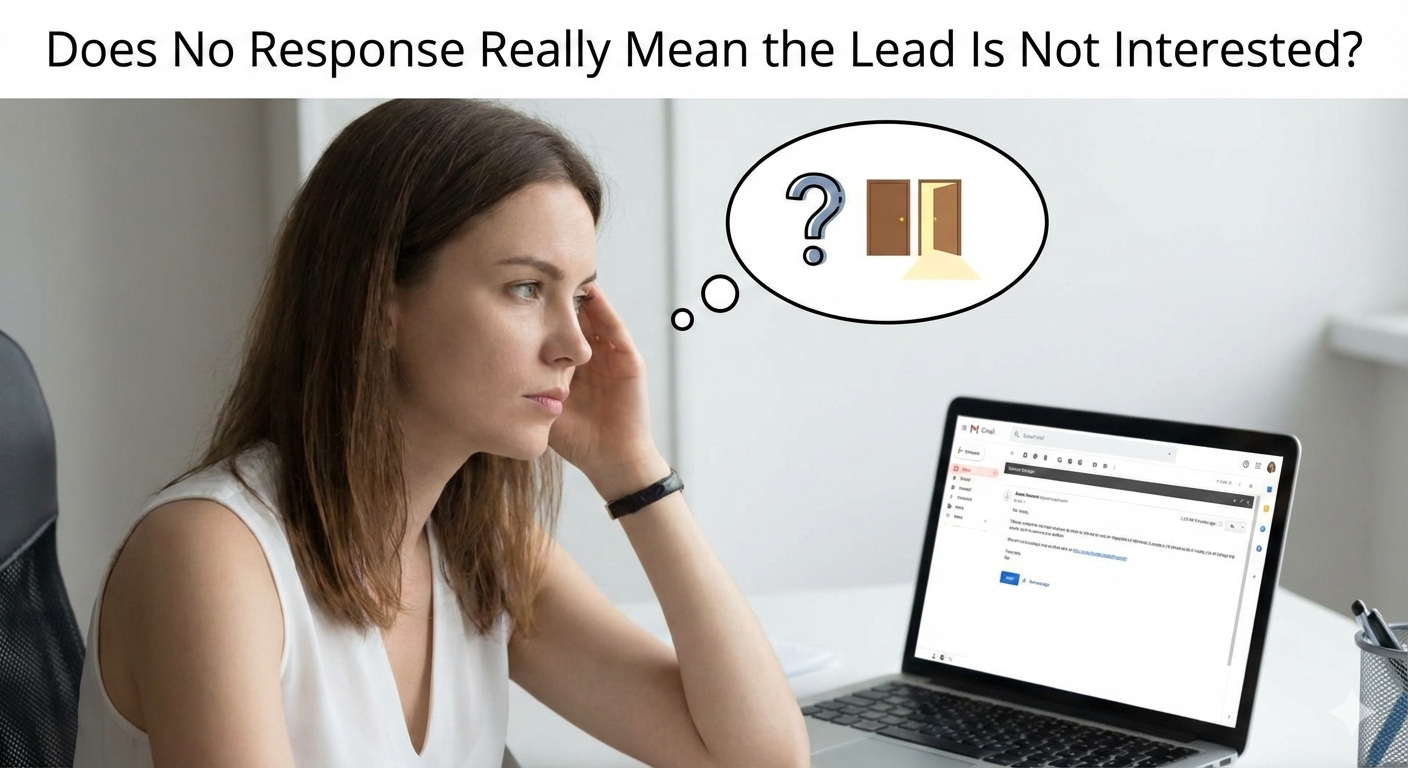
This question deserves its own section because the answer has massive implications for how small businesses handle their sales process. The short answer is: no, silence almost never means the lead has lost interest. But understanding why people go silent is what separates businesses that close consistently from those that constantly complain about "bad leads."
People enquire in the gaps between other things
When someone sends you a WhatsApp message asking about your service, they're rarely sitting at a desk with a notepad, carefully evaluating your business. They're on a lunch break. They're commuting. They're scrolling their phone while watching TV. They fire off a quick message, and then life immediately pulls them in another direction.
Your reply arrives 20 minutes later, but by then they're back in a meeting or putting their kids to bed. They see the notification, think "I'll read this properly later," and swipe it away. That "later" often turns into tomorrow, which turns into next week, which turns into forgetting entirely. The interest was real. The timing just didn't align. And without a follow-up to bring them back, that interest quietly expires.
Also read: How many follow-ups are needed to close a deal
Leads are always comparing multiple options
It's important to remember that you're almost never the only business a lead has contacted. For most services, people message between three and six options simultaneously. They're not being disloyal — they're being practical. They want to compare pricing, response quality, and overall vibe before committing.
This means your follow-up isn't just about reminding the lead that you exist. It's about staying in the consideration set while they evaluate everyone else. The business that follows up thoughtfully — not aggressively, but consistently — tends to be the one that's top of mind when the lead is finally ready to decide. The businesses that sent one reply and went silent? They're not even in the running anymore.
Most buying decisions need time to mature
Not every purchase decision is instant. For anything that costs more than a trivial amount — a course, a service package, a subscription, a consultation — people need time to think. They might need to check their budget, discuss it with a spouse or business partner, wait for the right moment, or simply sleep on it.
During this thinking period, the lead goes quiet. This silence isn't rejection — it's the decision process in action. But if your team interprets this silence as disinterest and stops reaching out, you're essentially removing yourself from the running at the exact moment the lead is getting closer to a yes.
A well-timed follow-up during this phase — something as simple as "Hey, just checking in — happy to answer any questions if you're still exploring" — can be the nudge that converts a thinking lead into a paying customer.
No follow-up signals that you don't care
Here's something most businesses don't consider: from the lead's perspective, your follow-up behaviour is a preview of your customer service. If you don't follow up before they've paid, why would they expect good support after they pay?
"Businesses that send personalized follow-up messages within 24 hours see a 26% higher conversion rate compared to those that follow up after 48 hours or more."
— Kraya AI Lead Management Study 2024
When a lead gets no follow-up, the message they receive is: "This business isn't very organised," or "They probably have too many customers to care about me," or "If they forget about me now, they'll forget about me later." These perceptions are hard to reverse. A single well-timed follow-up message does more for building trust than any testimonial on your website.
Also read : How WhatsApp Automation Helps Businesses Close More Deals
Why Do Small Businesses Miss Sales Follow-Ups Even With Interested Leads?
In many small businesses, leads don't disappear because they lose interest. They disappear because follow-ups don't happen on time. Even when a lead asks questions, requests pricing, or shows clear intent, things often stop in the middle. This is one of the most common sales follow-up problems.
Here's why it happens, explained in a simple and real way.
Root Cause | Impact on Sales | Quick Fix with Kraya AI |
|---|---|---|
Follow-ups depend on memory | 60-70% of follow-ups get forgotten | Automated reminders and follow-up scheduling |
One person handling too many tasks | Leads deprioritized when urgent work appears | Task distribution and lead assignment automation |
WhatsApp chats get buried | Old leads disappear from view within 24 hours | Smart chat prioritization and lead ranking |
No clear next step defined | Leads stall without direction | Structured follow-up sequences and workflows |
Unclear lead ownership | Responsibility gaps cause 15-20% missed follow-ups | Clear assignment and accountability tracking |
Follow-ups depend on memory
Most small teams don't write follow-ups down.
Someone thinks, "I'll message them later," and then the day gets busy.
When follow-ups live in the head, they get forgotten.
One person is handling too many things
In many small businesses, the same person manages sales, operations, and customer support simultaneously.
Follow-ups feel important, but other work feels urgent.
So follow-ups get pushed to later — and later often never comes.
WhatsApp chats get buried quickly
New messages keep coming in every day.
Yesterday's interested lead moves down the chat list.
Without reminders or a follow-up list, good leads disappear quietly.
There is no clear next step
Price is shared.
Call is done.
Demo is discussed.
But no one decides what should happen next, so nothing happens.
No one clearly owns the lead
One person replies first.
A salesperson replies next.Then it's unclear who should follow up.
When ownership is not clear, follow-ups don't happen.
Fear of sounding pushy
Many teams wait because they don't want to disturb the lead.
They assume the lead will reply on their own.
By the time they follow up, interest has already cooled.
"For small businesses in India using WhatsApp for sales, adding a structured follow-up system increases conversion rates by an average of 35-40%, without any increase in marketing spend."
— According to Kraya AI WhatsApp Sales Automation Report 2024
Also read: AI lead qualification saves 20 hours per week
How Inconsistent Follow-Ups Create Ongoing Sales Follow-Up Problems
In many small businesses, follow-ups happen sometimes, but not regularly. One day, the team follows up properly, and the next day, nothing happens. This uneven approach slowly creates sales follow up problems, even when leads are genuinely interested.
Leads get mixed signals – one follow-up shows interest, silence after that creates doubt about how serious the business is.
Interest slowly fades – without regular touchpoints, the lead forgets or moves on to someone else.
Follow-ups depend on mood, not a plan – some days the team is enthusiastic, other days they're not, and leads feel the difference.
Related: What Happens to Revenue When Sales Teams Don't Follow Up Properly?
Related: How AI Sales Follow Up Automation Changes the Follow-Up Process Step by Step
Related: Automated Follow-Up Sequences: How to Build a Sales System That Closes More Deals
Related: How WhatsApp Automation Helps Businesses Close More Deals
Related: WhatsApp Sales Follow-Up Automation: How to Stop Missing Leads and Close More Deals
```