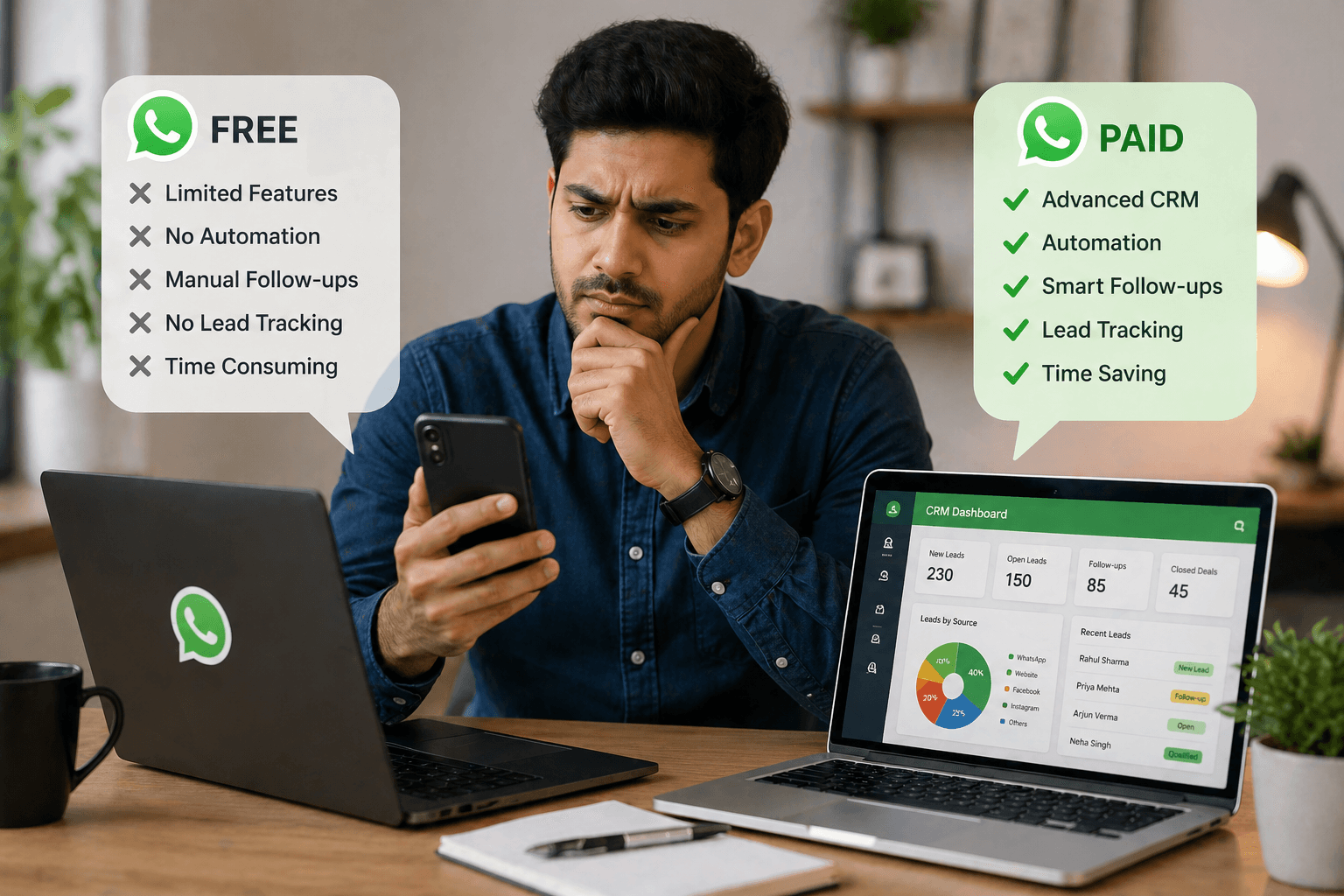
WhatsApp Business API Use Cases: 15 Proven Applications for 2026
 Abhyank Srinet
Customers today expect fast and convenient communication with businesses. Instead of waiting for email replies or calling support, most people prefer messaging companies directly on platforms they already use every day. WhatsApp has become one of the most powerful communication channels for this purpose, with more than 2.7 billion users globally and extremely high engagement rates compared with email or SMS. When a customer sends a message on WhatsApp, they usually expect a quick reply, clear information, and a smooth conversation that helps them move forward.
"WhatsApp messages achieve 95–98% open rates, making it 20–30 times more effective than email marketing for customer engagement."
— Meta Business Communications Report 2025
However, many businesses still manage WhatsApp conversations manually. Sales teams respond whenever they find time, support teams handle large volumes of messages, and important enquiries often get buried in chat threads. This leads to slow response times, missed follow-ups, and lost sales opportunities. According to industry data, businesses that fail to respond to customer messages within 1 hour lose approximately 35% of potential sales. Customers asking about product availability, order status, or appointment bookings may not receive timely replies, which often pushes them toward competitors who respond faster.
The WhatsApp Business API helps businesses solve these problems by enabling automated, structured, and scalable messaging. With the API, companies can automate customer support, send order updates, schedule appointments, recover abandoned carts, and efficiently manage high volumes of conversations. In this guide, we explore 15 proven WhatsApp Business API use cases, industry applications, implementation considerations, and real business impact to help you understand how businesses are using WhatsApp automation in 2026.
What Is WhatsApp Business API?

The WhatsApp Business API is a communication platform provided by Meta that allows businesses to send automated messages, manage high-volume conversations, and integrate WhatsApp with CRM systems and business tools. Unlike the standard WhatsApp Business app, the API supports automation workflows, message templates, chatbots, and customer engagement at scale.
Businesses use the WhatsApp Business API to:
Automate customer support conversations
Send order confirmations and delivery updates
Manage appointment reminders and notifications
Run personalized marketing campaigns
Handle large volumes of customer inquiries efficiently
Because WhatsApp messages typically achieve 95–98% open rates, the platform has become one of the most effective channels for customer communication.
Related: WhatsApp Business API Guide and Best API Providers in India 2026.
15 WhatsApp Business API Use Cases Businesses Implement in 2026
As messaging continues to replace traditional communication channels like email and phone calls, businesses are increasingly adopting the WhatsApp Business API to manage customer conversations at scale. Companies no longer use WhatsApp only for basic chat responses. Instead, they are building structured communication workflows that automate customer support, improve sales engagement, and streamline operational processes.
"In India, 87% of businesses using WhatsApp automation report a 40–50% increase in customer response rates and a 25–35% improvement in conversion rates within the first 6 months of implementation."
— Statista India Digital Business Study 2025
Because WhatsApp messages typically achieve 95–98% open rates and 40–60% response rates, the platform has become one of the most effective channels for real-time business communication. Organizations across industries—including e-commerce, healthcare, travel, real estate, and financial services—are now integrating WhatsApp into their core customer engagement strategies.
Below are 15 of the most common and impactful WhatsApp Business API use cases businesses are implementing in 2026.
1. Customer Support Automation
Customer support is one of the most widely adopted applications of WhatsApp Business API. Businesses receive large volumes of repetitive inquiries every day, and handling them manually slows response times and increases operational costs.
With WhatsApp automation, companies can instantly respond to common questions and guide customers through basic troubleshooting steps before transferring complex cases to human agents.
Typical support automation workflows include:
Answering frequently asked questions
Sharing product or service information
Providing business hours and location details
Checking order status automatically
Routing complex queries to support agents
Support automation helps businesses reduce response times from hours to minutes while allowing human agents to focus on more complex customer issues.
2. Order Confirmation Notifications
After completing a purchase, customers expect immediate confirmation that their order has been received successfully. WhatsApp Business API allows businesses to send automated order confirmation messages instantly after a transaction.
These messages typically include:
Order confirmation details
Payment confirmation
Order summary
Estimated delivery date
Order confirmation notifications reassure customers and reduce anxiety about whether their transaction was successful.
3. Shipping and Delivery Updates
Customers frequently check the status of their orders, especially when waiting for deliveries. WhatsApp allows businesses to send proactive shipping updates so customers always know where their order is.
Automated delivery notifications may include:
Shipping dispatch confirmation
Package tracking links
Delivery schedule updates
Delivery confirmation messages
These automated updates improve the customer experience and significantly reduce the number of "Where is my order?" inquiries that support teams receive.
4. Appointment Scheduling
Many service-based businesses use WhatsApp to allow customers to book appointments through messaging instead of complicated booking forms.
Customers can simply message the business to schedule services such as consultations, site visits, medical appointments, or service calls.
WhatsApp appointment scheduling systems allow customers to:
Check available time slots
Confirm appointment bookings
Request appointment changes
Cancel bookings if necessary
This conversational booking experience makes it easier for customers to schedule services quickly.
5. Appointment Reminder Notifications
Missed appointments create revenue losses for service-based businesses. According to industry research, automated WhatsApp reminders reduce no-show rates by 30–45%. Automated WhatsApp reminders help ensure customers remember their scheduled visits.
Reminder workflows typically include:
Appointment reminder messages sent 24 hours before the appointment
Additional reminder notifications sent a few hours before the visit
These reminders dramatically improve operational efficiency for businesses that rely on scheduled appointments.
6. Cart Abandonment Recovery
Cart abandonment is a major challenge for e-commerce businesses. Many customers add items to their cart but leave before completing the purchase. According to data from Indian e-commerce platforms, approximately 60–70% of online shopping carts are abandoned before checkout.
WhatsApp Business API allows businesses to send personalized reminders encouraging customers to return and finish the transaction.
Cart recovery messages may include:
Reminder messages about abandoned products
Discount offers or promotional codes
Direct checkout links
Because WhatsApp messages are highly visible, recovery campaigns often perform significantly better than email reminders.
7. Lead Qualification Conversations
Businesses often receive a large number of inquiries, but not every inquiry represents a serious buyer. WhatsApp automation helps businesses qualify leads by collecting important information before passing them to sales teams.
Lead qualification conversations typically gather details such as:
Customer requirements
Budget range
Timeline for purchase
Location preferences
By collecting this information early in the conversation, businesses can identify high-quality prospects and prioritize them for sales follow-ups.
8. Sales Follow-Up Messages
Sales teams frequently lose deals simply because follow-ups are inconsistent or delayed. WhatsApp automation ensures prospects receive timely follow-up messages after an inquiry, product demo, or quote.
Sales follow-up workflows may include:
Reminder messages after product demonstrations
Follow-up messages after sending pricing details
Additional information about services or features
Consistent follow-ups help keep prospects engaged and improve conversion rates.
9. Payment Reminder Notifications
Businesses that offer subscription services, installment payments, or invoice-based billing often struggle with delayed payments. WhatsApp reminders provide a convenient way to notify customers about upcoming or overdue payments.
Payment reminder messages may include:
Invoice notifications
Payment due reminders
Subscription renewal alerts
Sending reminders through WhatsApp increases the likelihood that customers will see and respond to the notification quickly.
10. Customer Feedback Collection
Customer feedback is essential for improving products and services. WhatsApp automation allows businesses to collect feedback directly after a purchase or service interaction.
| WhatsApp Use Case Category | Primary Benefit | Expected Impact on Business | Implementation Complexity |
|---|---|---|---|
| Customer Support Automation | Reduce response time | 30–50% reduction in support costs | Low–Medium |
| Order & Delivery Updates | Improve customer satisfaction | 20–30% fewer status inquiries | Low |
| Appointment Scheduling | Streamline booking process | 30–45% reduction in no-shows | Medium |
| Cart Abandonment Recovery | Recover lost sales | 15–25% recovery rate on abandoned carts | Low–Medium |
| Lead Qualification | Improve sales efficiency | 35–50% higher conversion rates | Medium |
```"Businesses implementing WhatsApp Business API solutions report an average customer satisfaction improvement of 45%, with response times decreasing from 4–8 hours to under 2 minutes."
Related: Best WhatsApp Business API Providers 2026: Complete Guide
— Gartner Customer Experience Report 2025
Frequently Asked Questions

Written by
Founder & CEO, Kraya AI
Abhyank Srinet is the Founder and CEO of Kraya AI, a WhatsApp CRM and sales automation platform serving 600+ Indian businesses. He is also the founder of MiM-Essay, one of India's largest Masters admissions consulting firms.
More from Abhyank