AI Lead Qualification vs Manual Qualification: Which One Saves More Deals?
 Abhyank Srinet
You get 40 WhatsApp enquiries on Monday. By Wednesday, your team has spoken to 12. Of the remaining 28, nobody knows who's serious, who has gone cold, and who may have already bought from a competitor. This situation is extremely common for businesses that receive inbound leads but struggle to respond quickly and qualify them properly.
"Indian B2B businesses receive an average of 35-40 WhatsApp leads daily but manage to qualify only 25-30% within the first 24 hours, leading to a 45% conversion loss rate."
— India Sales Automation Report 2024
The issue here is not a lack of leads. The real issue is the lead qualification process. When teams cannot quickly determine which prospects are worth pursuing, valuable opportunities slip through the cracks. Some leads receive late replies, some never get followed up, and some simply move on to faster competitors.
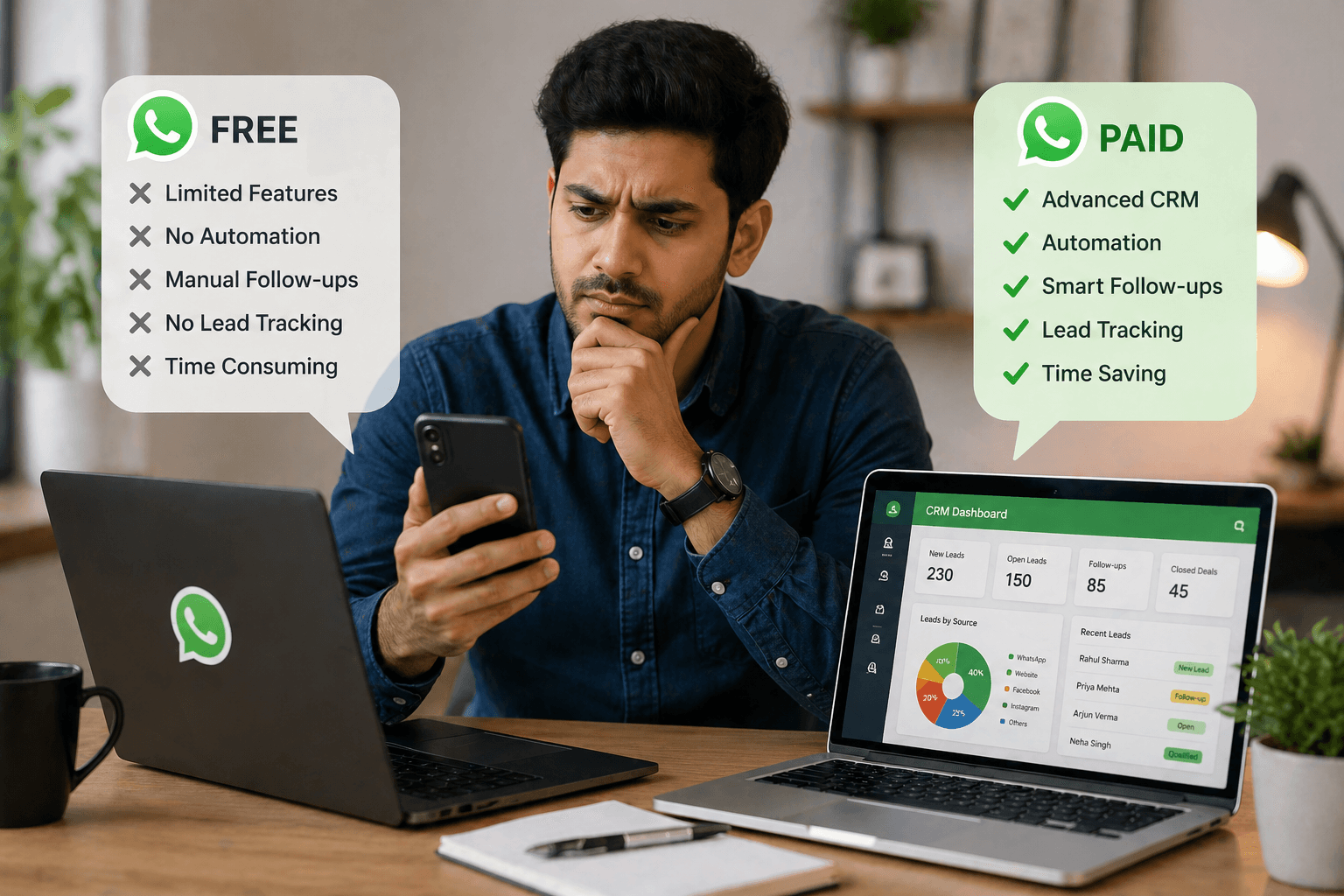
This is exactly where AI lead qualification and manual qualification start to differ. One relies on people to review and evaluate leads step by step. The other uses automated systems to instantly ask questions, gather information, and score prospects. The method you choose directly affects response speed, sales efficiency, and ultimately how many deals your business closes.
What Is Lead Qualification and Why Does It Matter in Sales?

Lead qualification is the process of identifying whether a potential customer is worth pursuing right now. In simple terms, it answers one important question: Is this person actually ready and able to buy?
Many businesses focus heavily on generating leads but overlook the importance of qualifying them properly. Without a structured lead qualification process, sales teams spend time talking to prospects who are not serious buyers. This creates wasted effort and slower response times for leads that actually matter.
"Companies that qualify leads within the first hour see a 391% increase in conversion rates compared to those that wait 24+ hours."
— HubSpot Lead Response Study
Unqualified leads often create more problems than having fewer leads. When sales teams try to handle every enquiry equally, they end up spreading their time too thin. This leads to delayed replies, inconsistent follow-ups, and missed opportunities to engage with high-intent prospects.
The goal of qualification is not to reject people — it is to prioritize the right conversations. By properly qualifying inbound leads, sales teams can focus on prospects who have real interest, suitable budgets, and a clear buying timeline.
How Manual Lead Qualification Actually Works in Real Sales Teams
Manual lead qualification is the traditional method used by most sales teams. In this approach, a salesperson reads each incoming enquiry and decides how to respond based on experience and judgment.
The process usually looks like this:
A lead sends a WhatsApp message or fills out a form.
A sales rep reads the message and evaluates the tone or intent.
The rep decides whether to reply immediately or later.
Qualification questions are asked to understand the prospect's needs.
These questions often follow frameworks like BANT qualification, which focuses on:
Budget
Authority
Need
Timeline
Manual qualification works well in certain situations, especially when sales conversations are relationship-driven or involve high-value deals. Experienced salespeople can read subtle signals, adjust questions, and build trust during early conversations.
However, the process starts to break down when lead volume increases. When businesses receive more than 20–30 leads per day, manual qualification becomes difficult to manage. Small teams handling leads across multiple channels — WhatsApp, ads, website forms, and referrals — often struggle to keep up.
This leads to several common problems:
Slow responses to inbound enquiries
Difficulty identifying hot leads vs cold leads
Inconsistent qualification questions across reps
Leads going cold before conversations begin
Manual qualification is not ineffective, but it becomes harder to scale as enquiry volume grows.
How AI Lead Qualification Works in Plain English
AI lead qualification automates the early part of the sales conversation by asking structured questions and analyzing responses instantly. Instead of waiting for a salesperson to review each enquiry, AI systems begin the qualification process immediately after a lead reaches out.
For example, when a prospect sends a WhatsApp message, the AI system can respond within seconds and ask a few simple questions such as:
What service or product are you interested in?
What is your approximate budget range?
When are you planning to make a decision?
Would you like more information or a quick call?
These responses help identify lead intent signals, which allow the system to perform AI lead scoring. Based on the answers, the system determines whether the prospect is likely to be a serious buyer.
Once the lead is scored, the system can automatically take the next step:
Hot leads are routed to the sales team for direct conversation.
Cold leads may enter a nurture sequence with follow-up messages.
This process, known as automated lead qualification, happens instantly and works even when the sales team is offline. If someone sends an enquiry at 2am, the system can still ask questions and collect important information before a salesperson ever opens the chat.
By the time the sales rep sees the conversation, they already know the lead's needs, budget range, and level of intent.
AI Lead Qualification vs Manual Qualification: Side-by-Side Comparison

The differences between AI Lead Qualification vs Manual Qualification methods become much clearer when viewed side by side.
Factor | Manual Qualification | AI Qualification |
Speed | Hours to days | Instant |
Works after hours | No | Yes |
Consistency | Depends on the rep | Always consistent |
Handles high volume | Breaks above 30/day | Scales infinitely |
Personal touch | High | Medium |
Cost at scale | Increases with headcount | Fixed |
Miss rate | High when team is busy | Near zero |
"AI-powered lead qualification reduces manual qualification time by 80% while improving lead-to-opportunity conversion by 52% in typical B2B sales operations."
— Forrester State of AI in Sales 2024
Manual qualification relies heavily on the availability and capacity of the sales team. When reps are busy or dealing with multiple conversations, leads may wait hours before receiving a response.
AI systems eliminate this delay by starting the conversation immediately. This ensures that every lead receives attention, regardless of time of day or team workload.
When Manual Lead Qualification Still Works Well
Despite the advantages of automation, manual qualification still has an important place in many businesses.
Certain industries depend heavily on personal relationships and trust. In these cases, a human first interaction can make a strong impression and help build credibility early in the sales process.
Manual qualification often works well in situations such as:
Enterprise deals where relationships matter more than speed
Legal, medical, or high-ticket consulting services
Businesses with genuinely low lead volume
When teams receive fewer than ten leads per day, manual qualification may be perfectly manageable. Experienced sales professionals can apply a prospect qualification framework and tailor conversations based on each prospect's situation.
The key limitation is scalability. As enquiry volume grows, manual processes become harder to maintain consistently.
Related: When Should You Move a Lead to the Next Stage in Your Sales Pipeline?
Related: How to Qualify Leads on WhatsApp: The Complete System to Turn Enquiries into High-Intent Buyers
Related: What Is WhatsApp CRM? WhatsApp CRM vs Traditional CRM for Indian SMBs
Related: WhatsApp Broadcast vs Individual Message What Is the Difference and When to Use Each
Related: WhatsApp vs Email for Sales: When to Use Each to Increase Conversions
Where AI Lead Qualification Delivers the Biggest Advantage
There are certain situations where

Written by
Founder & CEO, Kraya AI
Abhyank Srinet is the Founder and CEO of Kraya AI, a WhatsApp CRM and sales automation platform serving 600+ Indian businesses. He is also the founder of MiM-Essay, one of India's largest Masters admissions consulting firms.
More from Abhyank