WhatsApp vs Email for Sales: When to Use Each to Increase Conversions
 Abhyank Srinet
Most businesses don't lose sales because they don't get enough leads. They lose sales in the gap between the first message and the deal that never happens. A lead sends a WhatsApp asking for pricing. Or they send an email asking for details. Someone replies. Maybe a quick call happens. And then the conversation slowly stops. Not because the lead wasn't interested. Not because the offer was wrong. But because no one followed up at the right time, using the right channel. This is where the real discussion around WhatsApp vs Email for sales begins.
"According to HubSpot research, 50% of sales are won by the vendor who responds first. The speed of follow-up is a critical factor in converting leads into deals."
— HubSpot Sales Research, 2024
This part of sales is often ignored. Businesses spend money to generate leads. But once those leads come in, the follow-up becomes random. Some replies go through email. Some go through WhatsApp. Some leads get reminders. Others are forgotten. There is no clear plan for email follow-up vs WhatsApp follow-up. Teams are unsure about the best communication channel for sales at different stages. Everything depends on memory and manual effort.
The impact is slow but serious. Response rates drop. Conversations cool down. Deals take longer to close. When you look at WhatsApp vs Email open rates and overall engagement, the difference becomes clear. The wrong channel at the wrong time affects your email vs WhatsApp conversion rate. In this blog, we will clearly explain when to use WhatsApp, when to use email, and how choosing the right channel can improve your sales results.
What Is the Difference Between WhatsApp and Email for Sales?
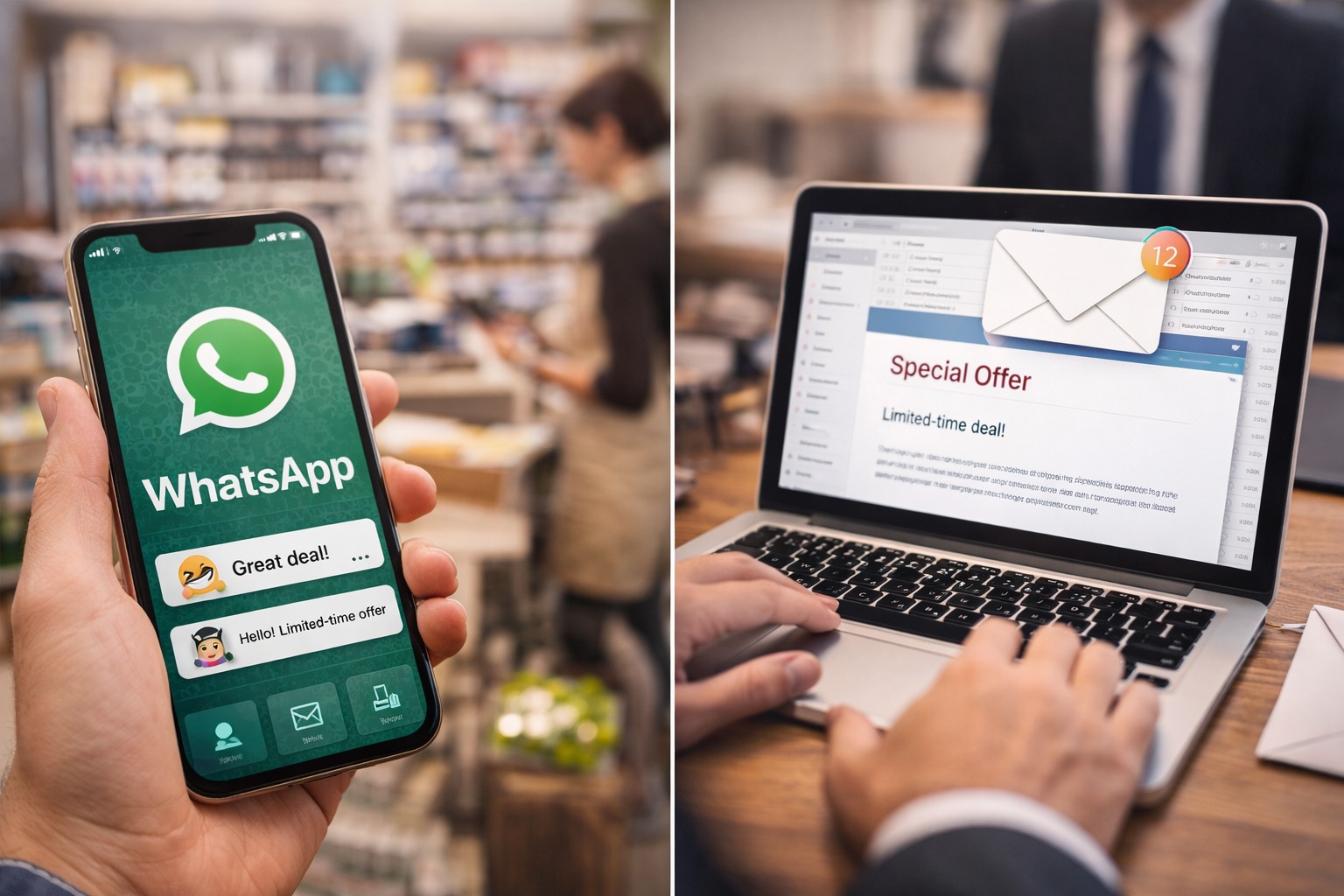
When businesses compare WhatsApp vs Email for sales, they often ask which one converts better. But the real difference is not just conversion. It is buyer behavior.
In real sales environments, especially in small and growing businesses, most deals are lost because momentum slows down. A lead shows interest. You reply. Then communication becomes inconsistent. The channel you use either keeps the conversation moving or quietly kills it. Understanding this difference is what helps you choose the best communication channel for sales at each stage.
WhatsApp vs Email — Quick Comparison (What Actually Matters)
This is what most people are looking for:
Factor | ||
Open rate | ~98% | ~21% |
Reply speed | Minutes (avg. 3-5 min) | Hours to days (avg. 24 hrs) |
Best for | First contact, follow-ups | Proposals, contracts |
Tone | Conversational | Formal |
Works when | Lead is warm | Lead needs documentation |
👉 According to Mailchimp's 2024 messaging benchmarks, WhatsApp messages have an open rate of approximately 98%, compared to email's average of 21%. This significant gap demonstrates why many follow-ups fail when relying solely on email.
Speed and Open Rates Matter in Sales
In sales, timing is everything. When a lead enquires, they are actively comparing options. That window of attention is short.
This is where WhatsApp vs Email open rates create a clear difference. WhatsApp messages are usually opened within minutes. Email messages are often checked in batches. Many sit unread in crowded inboxes. That delay affects response time, follow-up cycles, and overall deal movement.
"In India, 84% of smartphone users actively use WhatsApp daily, making it the most engaged communication platform for business conversations. For sales teams, this means higher message visibility and faster engagement rates."
— Statista Digital Market Insights, India Mobile Usage Report 2024
From practical experience across service businesses, faster replies almost always lead to better outcomes. Higher open rates lead to quicker engagement. Quicker engagement improves your overall email vs WhatsApp conversion rate. If your sales process relies on demo bookings, appointment confirmations, or price discussions, speed directly impacts revenue.
Conversation Style and Follow-Up Impact
Email feels structured and professional. It is ideal for proposals, contracts, onboarding documents, and detailed explanations. It creates a formal record. That makes it valuable in many parts of the sales process.
But when it comes to ongoing follow-ups, behavior changes. In most businesses, email follow-up vs WhatsApp follow-up shows a clear pattern. Email reminders are easier to ignore. WhatsApp feels more direct. It feels like a conversation.
Using WhatsApp for lead follow-up keeps interaction alive. A short check-in message often gets a faster reply than a formal email. This is why sales follow-up on WhatsApp tends to improve response rates and reduce no-shows.
When supported by simple WhatsApp automation for sales, reminders can be timed properly. That consistency strengthens performance without increasing manual effort. Over time, structured follow-up through a WhatsApp CRM vs Email CRM setup makes the difference between scattered communication and predictable conversions.
Also read: Best WhatsApp CRM Automation Tools
WhatsApp vs Email Open Rates and Response Rates in Sales
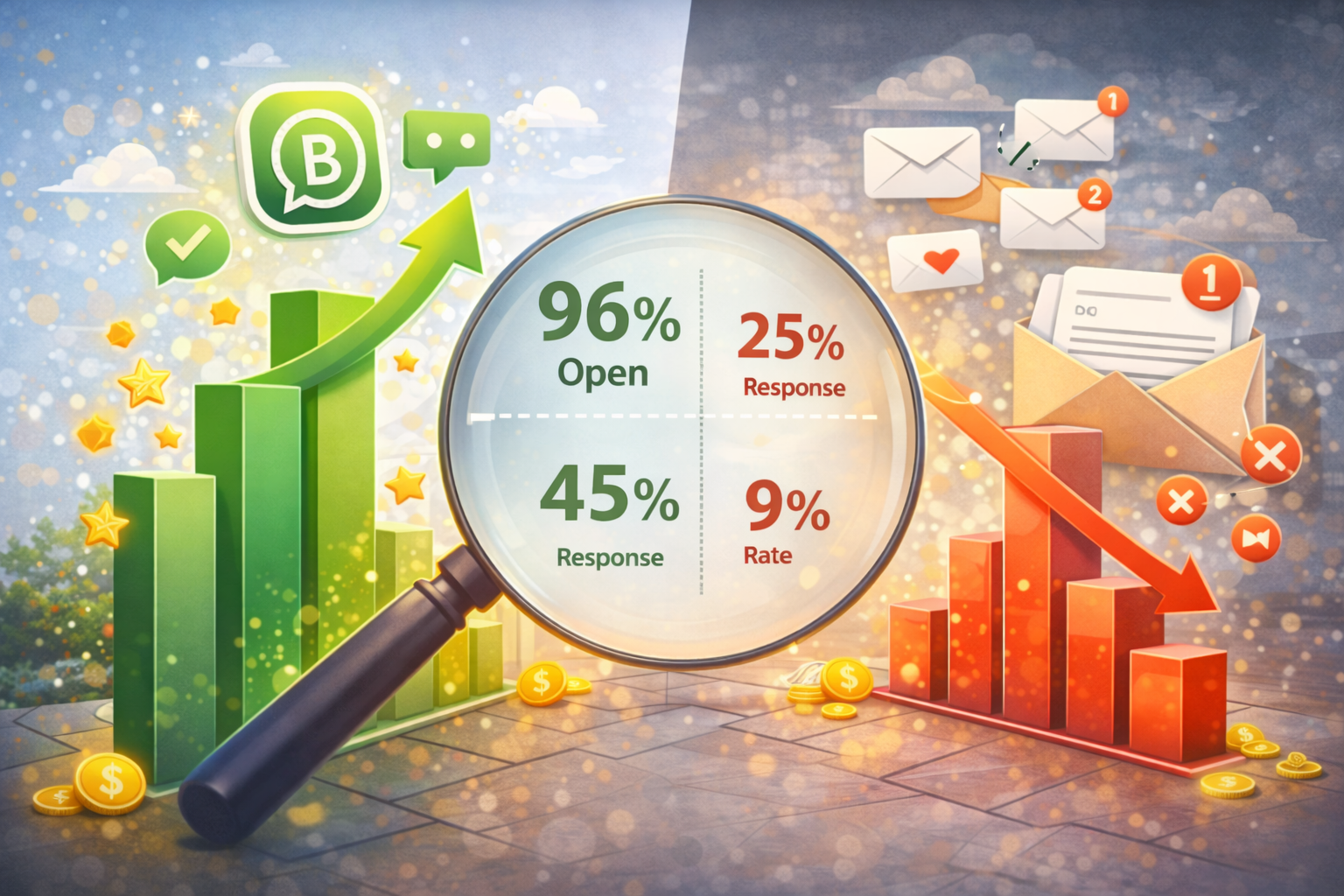
When we talk about WhatsApp vs Email for sales, open rates and response rates play a very important role. But this is not just about numbers. It is about how people actually behave when they receive a message. Sales is driven by attention. If your message is seen quickly, the conversation moves forward. If it sits unread, the interest slowly fades.
In most small and mid-sized businesses, this is where the real difference shows up. A lead sends an enquiry. You reply through email. The message lands in their inbox along with dozens of other emails. They may see it later. They may forget. Meanwhile, if the same reply goes on WhatsApp, it appears directly on their phone screen. It feels more immediate. That small difference changes the speed of the conversation.
Why WhatsApp Gets More Replies in Sales
People check WhatsApp throughout the day. It is part of daily communication. Messages feel direct and personal, not promotional. This is why WhatsApp vs Email open rates often show a big gap. WhatsApp messages are usually opened within minutes, while emails are often checked in batches when someone has time.
"Data from Forrester shows that businesses using WhatsApp for follow-up achieve 3.5x faster response times compared to email-only strategies, and 42% higher conversion rates on average."
— Forrester Research: Enterprise Messaging Study 2024
In real sales situations, speed matters more than most teams realize. When a lead is comparing options, the business that responds and continues the conversation quickly usually wins. Faster opens lead to faster replies. Faster replies improve the overall email vs WhatsApp conversion rate. It is not about the tool being better. It is about how quickly it keeps the momentum alive.
Why Email Still Matters in Sales
Email is still very important in sales. It works well for proposals, contracts, and detailed information. It creates a formal record and helps with documentation. But when it comes to regular follow-ups, behavior changes. Inbox overload is real. Even interested buyers may not reply immediately.
This is where email follow-up vs WhatsApp follow-up shows a clear difference. Email reminders often get delayed responses. WhatsApp messages feel like ongoing conversations. That is why sales follow-up on WhatsApp often gets quicker engagement compared to email.
The difference is not about professionalism. It is about attention. People treat email as something to manage later. They treat WhatsApp as something to respond to now.
How Open Rates Connect to Real Conversion Rates
Higher open rates alone do not close deals. But they increase the chance of interaction. And sales depends on interaction. When your message is opened quickly, you get the chance to answer doubts, confirm next steps, send reminders, and move the deal forward without delay.
This is where structured WhatsApp automation for sales can support teams. Timely reminders, appointment confirmations, and gentle follow-ups help reduce silent drop-offs. Over time, this directly improves your measurable email vs WhatsApp conversion rate. Businesses that understand this difference and use both channels wisely usually see stronger pipeline movement and fewer lost leads.
The key takeaway is simple. Email is strong for documentation and detailed communication. WhatsApp is strong for speed, engagement, and active deal movement. Understanding this difference in WhatsApp vs Email for sales helps you protect your conversion rate instead of slowly losing it.
Also read: How to Use WhatsApp for Sales Effectively
WhatsApp for Lead Follow-Up vs Email Follow-Up: Which Works Better?
Most deals are not lost in the first conversation. They are lost in the follow-up. This is where the real difference in WhatsApp vs Email for sales becomes clear.
A lead asks for pricing. You send details. Then there is silence. Many teams assume the lead is not interested. In reality, most leads get distracted, compare options, or delay decisions. The business that follows up properly — through the right channel — usually wins. The problem is not the quality of leads. It is the lack of structured follow-up.
Why Email Follow-Ups Often Lose Momentum
Email is professional and necessary for proposals, contracts, and detailed communication. But inboxes are crowded. Even interested buyers receive dozens of emails every day. If your follow-up lands at the wrong time, it gets pushed down the inbox and forgotten.
This is why many businesses see weaker results when comparing email follow-up vs WhatsApp follow-up. The issue is not the message itself. It is attention and timing. Email feels formal and easy to postpone. That delay directly impacts your overall email vs WhatsApp conversion rate, especially in fast-moving sales environments.
Why WhatsApp for Lead Follow-Up Feels More Effective
"According to a study by Twilio's 2024 Customer Engagement Report, 61% of Indian consumers prefer WhatsApp for business communication, with 89% more likely to respond to transactional messages sent via WhatsApp compared to SMS or email."
— Twilio Customer Engagement Report: India Market Analysis 2024
WhatsApp feels direct and conversational. When you use WhatsApp for lead follow-up, the message appears instantly on the lead's phone. It is short, easy to read, and easy to reply to. Even a simple message like "Would you like to schedule a demo?" gets faster responses on WhatsApp than the same question in an email.
The conversational tone also matters. On WhatsApp, a friendly check-in feels natural. On email, the same message can feel pushy or automated. This psychological difference is one reason why sales follow-up on WhatsApp consistently outperforms email follow-up in engagement metrics. When leads feel they are having a real conversation rather than being sold to, they respond better.
For teams using Kraya AI, WhatsApp automation ensures timely follow-ups without the manual effort, maintaining that conversational tone while scaling operations. Scheduled reminders, personalized templates, and response tracking all contribute to better email vs WhatsApp conversion rate performance.
Related: Manual Follow-Ups vs Automated WhatsApp Follow-Ups: What Works Better for Sales
Related: WhatsApp Broadcast vs Individual Message What Is the Difference and When to Use Each
Related: WhatsApp Sales Follow-Up Automation: How to Stop Missing Leads and Close More Deals
Related: How to Qualify Leads on WhatsApp: The Complete System to Turn Enquiries into High-Intent Buyers
Related: What Is WhatsApp CRM? WhatsApp CRM vs Traditional CRM for Indian SMBs
Related: WhatsApp CRM for Consultants and Freelancers: How to Manage Client Enquiries Without Losing Leads
Related: How to Follow Up on WhatsApp Without Getting Blocked or Annoying Your Leads
Related: AI Lead Qualification vs Manual Qualification: Which One Saves More Deals?
Related: WhatsApp CRM Best Practices to Increase Response Rates
Related: Best AiSensy Alternatives for WhatsApp Marketing in India
Related: Best Interakt Alternatives for Indian Sales Teams in 2026
Related: Best Gallabox Alternatives for WhatsApp Automation in India
```
Frequently Asked Questions

Written by
Founder & CEO, Kraya AI
Abhyank Srinet is the Founder and CEO of Kraya AI, a WhatsApp CRM and sales automation platform serving 600+ Indian businesses. He is also the founder of MiM-Essay, one of India's largest Masters admissions consulting firms.
More from Abhyank