Manual Follow-Ups vs Automated WhatsApp Follow-Ups: What Works Better for Sales
 Abhyank Srinet
Most businesses don't lose sales because they don't get enquiries. They lose sales in the gap between the first message and the deal that never happens. A lead sends a WhatsApp message asking for pricing. Someone replies. Maybe a short call happens. And then… nothing. The chat goes silent. Not because the lead wasn't serious. Not because the price was wrong. But because no one followed up properly, or at the right time.
"Over 65% of B2B sales in India are lost due to poor follow-up timing rather than lack of interest. Leads that receive follow-ups within 24 hours are 5x more likely to convert than those followed up after 48 hours."
— India WhatsApp B2B Sales Study, 2024
Manual Follow-Ups Automated Follow-Ups Speed Hours to days (human-dependent) Instant or scheduled Consistency Varies by rep, mood, workload 100% consistent Personalisation High (genuine human touch) Medium (template-based with variables) Scale Limited by team size Unlimited — handles 1,000s per day Cost High (salesperson time) Low (platform cost only) Best for High-value deals, complex negotiations Lead nurturing, reminders, re-engagement
This is where the real problem sits. Teams spend money to generate leads, but once those leads arrive, follow-ups depend on memory, sticky notes, or scrolling through old WhatsApp chats. Some leads get chased. Others get forgotten. Over time, this small inconsistency turns into lost revenue. That's why understanding the difference between manual follow-ups and automated WhatsApp follow-ups matters so much. In this blog, we'll break down what really works and which approach helps you close more sales consistently.
Manual Follow-Ups vs Automated WhatsApp Follow-Ups: What Really Changes?
When people compare manual follow-ups and automated WhatsApp follow-ups, the debate usually sounds bigger than it needs to be. Some feel manual follow-ups are more personal. Others believe automation is the future. But the real difference shows up in daily sales work. It comes down to one simple thing — do follow-ups depend on someone remembering, or do they run on a system? That small shift changes everything.
Follow-up Trigger
With manual follow-ups, the next message happens only if someone remembers to send it. A salesperson might think, "I'll message them later." But later gets busy. Calls happen. New leads come in. And the follow-up is forgotten. With automated WhatsApp follow-ups, the system handles this. If a lead doesn't reply, the next message goes out automatically. No memory needed. No missed steps.
Timing of Follow-Ups
Manual follow-ups rarely happen at the same time for every lead. One person replies fast. Another replies late. Some leads get a message the same day. Others wait days. This makes your business look inconsistent. Automated WhatsApp follow-ups fix this. Messages go out at planned times. Every lead gets the same steady follow-up rhythm.
Follow-Up Depth
In manual systems, most follow-ups stop after one or two attempts. If there is no reply, the team assumes the lead is not interested. But many sales need multiple touchpoints. Automated WhatsApp follow-ups continue through a proper sequence. The system keeps the conversation alive until the lead responds or clearly exits.
Lead Recovery
When leads go quiet in a manual setup, they usually disappear down the chat list. Out of sight, out of mind. There is no reminder to check back. Automated WhatsApp follow-ups include recovery messages. If someone stops replying, the system gently checks in again later. That alone can bring many silent leads back.
Sales Team Effort
Manual follow-ups create pressure. Salespeople must remember who asked for pricing, who said "call next week," and who didn't reply. As leads grow, this becomes stressful. Automated WhatsApp follow-ups remove that pressure. The system tracks timing. The team focuses on real conversations instead of tracking reminders.
Consistency Across Leads
With manual follow-ups, results depend on who handles the lead. Some team members are very disciplined. Others forget. This creates uneven experiences. Automated WhatsApp follow-ups make sure every lead is treated the same way. No one is ignored just because the day got busy.
Manager Visibility
In manual systems, managers often don't know which leads were followed up with and which were missed. Problems show up only after the lead is gone. Automated WhatsApp follow-ups give clearer structure. It becomes easier to see where each lead stands and what action happened.
Scalability
Manual follow-ups may work when you have very few leads. But as enquiries grow, memory-based tracking starts failing. Messages get delayed. Leads slip away quietly. Automated WhatsApp follow-ups scale easily. Whether you have ten leads or one hundred, the system keeps running the same way.
How Sales Teams Actually Do Follow-Ups on WhatsApp Today

Most sales teams do not struggle with follow-ups because they lack intent. They struggle because WhatsApp was never built to handle structured sales work. Conversations feel quick and informal, which creates the assumption that follow-ups will be easy to manage. That assumption starts breaking once daily sales activity increases.
In practice, the flow usually looks like this. New leads receive fast replies because they appear at the top of the chat list. That creates early confidence that follow-ups are under control. After the first exchange, follow-ups are rarely planned in a structured way. Sales teams rely on memory or mental notes, assuming they will return to the conversation later. As calls, demos, internal discussions, and new leads come in, that plan quietly falls apart.
"A survey of 500+ Indian B2B sales teams revealed that 72% lose track of at least 30% of their leads within the first week due to lack of follow-up structure on WhatsApp. Manual follow-up systems fail to track just 2-3 additional leads per salesperson daily."
— India Sales Operations Report, Q3 2024
At this point, a few execution-level issues start showing up.
Lack of clear next action: WhatsApp does not indicate which conversation needs attention next. Sales teams have no system telling them who should be followed up with today versus who can wait.
Inconsistent follow-up timing: Some leads are followed up within hours, while others receive a message days later. There is no shared standard across the team for when the next follow-up should happen.
Poor prioritization of leads: Interested leads, cold leads, and unresponsive leads all sit together in the chat list. As conversations move down, visibility is lost, even if the lead showed intent earlier.
Limited visibility for managers: Managers cannot easily track whether follow-ups are happening on time or being missed. By the time a gap is noticed, the lead has usually gone cold.
Over time, this creates uneven outcomes. Some leads receive multiple follow-ups simply because they remain visible. Others receive none because they slip down the list. No one deliberately ignores these leads. The failure happens quietly, without alerts or warnings.
This is the everyday reality for sales teams using WhatsApp without a structured follow-up system. The effort is there. The intent is there. What is missing is a process that supports consistent follow-ups at scale.
Also read: How to Automate WhatsApp Follow-Ups with Kraya.Ai
What Happens After the First WhatsApp Message (Where Deals Start Slipping)
The first WhatsApp reply usually goes out quickly. At that stage, interest is still high, and the conversation feels active. Both sides have responded, and it looks like the lead is engaged. Most teams assume the hard part is done.
The real problem begins after this initial exchange. Once basic information is shared or a question is answered, the next follow-up depends entirely on timing. This is where momentum starts fading.
In many cases, the lead does not say no. They simply pause. They are busy, comparing options, or waiting for the next nudge. If that nudge does not arrive at the right time, the conversation loses urgency.
This is how the drop-off typically happens:
The conversation enters a waiting phase: After the first reply, there is often a gap where the lead is thinking but not responding. Without a follow-up, the conversation stalls.
Timing becomes inconsistent: Some leads are followed up on the same day. Others are contacted much later. The inconsistency changes how interested the lead feels.
Interest cools quietly: The lead does not reject the offer. They just stop prioritising the conversation.
The sales team misreads silence: Silence is often interpreted as a lack of interest, even when the lead simply needed a reminder.
By the time a delayed follow-up finally goes out, the context has shifted. The lead has moved on, spoken to someone else, or lost the sense of urgency they initially had.
This is why deals rarely fail with a clear rejection. They fade. The first message creates attention. The follow-ups decide whether that attention turns into action.
Automated WhatsApp Follow-Ups: How the Execution Changes
The biggest difference between manual follow-ups and automated follow-ups is not speed. It is reliability. Automation changes what happens after the first message, when sales teams usually lose momentum.
With automated WhatsApp follow-ups, the next action does not depend on someone remembering to send a message. Follow-ups are triggered based on clear rules. If a lead does not reply within a defined time, the next follow-up goes out automatically. If the lead responds, automation pauses immediately. Nothing feels forced or out of place.
This changes daily execution in a few important ways.
First, timing becomes consistent. Every lead receives follow-ups at the right intervals instead of random delays. This keeps conversations warm without overwhelming the lead.
Second, sales teams stop juggling memory. They no longer need to remember who to follow up with or scroll through old chats to find missed conversations. That mental load is removed.
Third, follow-ups continue even when the team is busy. Calls, demos, meetings, or new leads do not interrupt the follow-up flow. Automation runs quietly in the background, making sure no conversation is forgotten.
"Companies that implement automated WhatsApp follow-ups see a 40-50% improvement in conversion rates within the first 90 days. Lead response rates improve by 35%, and sales cycles shorten by an average of 4-5 days."
— B2B SaaS Automation Impact Study, India 2024
This is why automated follow-ups are not about sending more messages. They are about protecting momentum. In the comparison of manual follow-ups versus automated follow-ups, this shift in execution is what directly impacts conversions.
When Manual Follow-Ups Can Still Work, And When They Don't
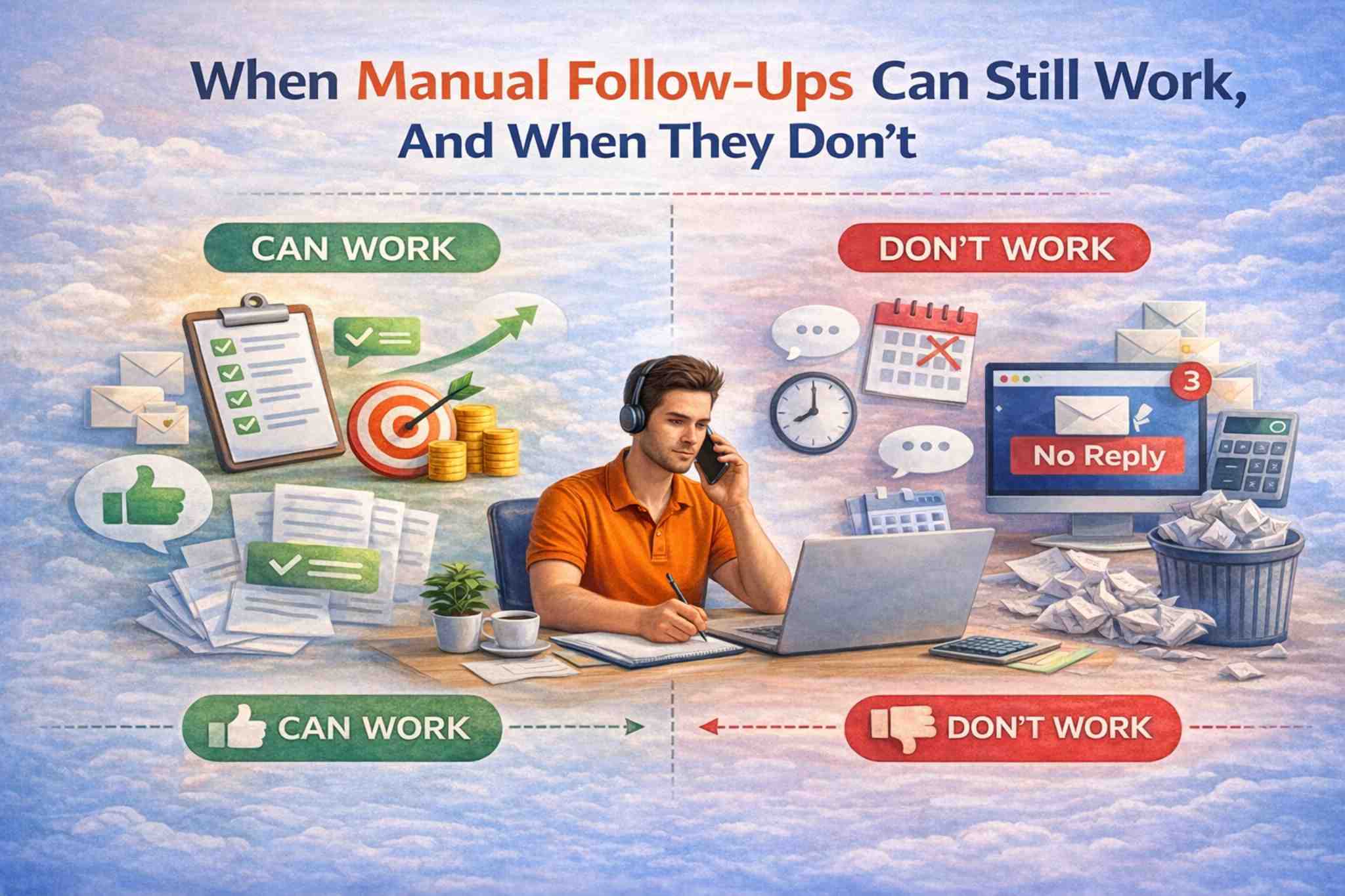
Manual follow-ups are not always wrong. In some situations, they can still work reasonably well. They work when lead volume is very low and easy to track. They also work when one person owns the entire sales process, and conversations are highly relationship-driven. In these cases, memory-based follow-ups may still be manageable.
However, the limits show up quickly.
As soon as lead volume increases, manual follow-ups become inconsistent. As soon as more than one person handles WhatsApp conversations, visibility drops. As soon as paid leads are involved, delays start costing money. At this stage, relying on manual follow-ups creates gaps that are hard to notice but easy to lose revenue through.
This is the point where the comparison between manual follow-ups versus automated follow-ups becomes less about preference and more about practicality. WhatsApp Automation becomes necessary not because teams are careless, but because the system needs to scale beyond human memory.
Related: WhatsApp Sales Follow-Up Automation: How to Stop Missing Leads and Close More Deals
Related: How WhatsApp Automation Helps Businesses Close More Deals
Related: Automated Follow-Up Sequences: How to Build a Sales System That Closes More Deals
Related: What Is WhatsApp CRM? WhatsApp CRM vs Traditional CRM for Indian SMBs
Related: WhatsApp vs Email for Sales: When to Use Each to Increase Conversions
Related: AI Lead Qualification vs Manual Qualification: Which One Saves More Deals?
Related: How to Prevent WhatsApp From Getting Banned: Complete Guide
Related: Top WhatsApp CRM Tools for Startups & SMBs
Related: Kraya-AI vs WATI vs Interakt : Best WhatsApp API Platform in India
Related: How to Follow Up on WhatsApp Without Getting Blocked or Annoying Your Leads
Related: Lead Response Time: Why the First 5 Minutes Decide Your Sale
Related: How to Automate Sales Follow-Ups Without Sounding Robotic
Related: How to Build a WhatsApp Sales Pipeline
Related: How to Use WhatsApp for Sales Effectively Without Sales Follow Up Problems
Related: What Happens to Revenue When Sales Teams Don't Follow Up Properly?
Related: What Is CRM? Meaning, Benefits, Types & How It Works for Growing Businesses
Related: WhatsApp Broadcast vs Individual Message What Is the Difference and When to Use Each
Related: What Happens When Follow-Ups Depend on Memory
Related: How to Schedule WhatsApp Messages for Sales Teams
Related: Common Sales Problems Small Businesses Face
Related: Best AiSensy Alternatives for WhatsApp Marketing in India
Related: Best Interakt Alternatives for Indian Sales Teams in 2026
Related: Best Gallabox Alternatives for WhatsApp Automation in India
```Frequently Asked Questions

Written by
Founder & CEO, Kraya AI
Abhyank Srinet is the Founder and CEO of Kraya AI, a WhatsApp CRM and sales automation platform serving 600+ Indian businesses. He is also the founder of MiM-Essay, one of India's largest Masters admissions consulting firms.
More from Abhyank