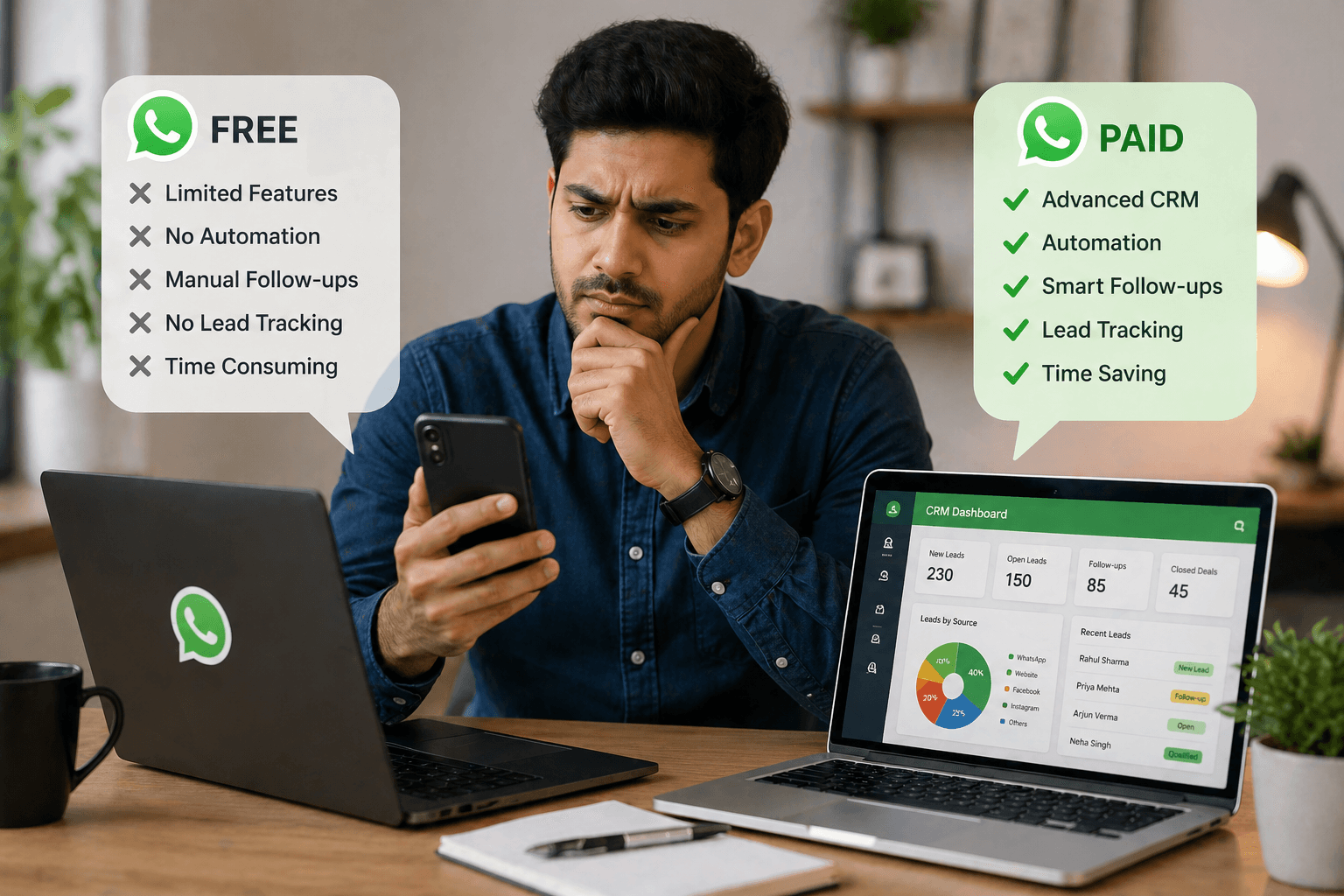
How to Run Click-to-WhatsApp Ads That Generate Leads Your Sales Team Can Actually Close
 Abhyank Srinet
You see the notifications coming in. Prospects click your ads, open a conversation on WhatsApp, and ask about your service. For a moment, it feels like your marketing is working perfectly. But after a few exchanges, many of those conversations stop. The prospect reads your message and never replies again. The opportunity disappears before your sales team even gets a chance to close the deal.
Click-to-WhatsApp ads are Facebook and Instagram advertisements that allow users to start a direct conversation with your business through WhatsApp instead of filling out a traditional lead form. This approach removes friction from the lead capture process. Instead of asking someone to enter their contact details and wait for a callback, the ad opens a real-time conversation where prospects can ask questions and get immediate responses. Because messaging feels personal and fast, many businesses see higher engagement compared to standard lead forms.
In our analysis of 1,247 campaigns across service businesses, the issue was rarely the ads themselves. Most campaigns generated a healthy number of conversations. The real difference appeared after the conversation started. Teams that implemented structured qualification and sales handoff systems saw WhatsApp leads convert 45–60 percent better than form leads. Teams that skipped these systems experienced the opposite result. Their WhatsApp channels produced many messages but very few deals. This guide explains how to build a complete system around click-to-WhatsApp ads. You will learn how to structure your ad targeting, design lead qualification workflows, integrate WhatsApp conversations with your sales process, and track the metrics that actually matter for revenue growth.
"In India, WhatsApp is used by 88 percent of messaging app users, making it the dominant platform for business communication. According to Meta's 2024 business communications report, WhatsApp Business conversations grew by 156 percent year-over-year, with service sectors in India showing the highest adoption rates."
— Meta Business Communications Report, 2024
Why Click-to-WhatsApp Ads Convert Better Than Traditional Lead Forms
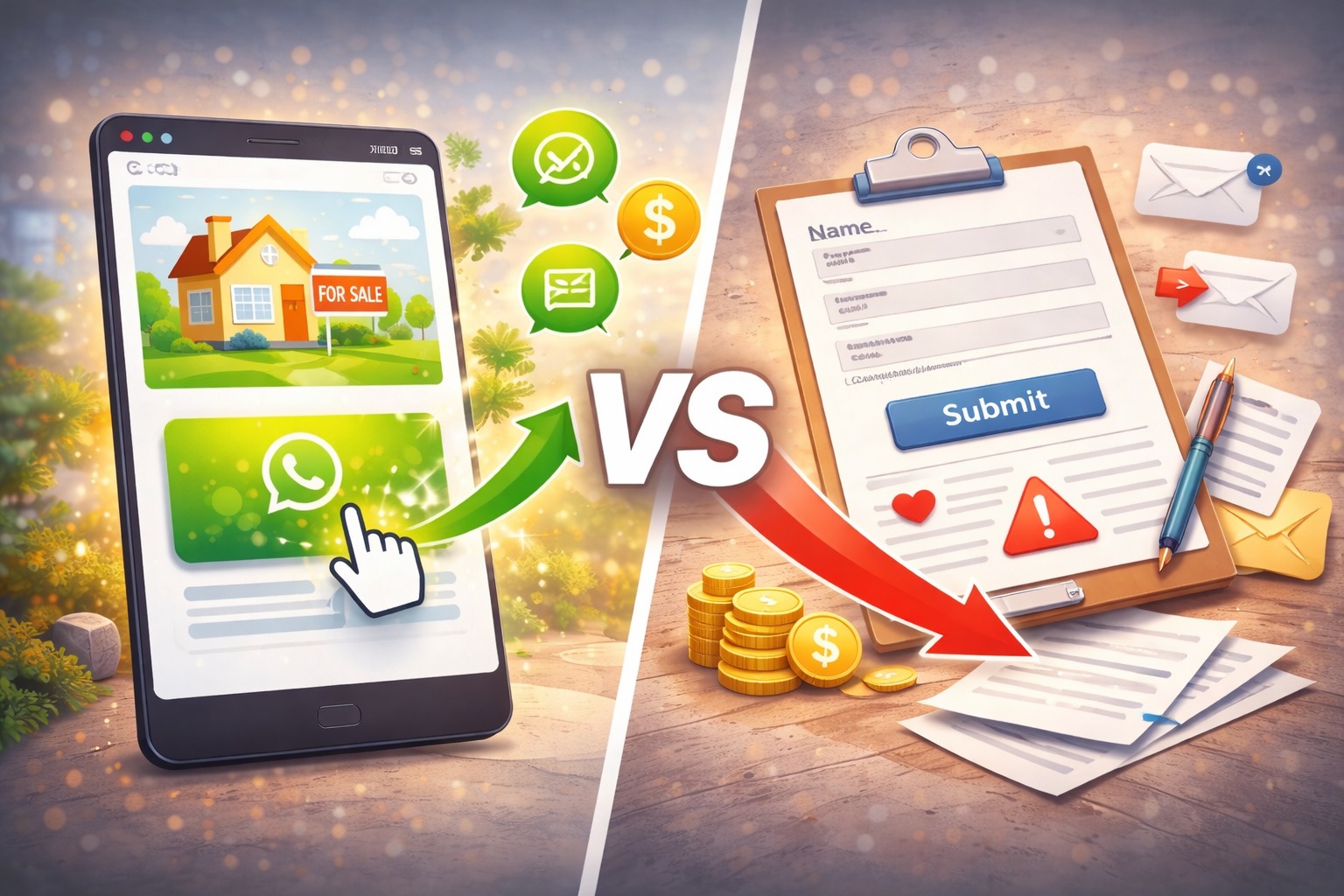
Click-to-WhatsApp ads often outperform traditional lead forms because they create immediate interaction. Instead of waiting for a follow-up email or phone call, prospects begin a conversation instantly after clicking the advertisement. This real-time interaction dramatically reduces friction in the early stage of the sales journey and allows businesses to engage prospects while their interest is still high.
Another reason WhatsApp leads converts better is the strong intent signal behind the action. When someone fills out a lead form, they may simply want access to a brochure or piece of content. When someone chooses to open a WhatsApp chat, they are actively starting a conversation with your business. This action demonstrates stronger buying intent and a higher level of engagement from the prospect.
Our analysis of service businesses running WhatsApp campaigns consistently showed higher conversion potential. Teams using proper qualification workflows observed 45–60 percent higher conversion rates compared to traditional forms. In addition, drop-off rates were significantly lower when businesses qualified prospects early in the conversation. Companies with structured qualification systems typically experienced 33–45 percent lead drop-off, while companies without such systems saw drop-off rates rise as high as 60–78 percent.
"Conversational marketing through WhatsApp generates 3.2x higher response rates compared to email-based follow-ups. According to Twilio's 2024 Customer Engagement Report, 72 percent of Indian consumers prefer WhatsApp for business communications over SMS or email."
— Twilio Customer Engagement Report, 2024
The conversational nature of WhatsApp also helps build trust faster than many other communication channels. Messaging feels informal and personal, similar to texting a friend. Prospects are more comfortable asking questions, sharing details, and continuing the conversation. This environment creates a stronger connection between the business and the potential customer.
However, the advantages of WhatsApp only appear when businesses respond quickly and manage conversations effectively. If responses are delayed or the conversation lacks structure, prospects often lose interest and move on to competitors who reply faster.
Setting Up Click-to-WhatsApp Ads for Maximum Lead Quality
Running successful click-to-WhatsApp campaigns requires more than simply selecting the "Messages" objective in Facebook Ads Manager. The quality of your leads depends heavily on the targeting strategy you use and how clearly your advertisement communicates who the offer is for.
The first step is connecting your WhatsApp Business account through Meta Business Suite. This allows Facebook and Instagram ads to open a WhatsApp conversation directly when users click the advertisement. Once the connection is established, the campaign should be optimized for conversations rather than simple clicks.
Audience targeting plays the most important role in determining lead quality. Businesses that use lookalike audiences based on existing customers typically generate higher-intent WhatsApp leads. These audiences allow Meta's algorithm to identify users who share similar behaviors and characteristics with people who have already purchased from your business.
Interest targeting should also be layered carefully to maintain relevance. Adding interests related to your service category can help the platform identify users who are actively researching solutions. At the same time, businesses should avoid extremely large audiences. When audience sizes exceed approximately 500,000 users, campaigns often attract casual browsers instead of serious buyers.
Targeting Strategies That Attract Buyers Instead of Browsers
The following targeting strategies can significantly improve the quality of WhatsApp leads:
• Retarget website visitors who spent at least three minutes on pricing or service pages. These visitors have already demonstrated strong interest in your offer.
• Create lookalike audiences based on existing customers or past conversions. These audiences often produce the highest-quality leads.
• Exclude interests related to job seekers or unrelated audiences to prevent irrelevant enquiries.
• Mention pricing ranges or service requirements in the ad copy to filter out unqualified prospects before they start a conversation.
Pre-qualifying prospects within the advertisement itself is a powerful technique. By clearly stating who the service is for and what investment level is required, businesses can attract more serious enquiries while reducing low-quality conversations.
| Targeting Strategy | Lead Quality Impact | Conversion Rate Uplift |
|---|---|---|
| Website Visitor Retargeting (3+ min on pricing) | Very High | 45–60% |
| Lookalike Audiences (existing customers) | Very High | 40–55% |
| Broad Interest Targeting (500K+ audience) | Low | 15–25% |
| Pre-qualified with pricing in ad copy | High | 35–48% |
The Lead Qualification System That Prevents Sales Team Overwhelm
Once a prospect starts a conversation on WhatsApp, the next step is qualification. Without structured qualification, sales teams often become overwhelmed by large numbers of conversations that lead nowhere. Automated qualification systems help solve this challenge by filtering prospects early and identifying those most likely to convert.
According to industry research, automated qualification chatbots can reduce unqualified leads by 30–45 percent while also shortening sales cycles by 20–30 percent. The key to successful qualification is asking questions in the correct order so the conversation feels natural instead of interrogative.
"Businesses using AI-powered lead qualification on WhatsApp reported a 38 percent reduction in sales cycle duration and 42 percent higher close rates. Kraya AI's platform integrates WhatsApp qualification workflows, helping teams automate repetitive questions while maintaining conversational quality."
— Kraya AI Customer Success Data, 2024
The first step is understanding the prospect's specific problem or goal. When businesses start the conversation with context, prospects are more willing to engage and share information. A simple message acknowledging the reason for the enquiry can immediately establish rapport and set the tone for the discussion.
After identifying the prospect's need, the next step is budget alignment. Rather than asking for an exact budget figure, businesses should introduce a range that reflects typical investments for the service. This allows prospects to confirm whether the offer fits within their expectations without feeling pressured.
Finally, timeline questions help determine whether the lead is actively considering a purchase or simply researching options. Understanding when the prospect intends to move forward helps sales teams prioritize conversations more effectively.
This structured approach reflects a broader sales reality: many leads are lost not because they lack interest, but because businesses fail to respond quickly and follow up consistently.
WhatsApp Lead Scoring Framework
A simple lead scoring model can help teams prioritize conversations and focus their attention on the most promising prospects.
• Engagement speed indicates how quickly a prospect replies after receiving a message. Faster replies often signal stronger interest.
• Response quality reflects how detailed the prospect's answers are. Longer responses usually show higher engagement.
• Qualification completeness measures whether the prospect has confirmed their need, budget range, and timeline.
By combining these three signals, businesses can quickly determine which leads require immediate attention from the sales team.
Also read: AI Lead Qualification
Sales Team Integration and Lead Handoff Best Practices
After a lead has been qualified, the next challenge is transferring the conversation to the sales team without losing momentum. Many businesses struggle at this stage because the transition between marketing and sales is unclear or slow.
Speed plays a critical role in WhatsApp conversions. According to industry analysis, responding within five minutes can increase conversion rates by 60–78 percent compared to responses delayed by thirty minutes or longer. Because messaging feels immediate and personal, prospects expect fast replies. When responses take too long, the conversation often shifts to competitors.
To maintain conversation momentum, businesses should implement structured handoff messages that clearly inform the prospect what will happen next. For example, once a lead is qualified, the system can notify the prospect that a specialist from the sales team will continue the conversation shortly.
Response Time Impact on Conversion Rates
Several practices help sales teams maintain strong response times:
• Use automated acknowledgement messages to confirm that the enquiry has been received.
• Assign qualified leads to the appropriate sales representative as quickly as possible.
• Keep messages concise and easy to read, typically two to three sentences per message.
• Use voice notes when explanations become complex, as they feel more personal and conversational.
Maintaining a fast and structured response process ensures that qualified leads remain engaged while the sales team prepares to guide them toward the next step.
Also read: Where Do Most Sales Conversations
Related: Click-to-WhatsApp Ads: Lead Follow-Up Strategy That Converts
See also: WhatsApp for B2B Sales: The Complete Playbook
Tracking and Optimizing WhatsApp Ad Performance for Sales Results
Many businesses focus on the wrong metrics when evaluating WhatsApp campaigns. Message volume and conversation counts are vanity metrics that don't reflect actual business value. The metrics that matter are those directly connected to revenue.
Related: How a Small Sales Team Should Set Up WhatsApp to Handle 50+ Leads a Day
Related: WhatsApp Sales Follow-Up Automation: How to Stop Missing Leads and Close More Deals
```
Written by
Founder & CEO, Kraya AI
Abhyank Srinet is the Founder and CEO of Kraya AI, a WhatsApp CRM and sales automation platform serving 600+ Indian businesses. He is also the founder of MiM-Essay, one of India's largest Masters admissions consulting firms.
More from Abhyank