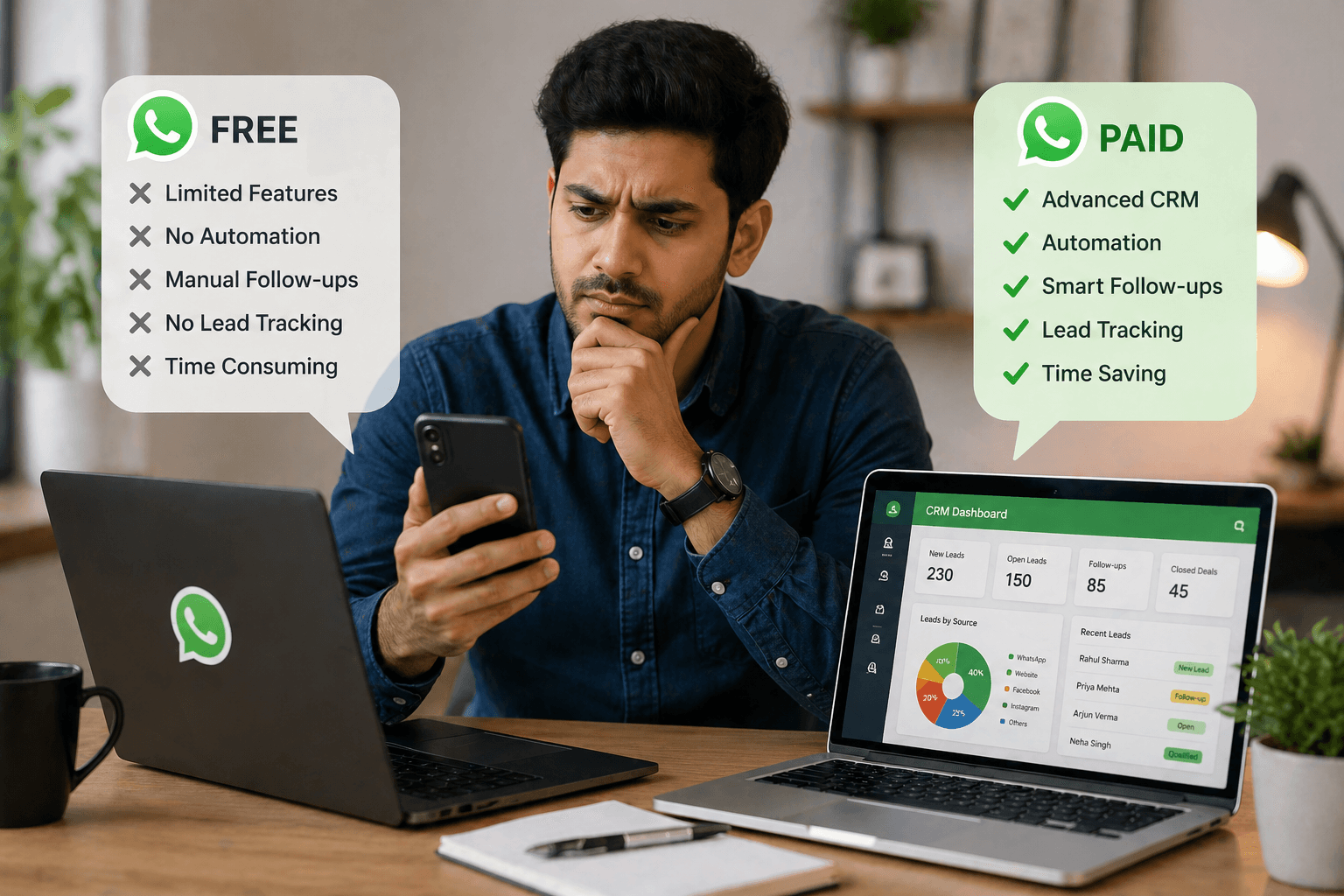
Click to WhatsApp Ads Lead Follow-Up: The Complete System to Turn Conversations into Consistent Sales
 Abhyank Srinet
Most businesses today are getting leads from ads. People are clicking, opening WhatsApp, and starting conversations. On the surface, everything looks perfect — traffic is coming in, messages are coming in, and conversations are happening. But when you look at actual results, something feels off. Leads message you, ask for details, and then disappear. Some say "I'll check later," some go silent, and some move to competitors who handled the conversation better. This is where most businesses quietly lose revenue without even realizing it.
"According to WhatsApp Business insights, 56% of businesses using WhatsApp for sales report that lead drop-off occurs after initial contact due to poor follow-up systems, not poor lead quality."
— WhatsApp Business Report 2024
The real problem is not lead generation it's what happens after the lead messages you. This is why click to whatsapp ads lead follow-up becomes the most important part of your funnel. Ads bring attention, but follow-ups create decisions. Without a proper system, even high-intent leads get wasted. But when your follow-up is structured and consistent, even average leads can turn into paying customers. In this guide, we'll break down the complete system step by step, in a simple and practical way you can actually use.
Why Click to WhatsApp Ads Alone Do Not Guarantee Conversions
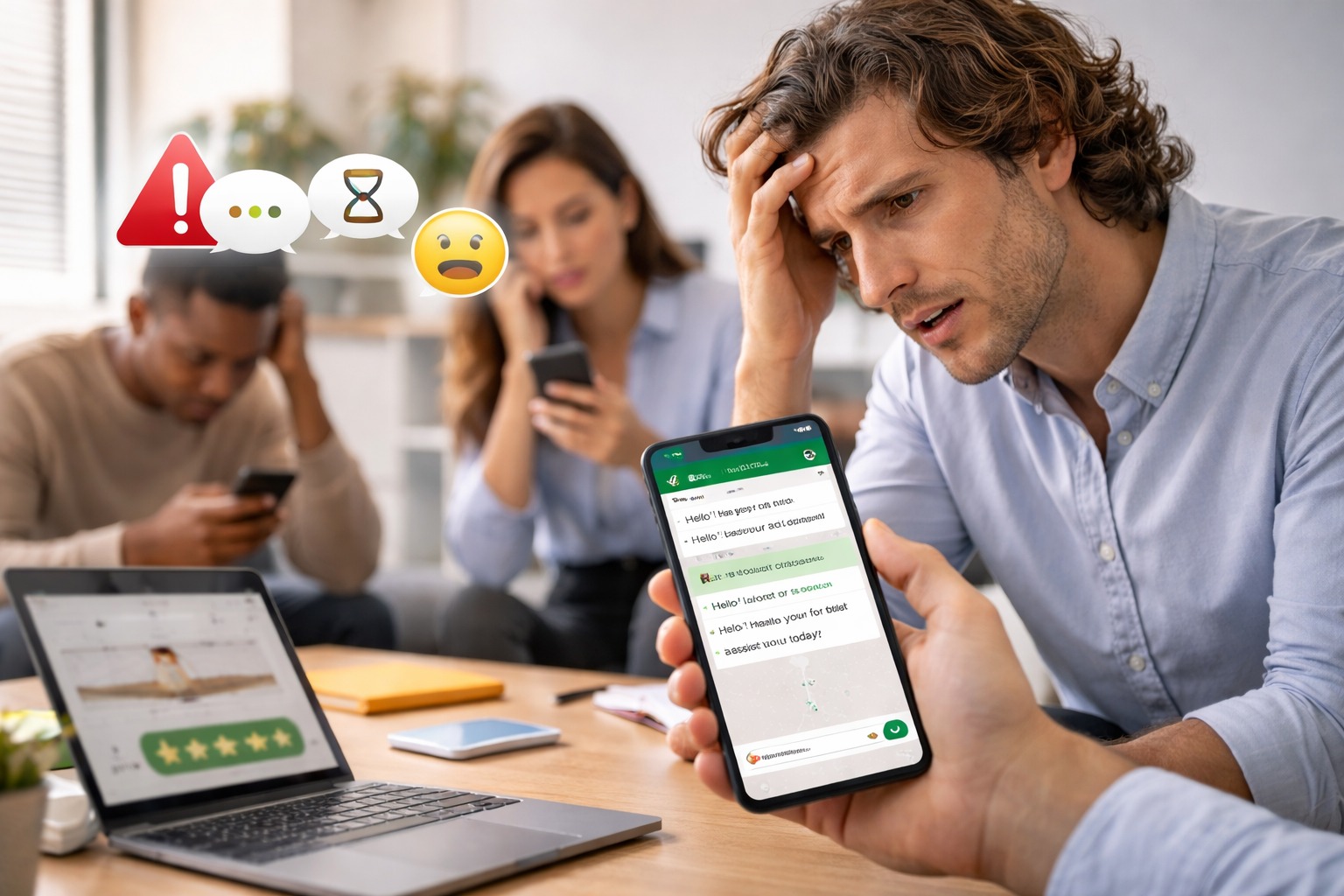
Click to WhatsApp Ads feel powerful because they remove friction. Instead of filling long forms, users can directly message you. This makes it easier for them to take action.
But here is the truth: starting a conversation is not the same as closing a sale.
Most businesses assume that once a lead messages them, the job is done. But in reality, that is just the beginning.
What Actually Happens After the Click
Let's look at a real-world pattern:
A user clicks your ad
They open WhatsApp and send a message
You reply after some time
They ask a question
You send details or pricing
They stop replying
This happens every day across industries — real estate, clinics, edtech, services, fitness, and more.
Why This Happens
It is not because the lead is bad. It is because the system is weak.
Here are the hidden reasons:
The reply is delayed, so interest drops
The conversation has no structure
Too much information is shared too early
No follow-up is done after sending details
No reminders are sent
Leads are not tracked properly
So even though the ad is working, the conversion system is broken.
This is why click to whatsapp ads lead follow-up is not just a tactic — it is the core system that decides your success.
What Is Click to WhatsApp Ads Lead Follow-Up (In Simple Terms)
Click to WhatsApp Ads lead follow-up is the process of continuously guiding a lead after they message you. It is not about sending one reply and waiting. It is about creating a structured journey for the lead.
Instead of reacting randomly, you guide the conversation step by step.
What a Strong Follow-Up System Includes
A proper system has:
Instant first response
Smart qualification questions
Structured follow-up messages
Timely reminders
Recovery for silent leads
Long-term nurturing
This transforms WhatsApp from a chat tool into a sales system.
Why Follow-Ups Are the Real Conversion Engine
Most businesses think ads are the most important part of sales. They focus on creatives, targeting, and budgets. But the truth is, ads only bring attention.
Follow-ups create conversions.
"Studies show that 80% of sales require 5+ follow-ups, yet 44% of salespeople give up after just one follow-up attempt. This gap is where revenue is lost."
— HubSpot Sales Research 2024
How People Actually Buy
People don't buy instantly because:
They want to compare options
They need clarity
They get busy
They delay decisions
They forget
Because of this, follow-ups become critical.
Reality of Sales Behavior
Most leads need multiple touchpoints
Many leads reply after hours or days
Silent leads are not rejected, just delayed
Consistent follow-up increases trust
This means your follow-up system decides whether you win or lose the deal.
| Follow-Up Type | Timing | Purpose | Expected Conversion Lift |
|---|---|---|---|
| Instant First Response | Within 2 minutes | Capture immediate interest | +35% |
| Qualification Follow-Up | Within 1 hour | Understand lead needs | +28% |
| Information Follow-Up | After 6-12 hours | Guide decision-making | +42% |
| Reminder Follow-Up | Before scheduled action | Prevent no-shows | +31% |
| Silent Lead Recovery | After 48-72 hours | Re-engage dormant leads | +18% |
Step 1: Instant Response — Capture the Moment
When a lead messages you, they are at their highest intent level. They are curious, interested, and actively exploring options. This is the best moment to engage. According to industry data, responding within 2 minutes increases conversion probability by 35% compared to responding after 30 minutes.
If you delay your reply, you lose that momentum.
Why Speed Matters
Leads message multiple businesses
The fastest reply gets attention
Delay reduces excitement
Slow response increases drop-off
Even a small delay can change the outcome.
What an Ideal First Reply Looks Like
Your first reply should be:
Quick
Simple
Helpful
Open-ended
Example:
"Hey! Happy to help. Can you tell me what exactly you're looking for?"
This keeps the conversation alive and invites the lead to respond.
Step 2: Lead Qualification — Understand Before You Pitch
Most businesses make a common mistake. They start selling immediately. They send pricing, brochures, or long messages without understanding the lead.
This creates confusion.
Instead, you should first qualify the lead.
What Is Qualification?
Qualification means asking simple questions to understand:
What the lead wants
When they want it
How serious they are
What their preferences are
Example Questions
"What exactly are you looking for?"
"When are you planning to start?"
"Do you have any specific preference?"
"Want me to suggest the best option for you?"
Why Qualification Works
The lead feels understood
You avoid irrelevant information
The conversation becomes natural
You increase trust
This step makes everything else easier.
Step 3: Structured Follow-Up Sequences — Where Most Sales Happen
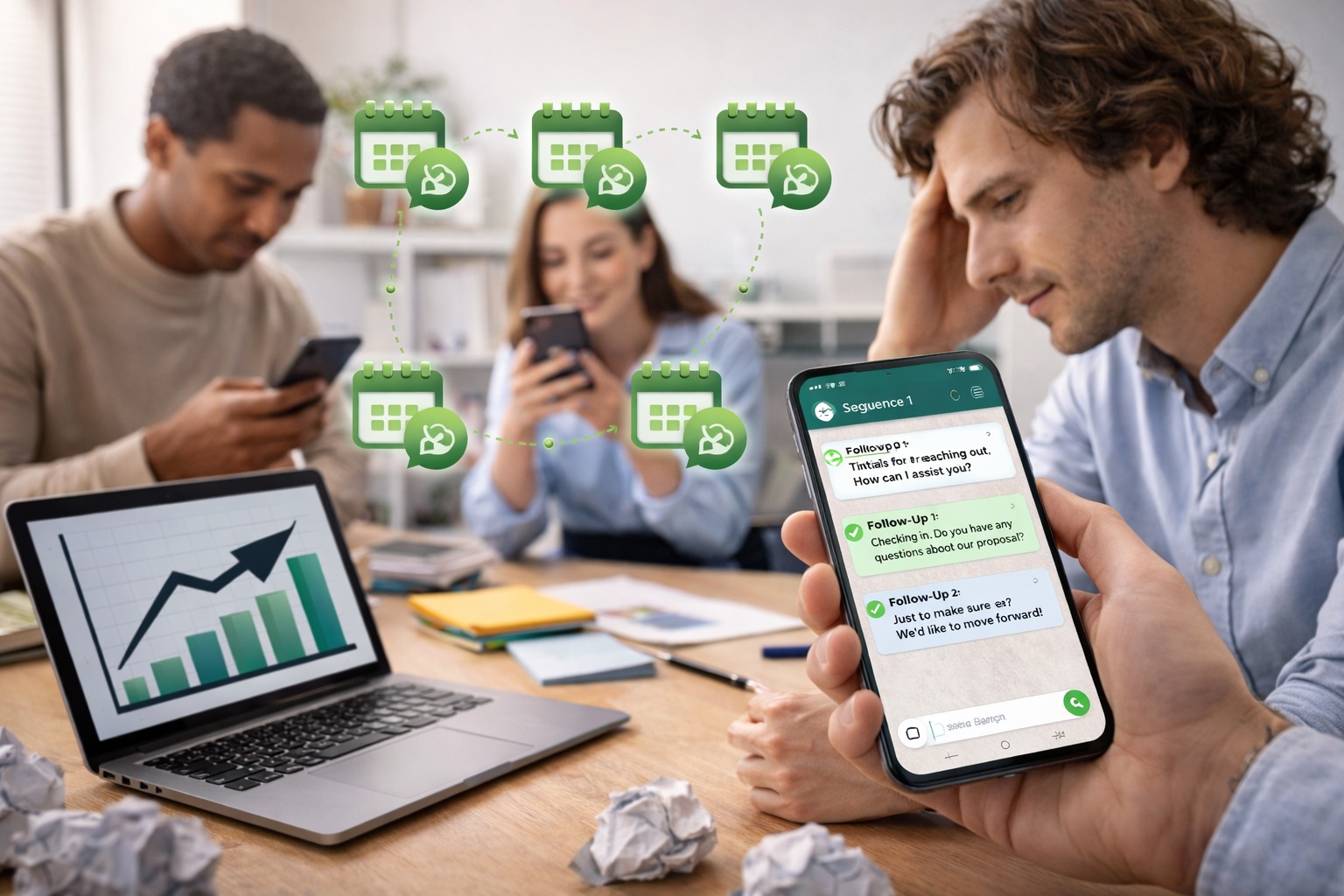
This is the most important part of the system.
Most businesses fail here because they depend on memory. They follow up randomly or not at all. This leads to massive revenue loss. According to WhatsApp Business data, 67% of leads that receive structured follow-ups convert within 30 days, compared to just 18% with ad-hoc follow-ups.
Follow-ups should be structured, not random.
Types of Follow-Ups You Must Have
1. New Lead Follow-Up
Keeps the conversation moving after the first reply.
Example: "Just checking — want me to help you with the next step?"
2. Information Follow-Up
After sending details, guide them again.
Example: "Did you get a chance to check the details?"
3. Decision Follow-Up
When the lead is close to deciding.
Example: "Want me to help you finalize this?"
4. Reminder Follow-Up
Before demos, calls, or visits.
Example: "Your session is today — sharing details again."
5. No-Show Recovery
If they miss a scheduled step.
Example: "Missed today — want me to reschedule?"
6. Silent Lead Recovery
When they stop replying.
Example: "Still exploring? Happy to guide you."
Why This System Works
Keeps engagement consistent
Builds trust over time
Reduces drop-offs
Increases conversion rate
This is where most of your sales actually happen.
Step 4: WhatsApp CRM — Bring Structure to Conversations
"Businesses using WhatsApp CRM systems report 3x higher conversation completion rates and 2.4x faster sales cycles compared to manual WhatsApp management."
— Gartner CRM Trends Report 2024
As your leads increase, managing chats manually becomes difficult. Messages get buried. Leads get forgotten. Follow-ups are missed. Modern WhatsApp CRM platforms like Kraya AI automate this process and ensure consistency at scale.
This is where a simple CRM system becomes necessary.
Basic CRM Flow
New Lead
Qualified
Engaged
Ready to Convert
Converted
Long-term Nurture
Related: WhatsApp Sales Follow-Up Automation: How to Stop Missing Leads and Close More Deals
Related: How to Build a WhatsApp Sales Pipeline
Related: How to Qualify Leads on WhatsApp: The Complete System to Turn Enquiries into High-Intent Buyers
Related: How to Manage Inbound Leads Effectively: A Step-by-Step System
Related: What Is WhatsApp CRM? WhatsApp CRM vs Traditional CRM for Indian SMBs
Related: How to Follow Up on WhatsApp Without Getting Blocked or Annoying Your Leads
Related: How AI Sales Follow Up Automation Changes the Follow-Up Process Step by Step
Related: Automated Follow-Up Sequences: How to Build a Sales System That Closes More Deals
Related: How to Use WhatsApp for Sales Effectively Without Sales Follow Up Problems
Related: Manual Follow-Ups vs Automated WhatsApp Follow-Ups: What Works Better for Sales
Related: How to Prevent WhatsApp From Getting Banned: Complete Guide
Related: What Happens When Follow-Ups Depend on Memory
Frequently Asked Questions

Written by
Founder & CEO, Kraya AI
Abhyank Srinet is the Founder and CEO of Kraya AI, a WhatsApp CRM and sales automation platform serving 600+ Indian businesses. He is also the founder of MiM-Essay, one of India's largest Masters admissions consulting firms.
More from Abhyank