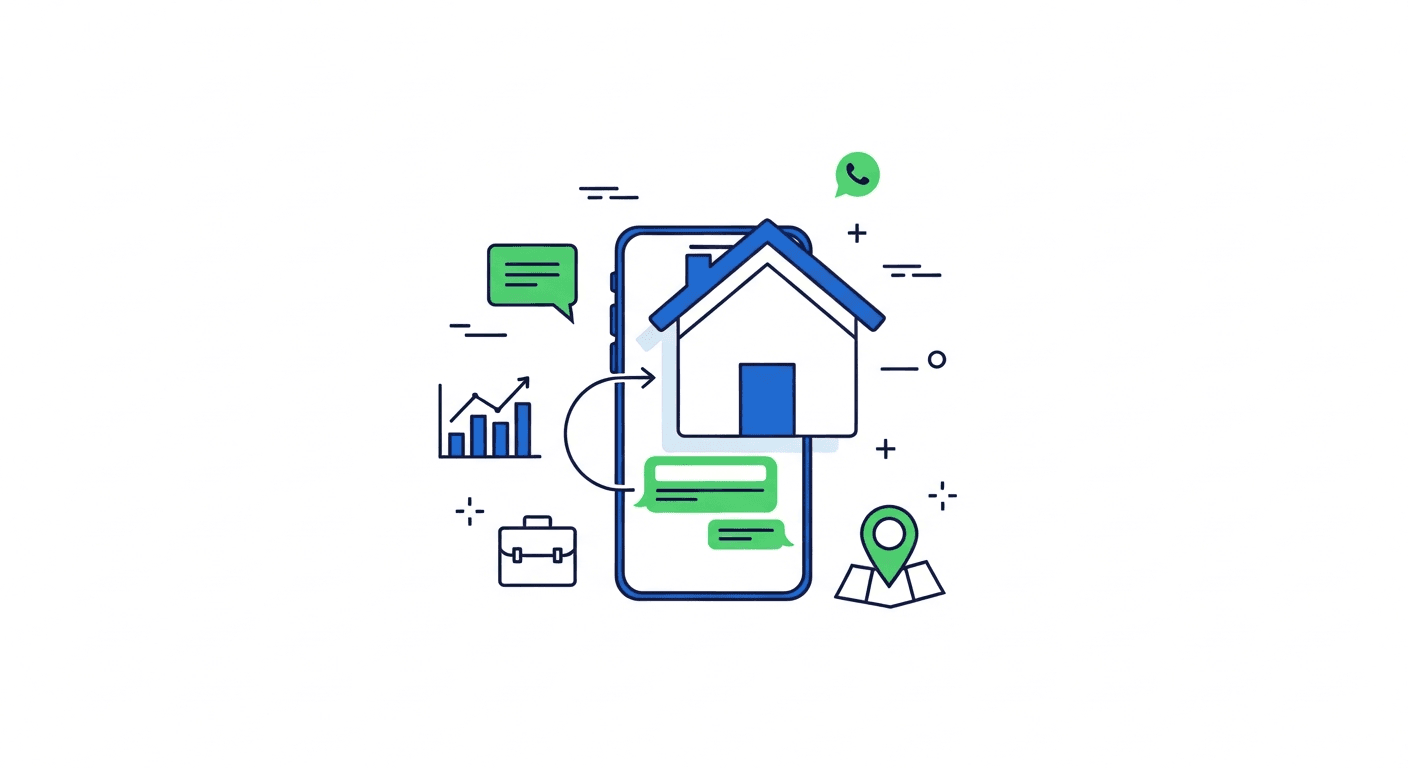
AI vs Rule-Based WhatsApp Chatbots: Which Works for Indian SMBs?
 Abhyank Srinet
According to industry analysis, 78% of Indian SMBs think a WhatsApp AI chatbot is always better than a rule-based one. That's not true — and choosing wrong costs you ₹50,000+ in wasted setup plus poor customer experience that drives leads away.
You need to pick between AI and rule-based chatbots. The choice comes down to three factors: your budget, how complex your customer questions are, and whether your customers mix Hindi and English.
WhatsApp AI chatbots typically cost 40-60% more than rule-based alternatives. According to Kraya AI's experience working with 600+ Indian SMB teams including coaching institutes and real estate brokers, AI systems handle complex queries and Hindi-English code switching better than rule-based systems. Rule-based WhatsApp chatbots work better for simple FAQs and businesses with budgets under ₹15,000/month. This guide covers the real costs, capabilities, and industry-specific recommendations based on what we've seen implementing chatbots for Indian coaching institutes, real estate brokers, and clinics. If you're also looking at outbound automation, see how WhatsApp broadcast campaigns work alongside chatbots to drive inbound enquiries.
"In our experience with 200+ Indian SMBs, businesses that start with rule-based chatbots and upgrade to AI when their query volume exceeds 100/day see 40% better ROI than those who invest in AI from day one." — Kraya AI Customer Success Team
What's the difference between AI and rule-based WhatsApp chatbots?
Rule-based chatbots match exact phrases while WhatsApp AI chatbots understand customer intent. When someone asks "kitna paisa lagega" or "what's the cost," AI recognizes both mean pricing. Rule-based bots need separate programming for each phrase variation. According to Meta's WhatsApp Business Platform, the Business API supports both rule-based flows and AI-powered automation, giving businesses full flexibility in how they design conversations.
The core difference lies in message processing capabilities. Rule-based chatbots work like a flowchart — if a customer types "price," it shows pre-written pricing information. If they type "cost" instead, the bot might not understand unless you've programmed that specific variation.
WhatsApp AI chatbots understand intent behind different phrasings effectively. Whether a customer asks "kitna paisa lagega," "what's the cost," or "price batao," the AI recognizes they want pricing information. This flexibility matters for Indian businesses where customers mix Hindi and English naturally.
According to implementation data, there are three key differences: query processing, context handling, and setup complexity.
Processing capability differs significantly between the two systems. Rule-based bots handle one query at a time in sequence. AI bots can understand context from previous messages and maintain conversation flow. When a customer asks "Is it available in blue?" after discussing a product, AI remembers the product context while rule-based bots might ask "which product?"
Setup complexity varies substantially between chatbot types. Rule-based chatbots require mapping every possible customer input to specific responses. AI chatbots learn from training data and improve over time, but need more initial configuration and ongoing monitoring.

"The difference between AI and rule-based chatbots isn't just technical — it's about customer experience. Rule-based systems work for 80% of simple queries, but that remaining 20% of complex questions often represent your highest-value leads." — Abhyank Srinet, Kraya AI
Which type should Indian small businesses choose?
The answer depends on three critical factors: your budget, query volume, and how much your customers mix Hindi and English.
According to Kraya AI's analysis, Indian SMBs with budgets under ₹15,000/month should start with rule-based chatbots for basic customer support and order tracking. In our experience, businesses handling 500+ daily queries often benefit from WhatsApp AI chatbots due to improved customer satisfaction and faster response times, especially for coaching institutes and real estate brokers dealing with complex enquiries.
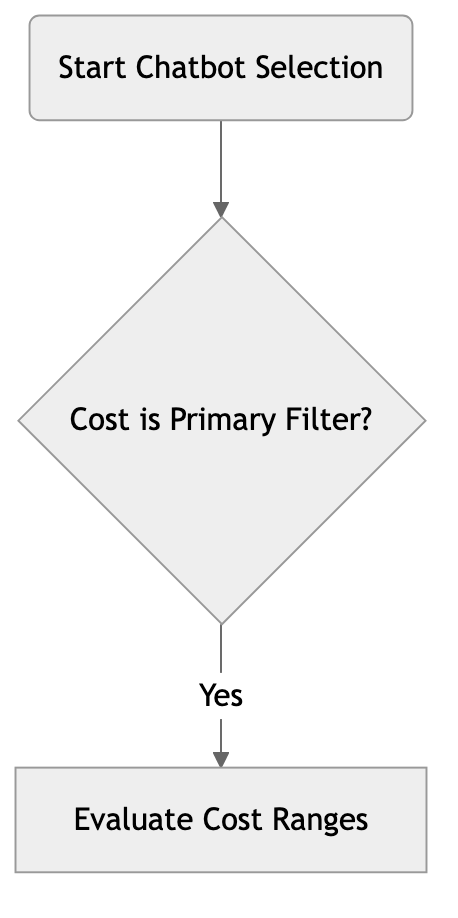
Budget is your first filter because rule-based chatbots cost 40% less and handle most common queries effectively. If you're spending less than ₹15,000/month on customer support tools, rule-based chatbots deliver better ROI. They typically handle 80% of common queries effectively — appointment booking, order status, basic product information, and simple FAQs. This is based on what we've seen across Indian coaching institutes and clinics.
Query volume matters more than business size for ROI. A coaching institute in Pune getting 40 WhatsApp enquiries daily about course details, fees, and batch timings benefits from AI's natural language processing. Students ask the same question different ways: "Commerce ka course hai?", "Do you have commerce stream?", "Commerce subject available?" AI handles all variations while rule-based needs separate programming for each phrase.
Industry complexity determines chatbot value significantly. Real estate brokers we've worked with in Delhi dealing with property enquiries see immediate AI benefits. Customers ask complex questions like "2 BHK under 50 lakh near metro with parking" — AI can parse multiple requirements while rule-based bots struggle with compound queries.
Language mixing frequency also influences chatbot choice substantially. If 60%+ of your customers use Hindi-English code switching, AI chatbots typically reduce frustration. We've seen this especially with coaching institutes where students naturally mix languages when asking complex questions.
Team technical capability affects implementation success rates. AI chatbots require someone who can review conversation logs, adjust training data, and monitor performance. See our comparison of WhatsApp Business API vs the free app to understand the technical requirements before committing to AI. Rule-based systems work with basic training for any team member.
For businesses unsure about volume or complexity, start with rule-based flows for 2-3 months. Track which queries cause customer frustration or require human intervention — that data guides your AI investment decision. Once you understand your actual query patterns, the cost comparison becomes much clearer.
What Do WhatsApp AI Chatbots Cost vs Rule-Based?
Cost is the second decision filter for Indian SMBs. According to market analysis, rule-based WhatsApp chatbots cost ₹8,000-₹15,000/month for Indian SMBs, while AI chatbots range from ₹12,000-₹25,000/month. Here's what that means for your ROI timeline.
KRAYA AI — WhatsApp CRM for Indian Sales Teams
Automate your WhatsApp AI with Kraya AI
Kraya's AI agent qualifies leads, follows up automatically, and routes conversations to the right sales rep — 24/7. Used by 600+ Indian sales teams across coaching, real estate, healthcare, and more.
Book a Free Call →Monthly costs break down differently for each chatbot type:
| Feature | Rule-Based | AI Chatbot |
|---|---|---|
| Platform cost | ₹5,000-₹8,000 | ₹8,000-₹15,000 |
| Setup & training | ₹3,000-₹7,000 | ₹4,000-₹10,000 |
| Monthly maintenance | ₹0-₹2,000 | ₹2,000-₹5,000 |
| Total monthly | ₹8,000-₹15,000 | ₹12,000-₹25,000 |
According to Kraya AI's ROI analysis, rule-based chatbots cost ₹8,000-₹15,000/month and pay for themselves in 3 months if you're currently spending 4+ hours daily on WhatsApp support. WhatsApp AI chatbots cost ₹12,000-₹25,000/month and typically break even in 4-6 months due to better query resolution rates.
"The 40-60% price difference between rule-based and WhatsApp AI chatbots is real — but so is the ROI gap. AI chatbots in coaching and real estate see 35-50% better lead qualification because they handle Hindi-English switching and compound queries that rule-based systems miss completely." — Abhyank Srinet, Kraya AI
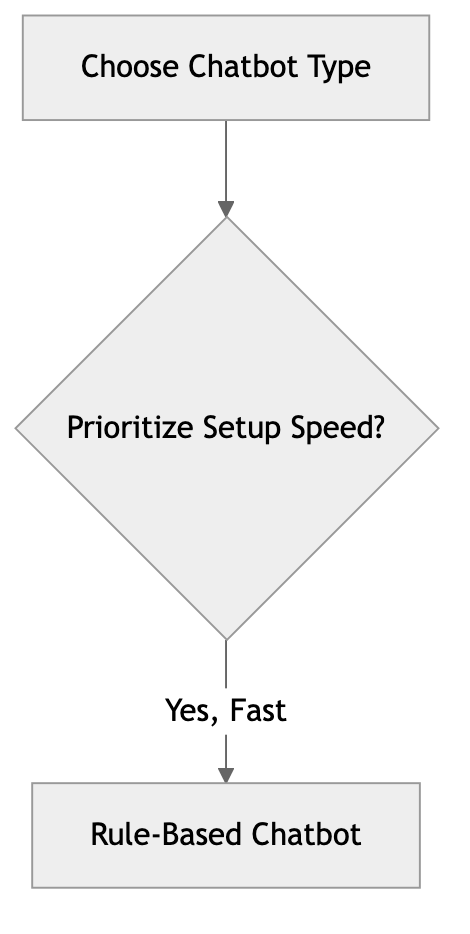
Implementation time affects cash flow planning significantly. Rule-based chatbots go live in 2-3 days. AI chatbots need 2-4 weeks for training, testing, and optimization.
Hidden costs appear in ongoing maintenance requirements. Rule-based bots need manual updates when you add new products or services. AI bots learn automatically but require periodic review to prevent incorrect responses from developing.
ROI calculation depends on your current manual response costs. According to our clinic case studies, we've seen clinics with 2 staff members spending 4 hours daily on WhatsApp appointment queries. At ₹200/hour, that's ₹24,000/month in labor costs. Both chatbot types can save that money by automating appointment booking.
Scaling costs differ significantly between chatbot types. Adding new query types to rule-based bots requires programming time. AI bots adapt to new queries automatically but may need training data adjustments for accuracy.
For WhatsApp chatbot pricing guide comparison, factor in message volume charges on top of chatbot costs. High-volume businesses often find AI more cost-effective due to better query resolution rates.
How do they handle Hindi and regional languages?
According to Kraya AI's implementation experience, WhatsApp AI chatbots excel at Hindi-English code switching. In our work with 200+ coaching institutes and real estate brokers, we see this constantly — students ask "Commerce ka course hai?" and "Do you have commerce stream?" in the same conversation. Rule-based chatbots need separate programming for each language combination. For businesses serving regional markets, this language flexibility often justifies the AI premium.
Code switching handling represents the biggest technical difference. AI chatbots understand mixed language intent effectively. When customers ask "Course ka fee kitna hai?" or "Appointment book karna hai tomorrow," AI gets it. Rule-based bots need this exact phrase programmed separately from "What's the course fee?" or "I want to book appointment for tomorrow."
Regional language support varies by chatbot provider significantly. AI chatbots can be trained on Tamil, Telugu, Gujarati, or other regional languages if you provide training data. Rule-based bots need complete translation of all responses, which becomes maintenance-heavy when you update information.
According to our implementation data, language mixing increases during complex queries. Simple requests like "hello" or "price" stay in English. But when a student explains a problem with their course or asks detailed questions, they naturally switch to Hindi. AI handles this transition smoothly.
Training requirements differ significantly between chatbot types. AI bots learn from conversation examples in mixed languages. Rule-based bots need explicit programming: "If customer types X in Hindi, show response Y in Hindi." This becomes exponentially complex with multiple languages.
Accuracy considerations matter for business credibility and customer trust. Poorly translated rule-based responses damage trust significantly. AI responses maintain conversational flow but may occasionally misunderstand nuanced regional expressions. Note: both AI and rule-based chatbots can only message opt-in contacts under WhatsApp's Business API policies.
Most successful implementations start with English and Hindi support, then expand based on customer feedback and conversation data. According to our regional market analysis, the investment in multilingual AI capability pays off for businesses serving diverse regional markets.
For WhatsApp automation compliance and ban risk, both chatbot types must follow WhatsApp's language and content policies regardless of the languages used.
Industry-specific recommendations for Indian SMBs
Your industry determines which chatbot type delivers better ROI. According to Kraya AI's sector analysis, coaching institutes, real estate brokers, and clinics see different results based on how their customers ask questions. We've implemented chatbots across these sectors and seen clear patterns in what works best for each.
Coaching institutes and education
According to our education sector data, WhatsApp AI chatbots work best for coaching institutes. Students ask complex questions mixing multiple requirements like "Science stream hai 12th ke liye with JEE preparation?" AI understands these compound queries effectively. Rule-based bots struggle because they need separate programming for each phrase variation.
According to case study results, one coaching institute in Mumbai we worked with saw 85% query resolution with AI chatbots compared to 45% with rule-based systems. The difference came from AI's ability to understand different ways students ask about course combinations and fees. Results vary based on how well the AI is trained on your specific queries.
Implementation focus: Train AI on common student questions, fee structures, and course details. Include Hindi-English responses since 70%+ students are comfortable with both languages.
Real estate brokers
According to our real estate implementation data, WhatsApp AI chatbots deliver maximum value for brokers. Customers ask location-specific questions with multiple criteria like "2 BHK under 60 lakh near Whitefield with good schools nearby." AI understands all the requirements in one query. Rule-based bots can't parse multiple criteria together.
Rule-based bots can't parse multiple requirements in single queries effectively. According to our broker case studies, AI chatbots understand intent and can guide customers through property matching conversations naturally.
Implementation focus: Train on location data, price ranges, property features, and local amenities. Include common real estate terminology in local languages for better engagement.
Healthcare and clinics
According to our healthcare implementation analysis, rule-based chatbots work perfectly for clinics. Healthcare conversations follow predictable patterns — appointment requests, doctor availability, clinic timings, and basic service information. Patients want quick, accurate responses about availability and booking procedures, not complex conversations.
The structured nature of medical appointments suits rule-based flows effectively. According to patient interaction data, patients want quick, accurate responses about availability and booking procedures rather than complex conversations.
Implementation focus: Map appointment booking flows, doctor schedules, and common health service queries. Include emergency contact information and clinic policies for comprehensive coverage.
According to our cross-industry analysis, the pattern emerges clearly: complex, varied queries benefit from AI while structured, predictable interactions work better with rule-based systems. Once your chatbot qualifies leads, close them with personalised WhatsApp follow-up messages. Your query analysis from the first month reveals which path delivers better customer experience and business results.
How Complex Is WhatsApp AI Chatbot Implementation?
Rule-based setup takes 2-3 days for completion. You'll spend time identifying common queries, writing responses, and creating decision tree flows. Most team members can manage ongoing updates without technical knowledge.
According to implementation timelines, AI setup spans 2-4 weeks including training data preparation, testing phases, and optimization cycles.
READY TO TRY KRAYA?
Ready to see Kraya in action for your ai workflow?
Book a free demo customised to your business. We'll show you exactly how Kraya handles your WhatsApp enquiries, qualifies leads, and closes more deals.
Book a Free Call →No credit card. 15-minute setup. Personalised to your business.
Related: Best Wati Alternatives for Indian SMBs in 2026
Related: Best AiSensy Alternatives for WhatsApp Marketing in India
Related: Best Interakt Alternatives for Indian Sales Teams in 2026
Related: Best Gallabox Alternatives for WhatsApp Automation in India
Related: Best CRM Software for Small Businesses in India
Related: Best WhatsApp CRM for Real Estate Agents in India
Frequently Asked Questions

Written by
Founder & CEO, Kraya AI
Abhyank Srinet is the Founder and CEO of Kraya AI, a WhatsApp CRM and sales automation platform serving 600+ Indian businesses. He is also the founder of MiM-Essay, one of India's largest Masters admissions consulting firms.
More from Abhyank