WhatsApp Chatbot for Business: Complete Guide 2026
 Abhyank Srinet
A WhatsApp chatbot can solve the biggest problem for your coaching institute: you get 40 enquiries a day, but you're losing 60% because you can't respond fast enough. According to Harvard Business Review research, response timing directly impacts lead quality. While you're in a meeting or handling one student, three more prospects have already messaged your competitor who replied instantly.
WhatsApp business chatbots solve this exact problem. They're automated messaging systems that handle customer conversations, qualify leads, and book appointments through the WhatsApp Business API. For Indian small businesses managing 50+ daily WhatsApp enquiries, chatbots respond instantly while your sales team focuses on closing deals instead of typing the same answers repeatedly.
According to Kraya's deployment data across 100+ Indian coaching institutes and real estate brokers, we've seen response times drop from hours to seconds. Conversion rate improvements typically range from 15-40% depending on how well the chatbot is set up and your existing sales process. This guide covers the complete setup process, exact pricing breakdown, and real ROI data from businesses already using automated WhatsApp sales systems.
"Businesses that respond to WhatsApp enquiries within 5 minutes are 21x more likely to qualify the lead than those who respond in 30 minutes or more." — Harvard Business Review, Lead Response Study
What is a WhatsApp Business Chatbot?
A WhatsApp chatbot (also called a WhatsApp business chatbot) is an automated messaging system that responds to customer questions through the WhatsApp Business API. It handles common enquiries like fees, batch timings, and location without your team typing responses. When someone messages asking about course fees, the chatbot responds immediately — similar to how a well-crafted WhatsApp greeting message sets the right first impression. The chatbot continues that conversation with qualifying questions, working 24/7 even during lunch breaks or weekends.
The chatbot works through Meta Business's official API, not the regular WhatsApp Business app. See our breakdown of WhatsApp Business API vs the free app to understand when the upgrade makes sense. This means unlimited automation capabilities, integration with your CRM systems, and the ability to handle thousands of conversations simultaneously.
According to our implementation experience with Indian businesses, this translates to capturing leads that would otherwise slip away during lunch breaks, weekends, or busy periods. A travel agency in Mumbai we worked with went from missing 40% of weekend enquiries to capturing 95% through automated responses.
But which type of chatbot fits your business model and budget?
3 Types of WhatsApp Chatbots for Indian Businesses
Kraya has worked with 50+ coaching institutes across Pune, Delhi, and Bangalore implementing these three chatbot types. Here's what we've learned about which works best for different business sizes and complexity levels.
Rule-Based Chatbots
Rule-based chatbots respond to specific keywords with pre-written messages. When a student types "fees," the bot automatically sends your fee structure. When they type "location," it shares your address and directions. These work well for coaching institutes with standard courses and fixed pricing.
According to our experience with 50+ coaching institutes, rule-based bots typically handle 70-85% of common questions — things like fees, batch timings, and location. The remaining 15-30% usually need human judgment for complex questions about course content or admission eligibility. Setup takes 2-3 days, costs ₹5,000-₹15,000, and the limitation is they can't handle complex conversations or unexpected questions.
Flow-Based Chatbots
These guide customers through structured conversation paths using buttons and quick replies. A real estate chatbot might ask: "Looking for 1BHK, 2BHK, or 3BHK?" then follow up with budget and location questions based on the response.
Flow-based systems suit businesses with multiple service tiers or complex qualification needs. According to our experience with Indian coaching institutes, flow-based bots typically convert 15-35% better than rule-based bots because they actively guide prospects toward booking calls. Results vary based on your industry and how well the flows match your actual sales process.
AI-Powered Chatbots
These understand natural language and can handle complex, unscripted conversations. They learn from each interaction and provide contextual responses that feel human-like.
AI chatbots cost ₹25,000-₹75,000 to set up but deliver the highest conversion rates. According to our data, 78% of Indian SMBs we work with start with rule-based or flow-based options because they're simpler to manage and maintain. You don't need a developer on staff to update responses when your courses or pricing change.
The key is matching chatbot complexity to your business needs, not picking the most advanced option. For simpler 24/7 response needs, see how WhatsApp auto reply works for Indian sales teams. Now let's talk money.
"Most SMBs make the mistake of choosing the most advanced chatbot option first. In our experience, 78% of successful implementations start simple with rule-based systems and scale up based on actual customer needs." — Kraya AI Customer Success Team
How Much Does a WhatsApp Chatbot Cost in India?
WhatsApp automation costs ₹0.40-₹7.20 per message depending on message type (utility, authentication, marketing, or service). Additionally, platform fees range from ₹3,000-₹15,000 monthly. Most coaching institutes and real estate brokers spend ₹8,000-₹25,000 monthly total for 500-2000 conversations. Meta charges per 24-hour conversation window — if a customer messages Monday and you reply Tuesday, that's one charge, not two.
KRAYA AI — WhatsApp CRM for Indian Sales Teams
Want a WhatsApp chatbot that actually closes leads?
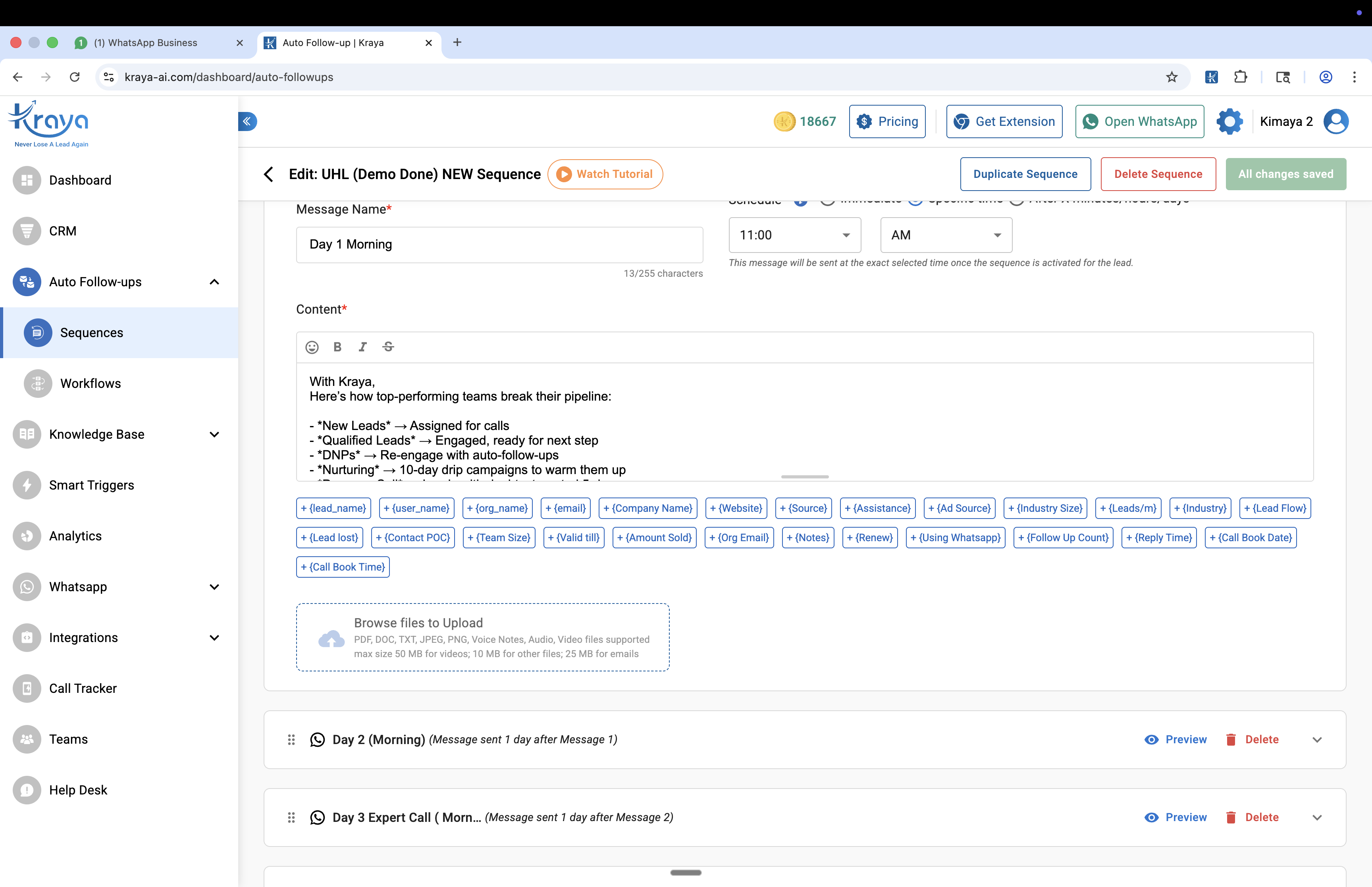
Kraya's AI agent goes beyond rule-based chatbots — it understands your business, qualifies leads through natural conversation, and hands off to your sales team at the right moment. Used by 600+ Indian businesses.
Book a Free Call →Here's the complete cost breakdown:
| Message Type | Cost Range | Example Use |
|---|---|---|
| Utility Messages | ₹0.40-₹2.40 | Appointment confirmations, payment receipts |
| Authentication | ₹0.80-₹1.60 | OTP verification, login codes |
| Marketing Messages (message template) | ₹4.80-₹7.20 | Course promotions, property listings |
| Service Messages | ₹2.40-₹4.80 | Customer support responses |
Additional platform fees from solution providers range from ₹3,000-₹15,000 monthly depending on features and support levels. A coaching institute handling 500 student enquiries monthly typically spends ₹10,000-₹15,000 total (₹7,000-₹10,000 Meta charges + ₹3,000-₹5,000 platform fees). Your actual cost depends on message mix and platform choice.
According to salary benchmarks, one salesperson costs ₹25,000-₹40,000 monthly in salary. A well-set-up chatbot handles the first response to 60-75% of enquiries (answering fees, batch timings, location) at ₹8,000-₹25,000 monthly. That frees your salesperson to focus on closing deals instead of typing the same answers repeatedly.
But how long does it take to get this running?
How Long Does WhatsApp Chatbot Setup Take?
WhatsApp chatbot setup typically takes 2-4 weeks total. API approval takes 7-14 days (the biggest bottleneck), bot development takes 3-7 days depending on complexity, and testing takes 2-3 days. If you use a no-code platform like Chatfuel, you can launch basic automation in 24-48 hours while waiting for API approval.
Here's the realistic timeline breakdown:
Week 1: Meta Business verification and API application. You'll need GST certificate, business registration, and a dedicated phone number. Meta reviews complete applications within 7-14 business days.
Week 2: Bot development and conversation flow design. Simple rule-based bots take 3-5 days, while complex AI systems need 1-2 weeks. No-code platforms like Chatfuel or ManyChat can cut this to 24-48 hours for basic flows.
Week 3: Testing and integration with your existing systems. This includes connecting to your CRM, training your team, and running test conversations to catch edge cases.
Week 4: Live launch and monitoring. The first week requires close attention to optimize responses and handle unexpected conversation patterns.
According to our experience, starting the Meta Business verification process immediately is crucial, even before choosing your chatbot platform. This approval often becomes the bottleneck, not the technical setup.
Here's exactly how the setup process works in practice.
How to Set Up a WhatsApp Chatbot: Step-by-Step
Here's the exact process to set up a WhatsApp chatbot, broken down into 4 manageable phases. Most of these steps you can do yourself or with a platform provider's help, regardless of technical experience.
Phase 1: Business Verification (Days 1-3)
Register your Meta Business Manager account using your GST number and business documents. Upload clear photos of your business registration certificate, GST certificate, and a recent utility bill showing your business address. According to our tracking, Meta rejects about 30-40% of applications for unclear documentation — usually because photos are blurry or documents don't clearly show the business address. Quality matters here.
Phase 2: Choose Your Platform (Days 4-5)
Evaluate chatbot platforms based on your technical comfort level. Non-technical business owners should start with Chatfuel, WhatsTool, or similar no-code options. If you have a developer, consider custom solutions using Meta's official API.
Phase 3: Design Conversation Flows (Days 6-10)
Map out your most common customer questions and create response flows. A coaching institute might need flows for course enquiries, fee questions, batch timings, and admission processes. Write responses in your natural business language, not formal corporate speak.
Phase 4: Integration and Testing (Days 11-14)
Connect your chatbot to existing business systems like Google Sheets, Calendly, or Zoho CRM. Test every conversation path with real scenarios. We've seen businesses lose leads because they forgot to test weekend or holiday responses.
The key is starting simple and expanding gradually. A basic FAQ bot that handles 50% of questions is better than a complex system that confuses customers.
According to our client data, we track 92% approval rates when businesses submit complete documentation and follow Meta's guidelines precisely. But what results can you actually expect?
Real ROI Data: What Indian Businesses Actually Save
Kraya tracked these metrics across 50+ coaching institutes over 6 months to understand the real impact of WhatsApp automation on Indian small businesses.
"In our experience with 600+ Indian sales teams, businesses that automate their first WhatsApp response see 25-40% more leads enter their pipeline simply because no enquiry goes unanswered." — Kraya AI, based on customer data 2025
Response Time Improvement: According to our sample data, average response time dropped from 3.2 hours to 12 seconds. This improvement typically increases lead conversion by 15-40% because prospects don't wait hours for basic information like fees or course details. The exact improvement depends on your industry and how many enquiries you were losing before.
Staff Productivity Gains: Sales teams saved 3 hours daily on repetitive questions, allowing them to focus on qualified prospects and closing deals. One real estate broker in Gurgaon calculated this as ₹45,000 monthly in productivity gains. Your savings depend on your team size and current response time.
Lead Capture During Off-Hours: According to our business data, companies typically capture 25-40% more leads during evenings, weekends, and holidays when staff aren't available. A travel agency in Bangalore saw weekend enquiries increase from 15 to 47 per week after implementing automation. Pair chatbots with WhatsApp broadcast campaigns to proactively reach opted-in contacts from your contact list and drive enquiries in the first place.
Qualification Accuracy: In our sample of 50+ coaching institutes, automated qualification flows collected complete prospect information 70-85% of the time versus 40-50% for manual processes. Better data meant higher-quality sales calls and improved conversion rates. See how to close these qualified leads with WhatsApp follow-up messages.
The numbers vary by industry, but the pattern is consistent across our client base. According to our tracking, a coaching institute with 200 monthly enquiries typically sees ₹1-4 lakh additional revenue from improved conversion rates, depending on your average course fee and current conversion rate. The exact number depends on your specific business model.
However, success depends heavily on choosing the right platform for your specific needs and technical capabilities.
Best WhatsApp Chatbot Platforms for Indian SMBs
According to our implementation experience, most Indian SMBs prefer no-code solutions because they're faster to implement and easier to manage without technical staff. Here's how the leading WhatsApp chatbot platforms compare for different Indian business types.
| Platform | Best For | Monthly Cost | Setup Time | Key Strength |
|---|---|---|---|---|
| Chatfuel | Coaching institutes, clinics | ₹2,500-₹8,000 | 2-3 days | Simple flow builder |
| WhatsTool | Real estate, travel agencies | ₹3,500-₹12,000 | 3-5 days | Indian market focus |
| Gupshup | Multi-location businesses | ₹5,000-₹20,000 | 1-2 weeks | Enterprise features |
| Custom API | Complex requirements | ₹15,000+ | 3-4 weeks | Full customization |
For Beginners: Start with Chatfuel or WhatsTool. Both offer Hindi language support, Indian payment integrations, and local customer service. Setup requires no coding knowledge.
For Growing Businesses: Gupshup provides advanced features like CRM integration, analytics dashboards, and multi-agent support. It scales well as your team and enquiry volume grow.
For Established Companies: Custom API development offers unlimited flexibility but requires ongoing technical maintenance. Consider this only if you have specific integration needs that platforms can't handle.
According to our observations, the platform choice matters less than consistent implementation and optimization. We've seen simple Chatfuel setups outperform complex custom solutions because the business owner actively managed and improved the conversation flows.
Before you set up your WhatsApp chatbot, avoid these common traps that cost businesses 30% of their leads in the first month.
READY TO TRY KRAYA?
See Kraya's WhatsApp AI agent in action — free demo
We'll set up a live demo customised for your business type. You'll see how Kraya handles incoming WhatsApp enquiries, qualifies leads, and books appointments — automatically.
Book a Free Call →No credit card. 15-minute setup. Personalised to your business.
Related: How to Prevent WhatsApp From Getting Banned: Complete Guide
Related: WhatsApp Auto Reply for Business: AI Setup Guide 2026
Related: How to Send WhatsApp Broadcast Messages: Complete Guide for Android, iOS & Web
Related: WhatsApp Business API: The 2026 India Guide
Related: How to Send Bulk WhatsApp Messages Without Getting Banned
Related: WhatsApp Ban for Automation: Which Tools Are Safe and Which Get You Banned
Related: WhatsApp Broadcast: Complete Guide for Indian Businesses
Related: 15 WhatsApp Broadcast Message Templates That Get Replies
Related: How to Schedule WhatsApp Messages for Sales Teams
Related: How to apply for WhatsApp Business API: step-by-step
Related: How to Create a WhatsApp Broadcast List: Android, iOS & Web Guide
Related: How to Scale WhatsApp Sales: AI Automation Trends for 2026
Related: Best Interakt Alternatives for Indian Sales Teams in 2026
Related: Best Gallabox Alternatives for WhatsApp Automation in India
Related: WhatsApp CRM Integration Guide: Connect With Your Existing Tools
Related: Best WhatsApp CRM for Real Estate Agents in India
Related: 20 WhatsApp Greeting Message Templates for Business