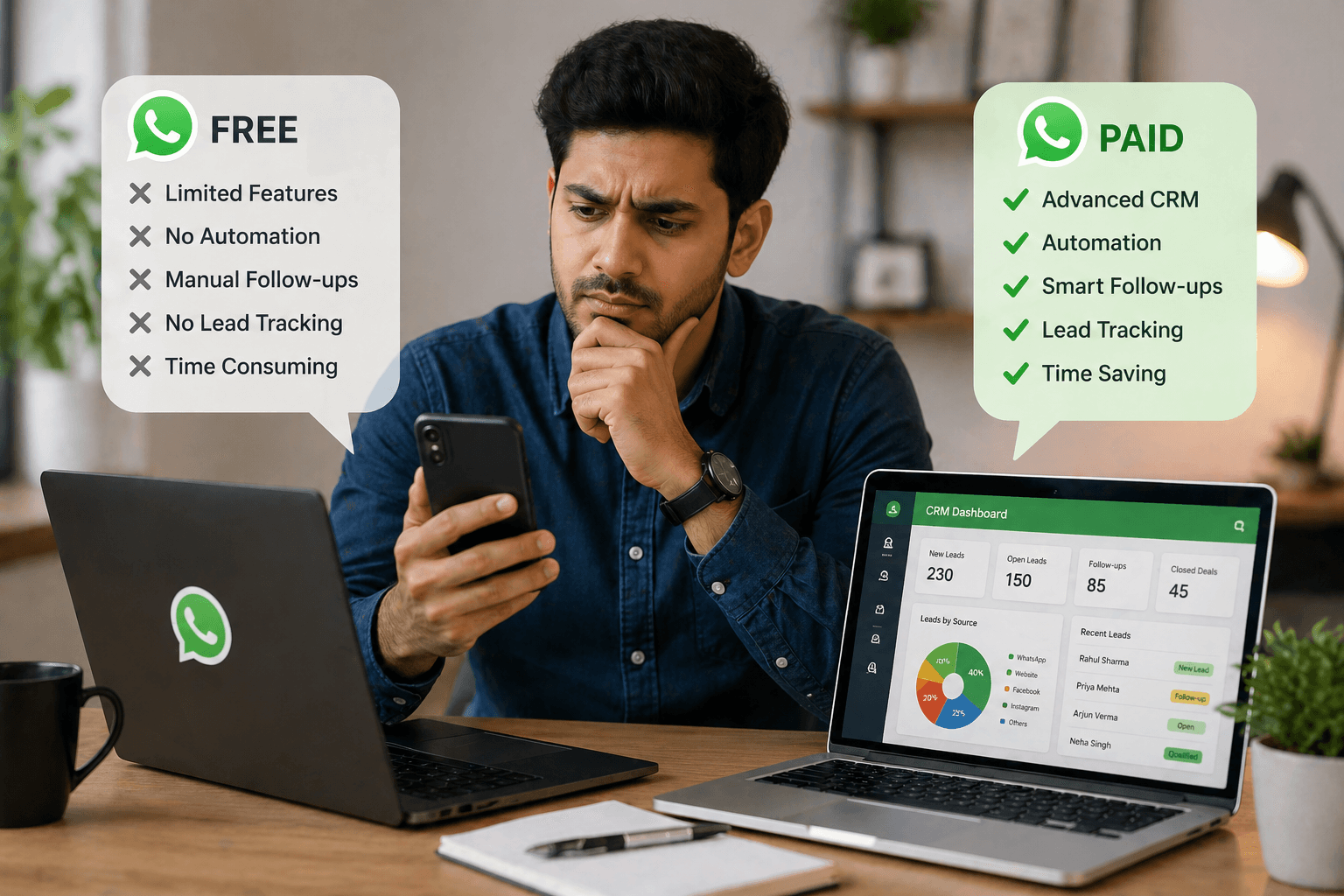
How Service Businesses Use WhatsApp to Book More Clients Without Hiring More Staff
 Abhyank Srinet
You are likely losing bookings right now without even realizing it. When a potential client sends a message asking for an appointment and does not receive a quick reply, they usually move to the next available provider. In service businesses, speed is not just important — it directly impacts revenue. Even a delay of a few minutes can result in lost opportunities, especially when competitors are responding faster.
"Businesses that respond to customer inquiries within 5 minutes are 100 times more likely to qualify a lead compared to those responding after 30 minutes."
— Harvard Business Review, Customer Response Time Study
This is why whatsapp sales for service businesses is becoming a powerful system, not just a communication tool. Instead of depending on manual replies, businesses are now using automation to handle enquiries, schedule appointments, and confirm bookings instantly. With a proper whatsapp business booking system, clients can check availability and book in under two minutes. According to industry data, this shift has helped businesses increase booking capacity by up to 40% on average, with some reaching even higher depending on their baseline efficiency.
How WhatsApp Sales for Service Businesses Actually Works
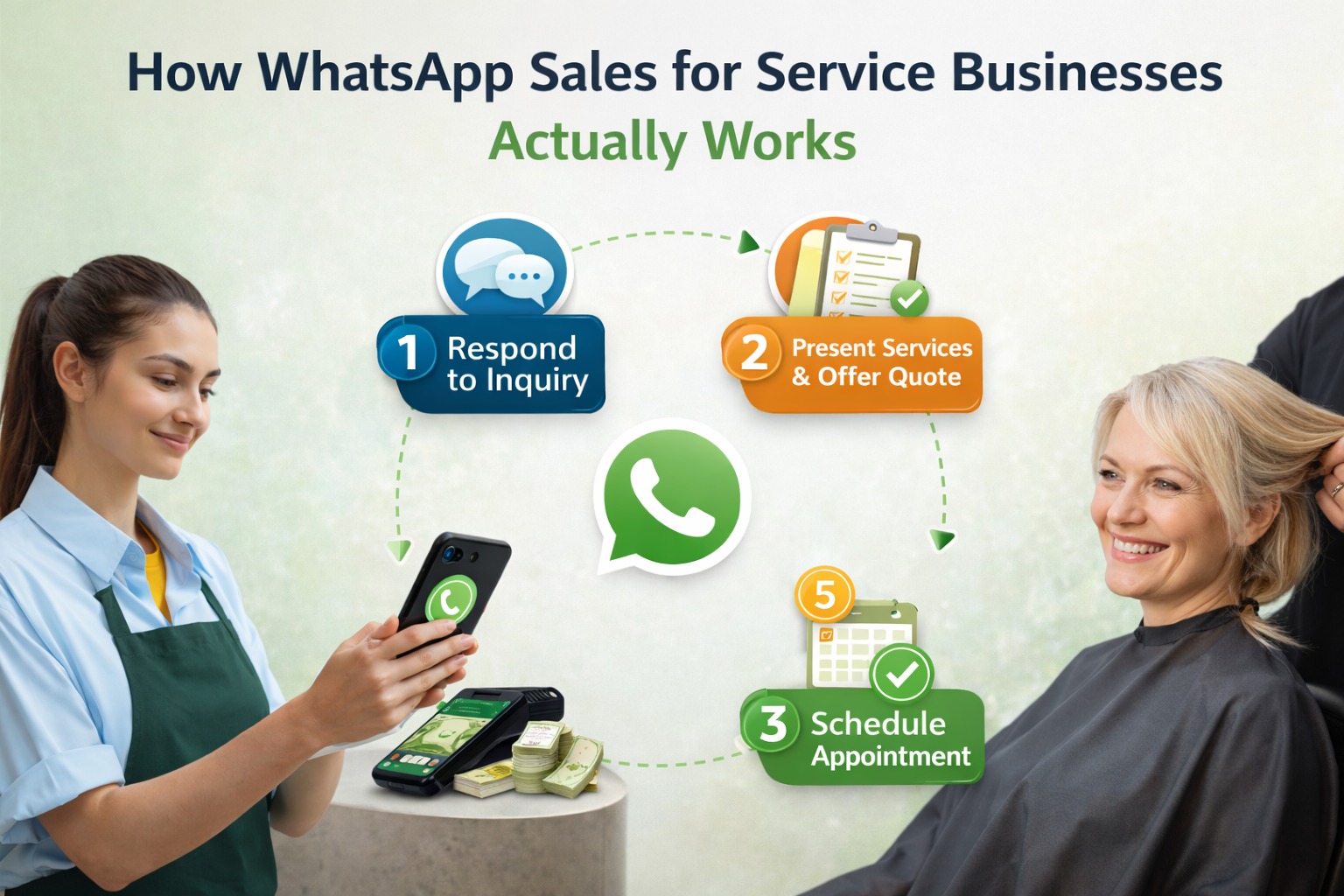
To understand the impact of WhatsApp sales for service businesses, you need to see how the system replaces manual booking workflows. Instead of waiting for staff to respond, automation handles the entire booking journey from the first message to final confirmation.
A typical automated client booking whatsapp system works through a simple but powerful process. When a client sends a message, the system responds instantly and asks a few guided questions. It then checks real-time availability through calendar integration and shows available slots.
Once the client selects a time, the system collects basic details such as name, service type, and any special requests. The booking is confirmed automatically, and the appointment is added to the calendar. This entire process takes only 2–3 minutes and requires no human involvement for standard bookings.
This is where service business automation without staff becomes a reality. According to automation platform data, around 80–85% of bookings can be handled automatically, while only complex cases are passed to a human team member. The result is faster response, better client experience, and higher booking volume.
Why WhatsApp Sales for Service Businesses Is Replacing Manual Booking
Most service businesses believe booking problems are caused by a lack of staff. In reality, the issue is inefficient systems. Manual booking processes create delays, inconsistency, and missed opportunities.
With WhatsApp booking automation for service businesses, these problems are solved at the system level.
Faster response time leads to more conversions
When clients receive an instant reply, they are more likely to continue the conversation and complete the booking. Businesses using automation typically improve response time by 80–90%, which directly increases conversion rates by 35–50% based on service industry benchmarks.
Reduced dependency on staff
Manual booking requires constant attention from staff. Calls, messages, follow-ups, and confirmations take hours every day. With automation, these repetitive tasks are handled automatically, allowing your team to focus on service delivery instead.
24/7 booking availability
Clients do not only message during working hours. Many enquiries come in the evening or late at night. A whatsapp appointment booking for salons or clinics that works 24/7 ensures no enquiry is missed.
Consistent client experience
Every client gets the same fast, structured, and helpful response. This improves professionalism and builds trust from the first interaction.
ROI of WhatsApp Sales for Service Businesses vs Hiring Staff
One of the biggest advantages of whatsapp sales for service businesses is the cost efficiency it brings. Most businesses underestimate how much manual booking actually costs.
| Cost Factor | Manual Booking | Automation System |
|---|---|---|
| Monthly Cost | $4,700+ | $250 |
| Staff Salary (INR) | ₹2–3 lakh/month | None |
| Booking Capacity | Standard | 2–3x higher |
| 24/7 Availability | No | Yes |
| Error Rate | 5–10% | <1% |
Manual booking costs include:
Booking staff salary (₹2–3 lakh/month equivalent globally)
Training and onboarding time
Missed bookings during off-hours (estimated 15–20% of daily inquiries)
Time spent on repetitive conversations (5–7 hours per staff member daily)
Errors and double-bookings (5–10% occurrence rate)
Automation costs include:
WhatsApp API access
Booking automation software
One-time setup
"Service businesses implementing WhatsApp automation report an average ROI of 300–400% within the first 6 months, primarily through increased booking volume and reduced operational costs."
— Service Industry Automation Report, 2024
But the real value is not just cost saving. It is capacity growth. Businesses using WhatsApp booking automation for service businesses often handle 2–3x more enquiries without increasing staff.
Which Service Businesses Benefit the Most
Not every business benefits equally, but some industries see strong results from whatsapp sales for service businesses.
Healthcare and clinics
Automated reminders and easy rescheduling reduce no-shows by up to 25%. Patients can book and manage appointments without calling, which improves overall experience.
Beauty salons and spas
This is where whatsapp appointment booking for salons performs exceptionally well. Clients can check availability instantly and book their preferred stylist without waiting. According to salon industry data, this increases booking completion rates by 45–60%.
Fitness trainers and wellness centers
Scheduling becomes easier when clients can view available slots and reschedule sessions without back-and-forth communication.
Consultants and coaches
Discovery calls can be booked instantly after an enquiry, reducing friction in the sales process by 50–70%.
The common factor across these industries is predictable booking structures and clear availability, which makes automation highly effective.
Key Features Required in a WhatsApp Business Booking System
A strong whatsapp business booking system is not just about replying automatically. It needs the right features working together to create a smooth booking experience.
Essential features include:
Real-time calendar integration
Prevents double bookings and shows accurate availabilityAutomated reminders and confirmations
Reduces no-shows by 20–30% and keeps clients informedRescheduling and cancellation flow
Helps recover bookings instead of losing themPayment and deposit collection
Improves commitment and reduces cancellations by 35–40%Multi-staff assignment system
Allows clients to choose their preferred provider
These features ensure that automated client booking whatsapp systems work reliably across different service models.
Implementation Timeline for WhatsApp Sales Systems
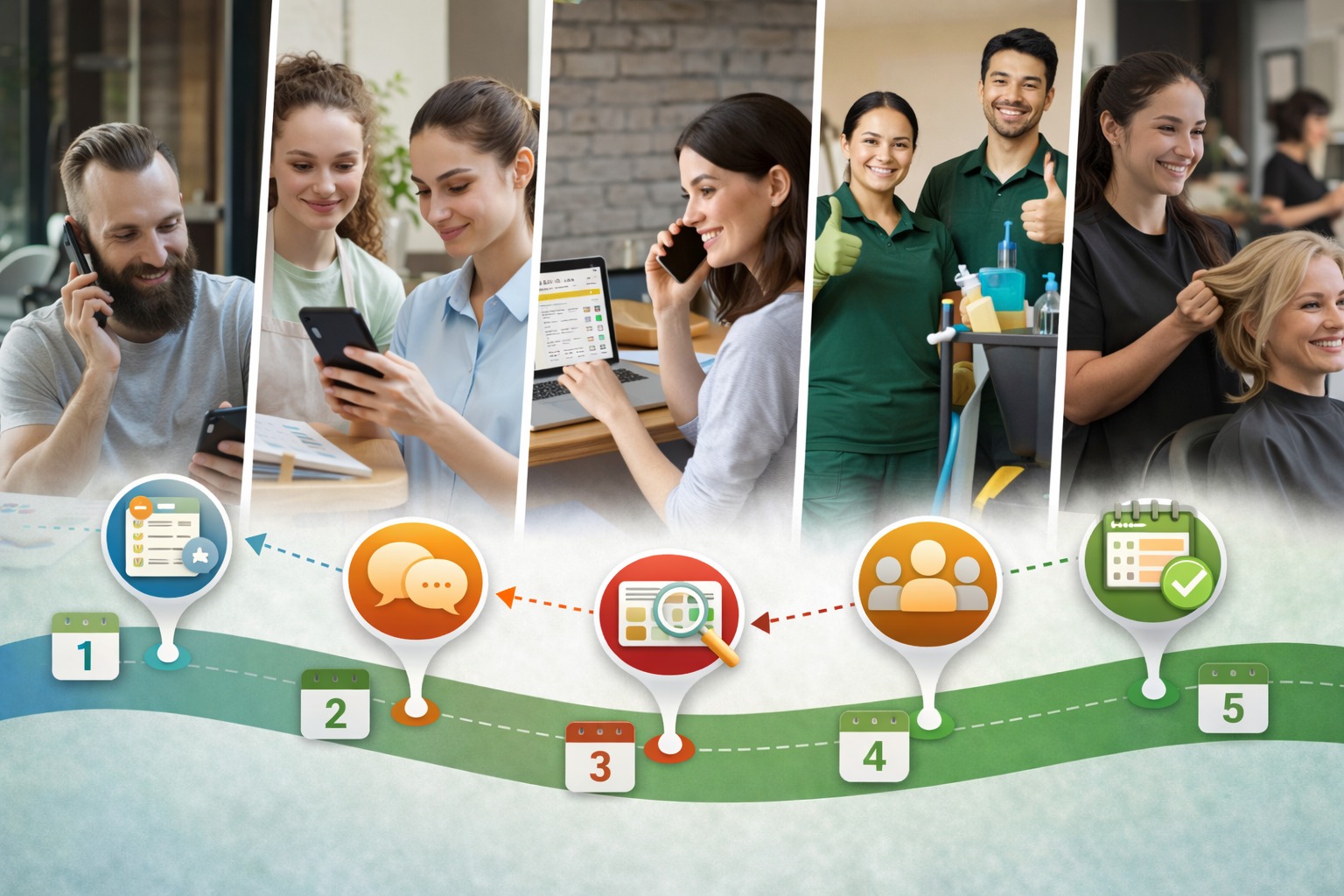
One of the biggest advantages of service business automation without staff is that it does not take months to implement. Most businesses can go live within 2–3 weeks.
Week 1: Setup and integration
WhatsApp API approval
Calendar connection
Basic system setup
Week 2: Automation building
Booking flow creation
Testing different scenarios
Setting up reminders
Week 3: Training and launch
Staff onboarding
Soft launch with existing clients
Full rollout
In most cases, businesses start seeing bookings within 48 hours of launch, with full efficiency achieved within 30–40 days.
Technical Requirements for WhatsApp Booking Automation
To implement WhatsApp booking automation for service businesses, you need a few basic systems working together.
Core requirements:
WhatsApp Business API access
Calendar system (Google Calendar, Calendly, etc.)
Payment gateway integration
Optional CRM integration
The good part is that most modern platforms offer pre-built integrations, so you do not need heavy technical development.
Related: WhatsApp for B2B Sales: Complete Playbook for 2026
See also: WhatsApp CRM for Consultants and Freelancers
See also: How to Use WhatsApp for Sales Effectively.
Common Challenges in WhatsApp Sales for Service Businesses
Even though whatsapp sales for service businesses is powerful, some challenges can slow down implementation.
Staff resistance
Teams may feel automation will replace their role. The solution is to reposition it as a support system that removes repetitive work.
"When staff are trained to view automation as a productivity tool rather than a replacement, adoption rates increase by 85% and satisfaction scores improve significantly."
— Change Management Institute, Digital Transformation Study
Complex scheduling
Businesses with multiple staff members, varying service durations, and complex rules may need customization beyond basic automation setup.
```Frequently Asked Questions

Written by
Founder & CEO, Kraya AI
Abhyank Srinet is the Founder and CEO of Kraya AI, a WhatsApp CRM and sales automation platform serving 600+ Indian businesses. He is also the founder of MiM-Essay, one of India's largest Masters admissions consulting firms.
More from Abhyank