How to Build a WhatsApp Sales Pipeline
 Abhyank Srinet
Most businesses don't lose sales because they lack leads—they lose them because of what happens after a lead messages them. Slow replies, missed follow-ups, and scattered conversations across calls and emails quietly break momentum. Prospects delay responses, compare options, or simply move to a competitor who replied faster. This is exactly where a whatsapp sales pipeline changes the game. With instant, conversational communication, businesses can engage leads in real time, maintain interest, and move deals forward without delays.
"Businesses using WhatsApp for sales see a 45–60% response rate compared to just 20% for email, reducing deal cycles from weeks to days."
— Sales Engagement Research, 2024
A whatsapp sales pipeline is a structured system that guides every lead from first message to final conversion through clear stages like capture, qualification, nurturing, and closing. With WhatsApp delivering up to 98% open rates and 45–60% response rates, businesses are able to shorten deal cycles dramatically—from weeks to just a few days. More importantly, it brings speed, structure, and consistency into sales, ensuring no lead is missed and every opportunity is handled properly.
What is a WhatsApp Sales Pipeline?
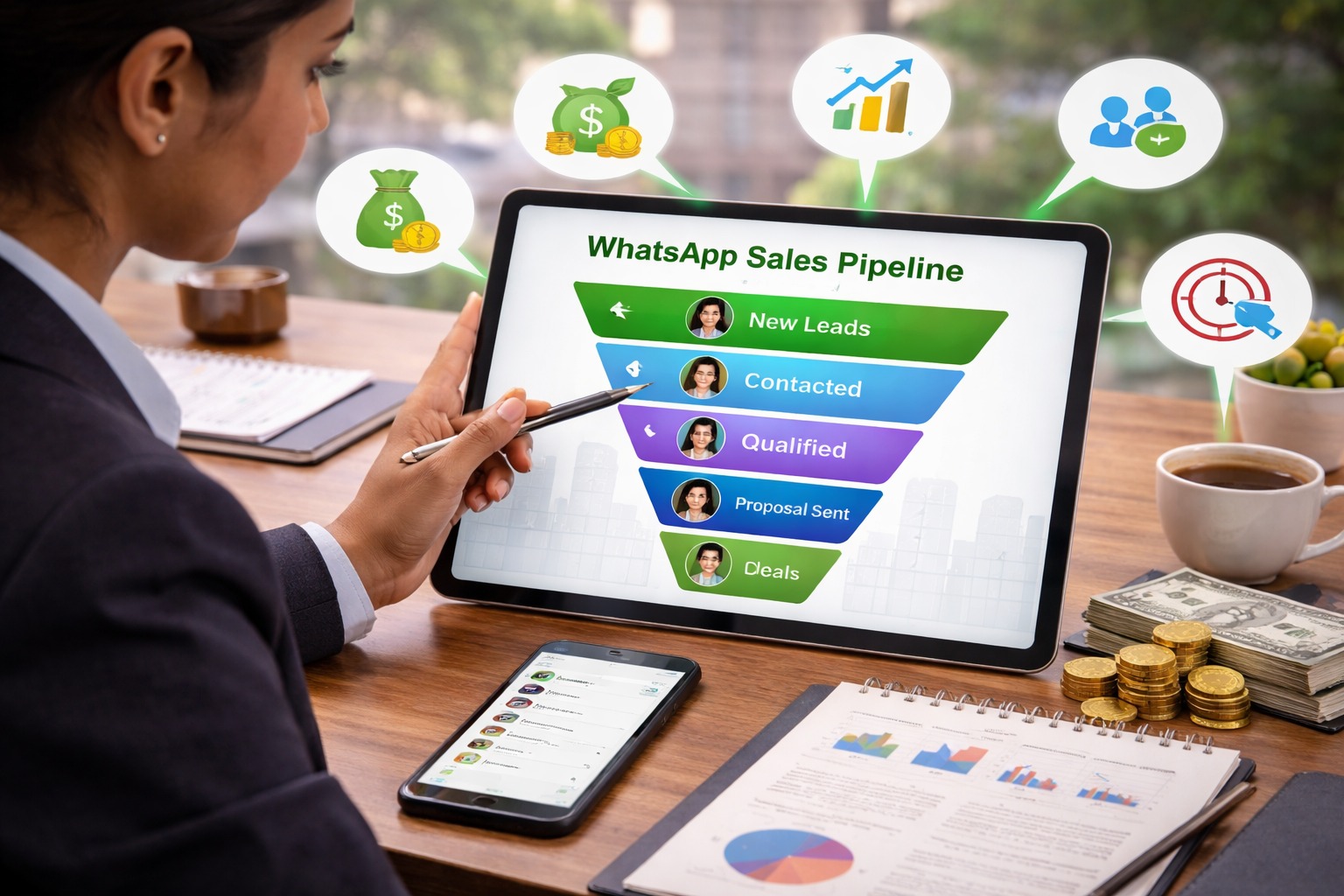
A whatsapp sales pipeline is a structured sales system that moves prospects through five essential stages: lead capture, qualification, nurturing, conversion, and retention. Unlike traditional sales funnels, this pipeline is built entirely around real-time, conversational messaging.
The effectiveness of a whatsapp sales pipeline comes from WhatsApp's user behavior dynamics:
45–60% response rates, compared to ~20% for email
Higher engagement due to instant notifications
60% shorter deal cycles than traditional methods
This speed and efficiency are driven by the conversational nature of WhatsApp. Prospects expect immediate replies and are more comfortable engaging in chat-based discussions rather than formal emails.
Instead of filling out long forms or waiting for callbacks, prospects can directly message your business. This removes friction and significantly improves lead engagement.
Why Businesses Are Adopting WhatsApp Sales Pipelines
Businesses across industries are shifting toward WhatsApp-based sales systems because they:
Enable real-time communication with prospects
Reduce delays in follow-ups and decision-making
Improve lead qualification accuracy
Increase overall conversion rates
Provide a more personalized customer experience
"Companies implementing WhatsApp sales pipelines report a 35% increase in conversion rates and 50% faster sales cycles compared to email-based approaches."
— Global Sales Technology Report, 2024
However, to implement this system effectively at scale, businesses must use the WhatsApp Business API instead of the standard app. The API supports automation, multi-agent handling, CRM integration, and advanced analytics.
Most businesses can get API approval within 7–14 days, provided their documentation and verification processes are complete.
Understanding this foundation makes it easier to break down each stage of the pipeline in detail.
The 5 Key Stages of WhatsApp Sales Pipeline (Step-by-Step Breakdown)
A high-performing whatsapp sales pipeline is built on five clearly defined stages. Each stage has a specific objective and requires tailored messaging strategies to move prospects forward.
Leads that successfully reach the qualification stage typically show 15–25% conversion rates, making it crucial to optimize each stage effectively.
| Pipeline Stage | Objective | Key Focus | Avg. Duration |
|---|---|---|---|
| Lead Capture | Attract high-intent prospects | QR codes, ads, website widgets | Immediate |
| Qualification | Filter and score leads | BANT framework, chatbots | 1–2 hours |
| Nurturing | Build trust and engagement | Case studies, testimonials, content | 3–7 days |
| Conversion | Close qualified deals | Sales agent engagement, objection handling | 1–3 days |
| Retention | Maximize lifetime value | Support, feedback, upselling | Ongoing |
Stage 1: Lead Capture (How to Attract High-Intent Leads)
The first step in any whatsapp sales pipeline is lead capture. The quality of your leads depends heavily on where and how they enter your system.
Different channels attract different types of prospects:
QR codes on receipts and physical materials → High-intent leads
Click-to-WhatsApp ads → Immediate need prospects
Website chat widgets → Research-oriented users
Social media links → Discovery-stage users
High-Performing Lead Capture Channels
QR codes on packaging, storefronts, and business cards
Facebook and Google click-to-WhatsApp ads
Website WhatsApp chat widgets
Instagram bio links and story stickers
QR codes, in particular, tend to generate highly qualified leads because users must take deliberate action to initiate contact.
Stage 2: Qualification (Automating Lead Filtering)
Once leads enter your whatsapp sales pipeline, the next step is qualification. This stage determines whether a lead is worth pursuing and helps prioritize sales efforts.
Automated chatbots play a crucial role here by asking structured questions based on the BANT framework:
Budget – Does the prospect have the financial capacity?
Authority – Are they the decision-maker?
Need – Do they have a real problem your solution can solve?
Timeline – How soon are they planning to act?
Benefits of Automated Qualification
Saves time for sales teams
Filters out low-quality leads early
Improves conversion efficiency
Enables real-time lead scoring
By automating this process, businesses ensure that human agents only engage with high-potential prospects.
Stage 3: Nurturing (Building Trust Before Conversion)
Not every qualified lead is ready to make an immediate purchase. This is where nurturing becomes essential in a whatsapp sales pipeline.
Nurturing involves sending relevant and valuable content over time to build trust and maintain engagement.
Effective Nurturing Content Includes:
Educational insights and guides
Case studies and success stories
Testimonials and social proof
Industry-specific tips
The goal is to stay relevant without being intrusive, ensuring that your business remains top-of-mind when the prospect is ready to buy.
Stage 4: Conversion (Turning Conversations into Customers)
The conversion stage is where human sales agents step in to close deals. By this point, prospects are already familiar with your business and have shown genuine interest.
"Pre-qualified leads nurtured through conversational channels show 3x higher conversion rates and demonstrate 40% greater lifetime value."
— HubSpot Sales Performance Study, 2024
This significantly increases the likelihood of successful conversions.
Key Focus Areas in Conversion Stage:
Personalized communication
Problem-solving approach
Clear value proposition
Handling objections effectively
Since prospects are already warmed up, conversations become more consultative rather than sales-driven.
Stage 5: Retention (Maximizing Customer Lifetime Value)
Retention is the final stage of a whatsapp sales pipeline, but it plays a major role in long-term growth.
After conversion, businesses should continue engaging customers through:
Customer support
Feedback collection
Upselling opportunities
Cross-selling strategies
WhatsApp's conversational nature makes ongoing communication feel natural, helping build stronger customer relationships.
Related: WhatsApp for B2B Sales: The Complete Playbook, WhatsApp Sales Follow-Up Automation, and Sales Pipeline Stages: When to Move Leads.
How to Set Up WhatsApp Business API for Sales (Complete Setup Guide)
To build a scalable whatsapp sales pipeline, using the WhatsApp Business API is mandatory. The standard WhatsApp Business app does not support automation, team collaboration, or CRM integration.
Step-by-Step Setup Process
1. Meta Business Manager Verification
Your business must have a verified Meta Business Manager account. Meta reviews this during API approval, and any inconsistencies can delay the process.
2. Choose Integration Method
You have two options:
Business Solution Providers (BSPs) like Twilio
Easier setup
Less technical complexity
Direct API Integration
Requires developers
Offers full customization
3. Message Template Approval
WhatsApp requires pre-approved message templates for sending automated messages after 24 hours of inactivity.
Approval time: 1–3 days
Templates must comply with WhatsApp policies
4. Webhook Configuration
Webhooks enable real-time communication between WhatsApp and your CRM system. This ensures:
Instant lead routing
Automated responses
Real-time updates
| Setup Component | Timeframe | Technical Effort |
|---|---|---|
| Meta Business Manager Verification | 1–3 days | Low |
| API Approval | 7–14 days | Medium |
| Message Template Approval | 1–3 days | Low |
| Webhook & CRM Integration | 3–7 days | High |
Timeline Overview
API approval: 7–14 days
Complete setup: 14–21 days
Related: What Is WhatsApp CRM? WhatsApp CRM vs Traditional CRM for Indian SMBs
Related: How to Follow Up on WhatsApp Without Getting Blocked or Annoying Your Leads
Related: Common Sales Problems Small Businesses Face
Related: How to Manage Inbound Leads Effectively: A Step-by-Step System
Related: How to Use WhatsApp for Sales Effectively Without Sales Follow Up Problems
Related: 5 Signs Your Lead Management Process Is Broken
Related: Manual Follow-Ups vs Automated WhatsApp Follow-Ups: What Works Better for Sales
Related: How to Schedule WhatsApp Messages for Sales Teams
Frequently Asked Questions

Written by
Founder & CEO, Kraya AI
Abhyank Srinet is the Founder and CEO of Kraya AI, a WhatsApp CRM and sales automation platform serving 600+ Indian businesses. He is also the founder of MiM-Essay, one of India's largest Masters admissions consulting firms.
More from Abhyank