How to Qualify Leads on WhatsApp: The Complete System to Turn Enquiries into High-Intent Buyers
 Abhyank Srinet
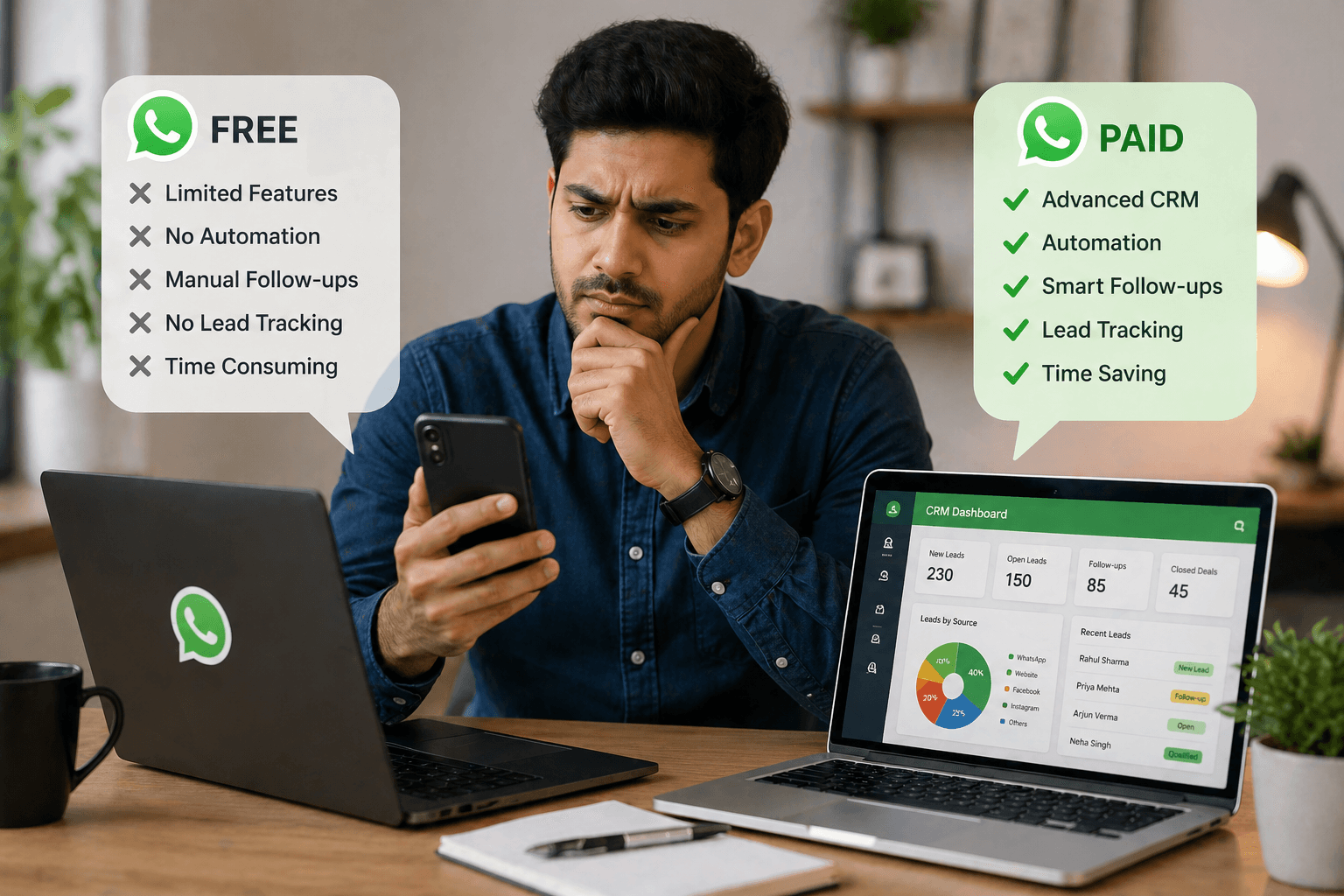
If you are getting leads on WhatsApp but still not closing enough sales, the problem is usually not traffic or marketing. The real issue is what happens after the lead messages you. Most businesses reply without a clear system, ask random questions, or jump straight to pricing without understanding the lead. This creates confusion, breaks the flow of conversation, and often pushes the lead toward a competitor who responds faster and more clearly. That's why learning How to Qualify Leads on WhatsApp properly is so important—it helps you turn conversations into real opportunities instead of missed chances.
"According to Statista's 2024 report, WhatsApp is used by 77% of Indian businesses for customer communication, yet only 35% have a structured lead qualification process in place."
— Statista Digital Commerce Report 2024
When there is no structured approach to How to Qualify Leads on WhatsApp, sales teams end up spending time on the wrong leads while high-intent prospects get ignored. Conversations become inconsistent, follow-ups are missed, and many leads go cold without any recovery. Over time, this affects your entire sales performance. The truth is, you don't always need more leads—you need a better system to handle the ones you already have. In this blog, you'll learn how to build that system and qualify leads on WhatsApp in a simple, clear, and effective way.
What Does It Mean to Qualify Leads on WhatsApp?

To qualify leads on WhatsApp means identifying whether a lead is serious, relevant, and ready to move forward before your sales team invests time in converting them. It is a process of understanding intent, clarity, urgency, and readiness through structured conversation.
Instead of immediately pitching your product or sharing pricing, qualification focuses on understanding the lead first. This allows you to guide the conversation in the right direction and provide relevant information at the right time.
A properly qualified lead is not just someone who messages you. It is someone who demonstrates certain signals that indicate potential conversion. These signals include:
A clear requirement or problem they want to solve
A defined or approximate timeline
Willingness to engage in conversation
Openness to the next step such as a call, demo, or visit
Without qualification, every lead looks the same. Your team ends up treating all enquiries equally, which leads to inefficiency and missed opportunities. With proper qualification, your pipeline becomes structured, and your team knows exactly where to focus.
Qualification is not about rejecting leads. It is about creating clarity. It helps you decide:
Who needs immediate attention
Who requires nurturing
Who is not a priority right now
This clarity is what transforms your WhatsApp from a messaging tool into a sales system.
Why It Is Critical to Qualify Leads on WhatsApp
WhatsApp is a high-speed communication platform where expectations are extremely high. People expect instant replies, clear answers, and smooth conversations. If your response is delayed or unclear, the lead does not wait—they move on.
"Research from HubSpot indicates that responding to WhatsApp leads within 5 minutes increases conversion probability by 47%, compared to responses after 30 minutes."
— HubSpot State of Sales Report 2023
When a lead messages you, they are in an active decision-making phase. They are comparing options, evaluating responses, and trying to decide whom to trust. This moment is extremely sensitive. If handled correctly, it leads to conversion. If mishandled, it leads to drop-off.
Most businesses lose leads due to a few common reasons:
Delayed responses that break momentum
No structured questioning to understand the lead
Lack of follow-ups after initial interaction
No clarity on what the lead actually wants
When you qualify leads on WhatsApp properly, you solve all these problems at once. You create a system where:
Conversations are clear and structured
Leads feel understood and guided
Your team focuses on high-quality opportunities
Follow-ups become relevant and effective
This directly results in:
Faster conversions
Better use of sales team time
Higher quality conversations
Improved closing rates
Qualification is not just a step in the process—it is the foundation of your entire sales system.
The Ideal Flow to Qualify Leads on WhatsApp
A strong system to qualify leads on WhatsApp follows a clear and structured flow. It is not about asking too many questions, but about asking the right questions in the right order while maintaining a natural conversation.
| Qualification Stage | Primary Action | Key Outcome |
|---|---|---|
| Step 1: First Response | Acknowledge enquiry instantly and show willingness to help | Lead remains engaged; conversation initiated |
| Step 2: Structured Questions | Ask about requirements, timeline, current situation | Clear understanding of lead needs and intent |
| Step 3: Data Capture | Record all qualification details in organized system | Complete lead profile for follow-up; no information loss |
| Step 4: Lead Scoring | Categorize as Hot, Warm, or Cold based on signals | Sales team knows priority and resource allocation |
| Step 5: Next Action | Move lead to call, demo, or nurture sequence | Momentum maintained; conversion path activated |
Step 1: Instant First Response
The first response is the most critical moment in the conversation. It sets the tone and determines whether the lead will continue engaging with you or not.
A strong first response should:
Acknowledge the enquiry quickly
Show willingness to help
Guide the conversation forward
For example, instead of giving a generic reply, you can say:
"Thanks for reaching out. I'll help you with this. Can I ask a couple of quick questions to understand your requirement better?"
This creates a smooth transition into qualification without overwhelming the lead.
Step 2: Ask Structured Qualification Questions
Once the conversation begins, the next step is to ask structured questions that help you understand the lead better. These questions should be simple, relevant, and conversational.
The goal is to gather essential information such as:
What the lead is looking for
When they need it
Their current situation
Their expectations
The key here is flow. The conversation should feel natural, not like an interrogation. Each question should build on the previous one and guide the lead forward.
Step 3: Capture and Organize Lead Information
Qualification is only useful if the information collected is properly stored and organized. One of the biggest reasons businesses lose leads is that conversations are scattered and untracked.
You should always capture:
Requirement details
Timeline or urgency
Preferences
Lead source
Conversation history
This ensures that your team can continue the conversation without repeating questions and can follow up effectively.
Step 4: Identify Lead Quality
Not all leads are equal. Once you have basic information, you need to categorize the lead.
Leads can be divided into:
Hot Leads → Ready to take action
Warm Leads → Interested but need nurturing
Cold Leads → Low intent or not ready
This classification helps your team prioritize and focus on the right leads.
Step 5: Move the Lead to the Next Stage
Qualifications should always lead to action. The purpose is not just to gather information but to move the lead forward.
The next step could be:
Booking a call
Scheduling a demo
Sharing detailed information
Confirming an appointment
A strong system ensures that every conversation ends with direction.
Common Mistakes While Trying to Qualify Leads on WhatsApp

Many businesses try to qualify leads on WhatsApp but still struggle with conversions because of how they handle conversations. Small mistakes in messaging, timing, or structure can break the flow and cause leads to lose interest quickly. Understanding these mistakes is important so you can avoid them and build a more effective qualification process.
"According to a 2024 survey of Indian B2B businesses, 58% report losing qualified leads due to poor initial qualification and follow-up practices on messaging platforms like WhatsApp."
— BharatStack B2B Sales Insights 2024
Here are the most common mistakes businesses make:
Asking too many questions at once: This overwhelms the lead and makes the conversation feel like a form instead of a natural chat.
Asking irrelevant or confusing questions: If questions don't help move the lead forward, they create friction and reduce engagement.
Delayed responses: Even a few minutes of delay can cause the lead to lose interest or move to a competitor.
Jumping to pricing too quickly: Sharing pricing without understanding the lead often leads to drop-offs and no response.
No follow-up after initial conversation: Studies show that 80% of leads require 5+ touchpoints before conversion, yet many businesses stop after one message.
Treating all leads the same: Not differentiating between hot, warm, and cold leads reduces efficiency and focus.
No system or structure: Relying on memory or manual chats leads to inconsistency and missed opportunities.
How Automation Helps You Qualify Leads on WhatsApp
As your business starts receiving more enquiries, handling every conversation manually becomes difficult and inconsistent. This is where automation becomes essential. It helps you maintain speed, structure, and consistency while ensuring that no lead is missed or ignored.
Automation allows you to respond instantly to every incoming message, which is critical because the first few minutes decide whether the lead stays engaged or drops off. Instead of waiting for a sales team member to reply, automated systems can start the conversation immediately and guide the lead through a structured qualification flow.
"According to Forrester Research, businesses using automated qualification workflows on WhatsApp see a 42% increase in lead-to-meeting conversion rates and 34% improvement in response time consistency."
— Forrester The State of Sales Operations 2023
With automation, you can:
Send instant first responses to acknowledge every enquiry without delay
Ask structured qualification questions automatically in a conversational way
Capture lead details in real time without manual effort
Score and categorize leads based on their responses and engagement signals
Related: WhatsApp CRM for Consultants and Freelancers: How to Manage Client Enquiries Without Losing Leads
Related: WhatsApp Sales Follow-Up Automation: How to Stop Missing Leads and Close More Deals
Related: WhatsApp vs Email for Sales: When to Use Each to Increase Conversions
Related: AI Lead Qualification vs Manual Qualification: Which One Saves More Deals?
Related: WhatsApp CRM for Real Estate How Property Agents Manage Enquiries Without Losing Leads
Related: WhatsApp Lead Generation Strategies for 2025 – Complete Guide for High-Converting Results
Frequently Asked Questions

Written by
Founder & CEO, Kraya AI
Abhyank Srinet is the Founder and CEO of Kraya AI, a WhatsApp CRM and sales automation platform serving 600+ Indian businesses. He is also the founder of MiM-Essay, one of India's largest Masters admissions consulting firms.
More from Abhyank