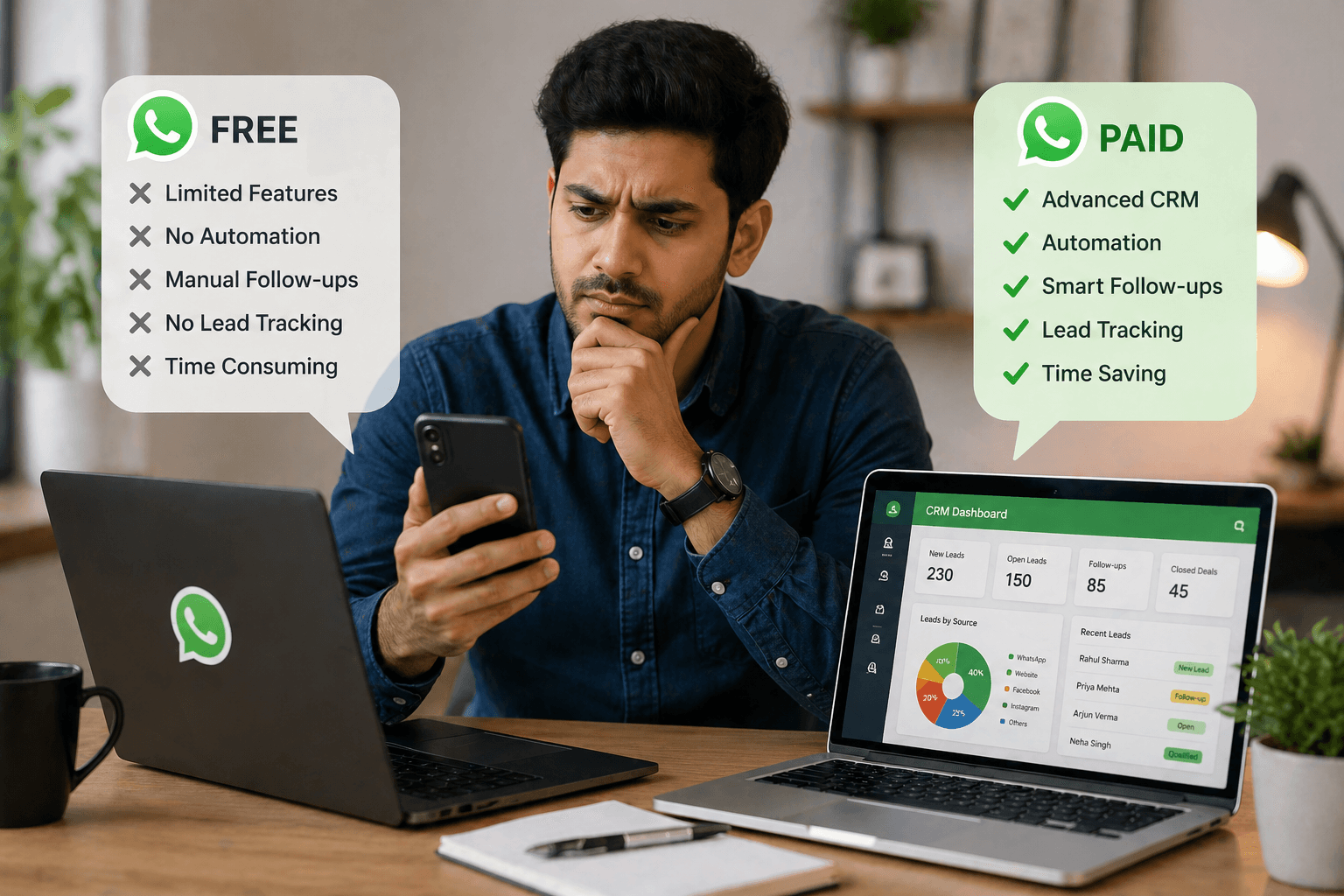
Automated Follow-Up Sequences: How to Build a Sales System That Closes More Deals (2026)
 Abhyank Srinet
Most businesses don't lose sales because of a bad product or incorrect pricing. They lose sales because nobody followed up. A potential customer asks for details, you send the pricing or brochure, and then both sides get busy. The conversation fades, the lead goes cold, and the deal disappears — not because they rejected the offer, but because there was no clear next step.
This happens more often than sales teams expect. According to industry research, 80% of sales require at least five follow-ups to close, yet 44% of salespeople give up after just one attempt. The problem is rarely effort — it's the absence of a structured follow-up process. Without reminders, sequences, or a clear plan for what message goes out next, follow-ups become inconsistent, and revenue quietly slips away.
"80% of sales require at least five follow-ups to close, yet 44% of salespeople give up after just one attempt."
— Sales Research Data
This is where automated follow-up sequences make a real difference. Instead of relying on memory or manual reminders, they create a repeatable process that moves every lead forward. In this guide, you'll learn how automated follow-up sequences work, why they matter in real sales environments, and how to build a system that improves conversions at every stage of your pipeline.
What Is an Automated Follow-Up Sequence in Sales?
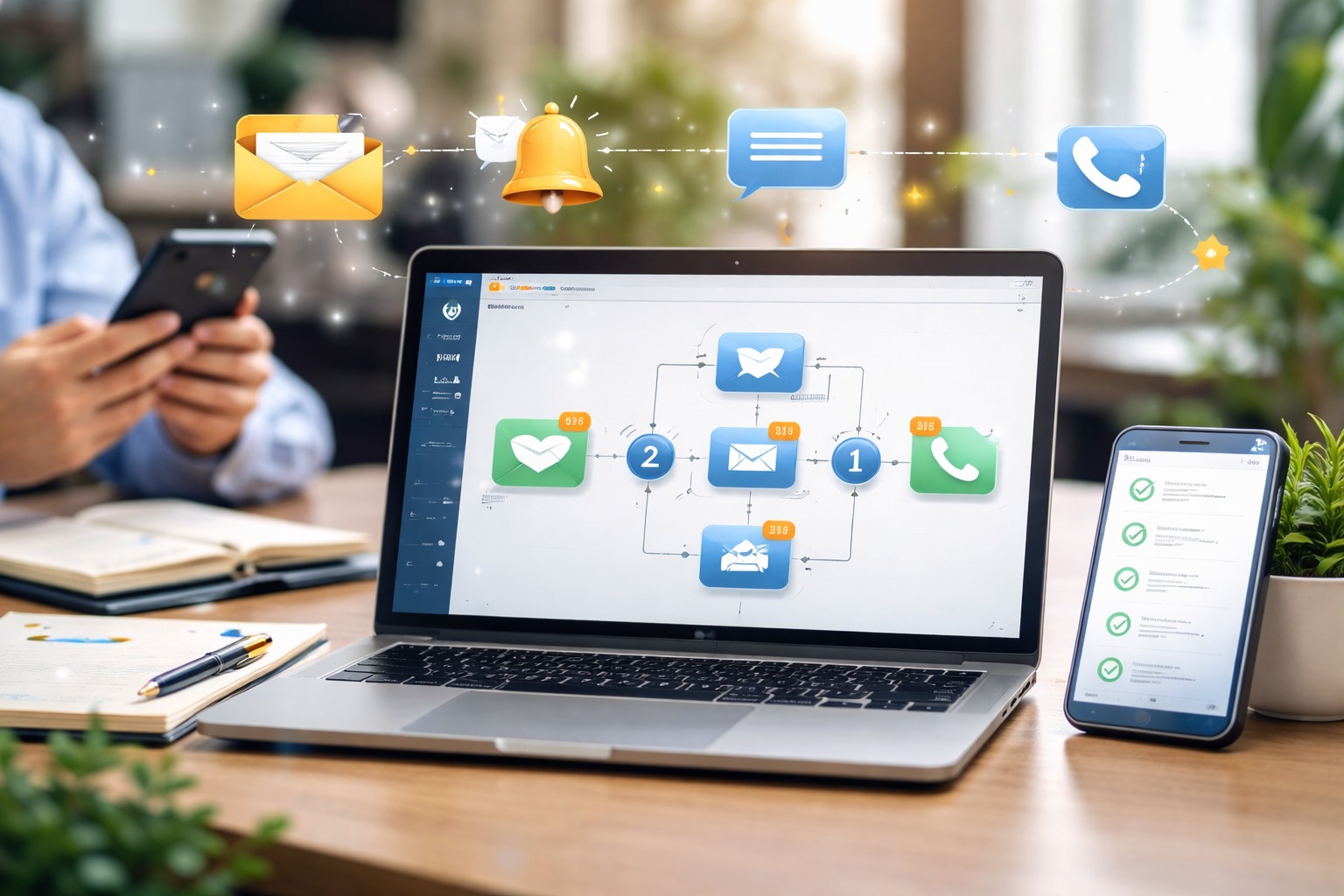
An automated follow-up sequence is a planned series of messages sent to a lead automatically after a specific action in your sales process. Instead of relying on someone from your team to remember when to follow up, the system sends messages at the right time.
In real sales situations, people rarely make a decision immediately. They ask for pricing, request more information, book a demo, or say they will think about it. After that, things often slow down. Prospects get busy, forget to reply, or start comparing other options. Without a structured follow-up process, these conversations gradually fade, and potential deals are lost.
Automated follow-up sequences help prevent this. They keep the conversation active by sending the right message at the right time. Instead of depending on memory or manual reminders, every lead moves through a simple follow-up process that gently guides them toward the next step.
Why Automated Follow-Up Sequences Matter in Real Sales
Most leads do not say no. They delay. They pause. They wait. This is normal buying behavior. But many sales teams treat silence as rejection and stop following up too early.
"According to WhatsApp Business Report, businesses using WhatsApp for sales follow-ups in India see a 35% improvement in response rates compared to email-only approaches."
— WhatsApp Business Analytics Report
Research across industries shows that most sales happen only after multiple follow-ups. In fact, many deals close after the fifth contact or later. Yet many businesses stop after one or two attempts because they lack a structured system. When follow-ups depend entirely on people, they become inconsistent. Some leads receive attention while others are forgotten, creating quiet revenue leakage over time.
Automated follow-up sequences bring consistency to the sales pipeline. Every lead receives planned communication. Quotes are followed up, demos are reminded, and silent leads receive gentle nudges. Instead of scattered conversations, the sales process becomes a structured lead-nurturing workflow. This consistency improves response rates, builds trust, and helps more deals move toward a decision.
Core Parts of a High-Performing Automated Follow-Up Sequence
A strong follow-up sequence is simple. It does not need complex logic. It needs clarity, timing, and purpose.
1. A Clear Trigger
Every sequence starts because something happened. For example, you shared a quote, booked a demo, or did not receive a reply for 48 hours. This trigger makes the follow-up relevant. The message connects directly to what the prospect already did.
2. Proper Timing
Timing is very important in sales. A message sent too late loses impact. A message sent too early feels unnecessary. Good follow-up sequences use logical timing. For example, a follow-up after quote within 24 hours. Demo reminder automation before the scheduled call. Gentle nudges if someone goes silent. This helps reduce no-shows with reminders and keeps the sales process moving.
3. Clear Next Step in Every Message
Every follow-up should guide the lead forward. It should not just say, "Following up." It should help them decide what to do next. Confirm a slot. Ask a question. Move ahead. When messages give direction, they feel helpful instead of pushy.
4. Stop When the Lead Responds
A good automated system pauses when the prospect replies. This keeps communication natural. Modern WhatsApp CRM automation tools make this easy. Automation supports the process, but real conversations still happen when needed.
Practical Example: Follow-Up After Quote
Let's take a common example. A customer asks for pricing. You send the proposal. Then nothing happens.
Without automation, someone may forget to follow up. Or they follow up once and stop.
With a structured follow-up after a quote, the process becomes steady. The first message checks if they reviewed the proposal. The second message offers to clarify doubts. The third message guides them toward the next step. If they are still silent, a final message offers support without pressure.
This approach keeps you visible without chasing. It shows professionalism. It builds confidence.
How Automated Follow-Up Sequences Strengthen Your Sales System
When used properly, automated follow-up sequences connect every step of your sales process. They help with lead qualification, sharing pricing, sending demo reminders, handling no-show recovery, and even long-term nurturing. Instead of random conversations across different chats, everything becomes part of a clear sales pipeline. For growing businesses, especially those using sales automation for small business teams, this makes daily work much easier. The team does not have to rely on memory to remember who needs a follow-up. Leads do not get lost in long chat threads. Every prospect moves forward through a simple and organized process.
Automation becomes even more powerful when combined with systems like AI lead qualification saves 20 hours per week, because it helps identify serious leads early and saves time for the sales team. According to Kraya AI users, businesses implementing AI-assisted lead qualification see a 28% increase in conversion rates within the first 90 days.
Over time, this improves response rates, reduces missed opportunities, and makes the sales process more predictable. Follow-ups stop being something your team tries to remember and become a reliable part of how you close deals.
Why Are Follow-Ups Important in Sales?
Follow-ups are important in sales because most people do not decide in the first conversation. They show interest, ask for details, and then go quiet. Not because they are not serious, but because life gets busy. They compare options. They wait for approval. They forget. Without proper follow-up, even good leads slowly disappear.
"Businesses that implement structured follow-up sequences report a 40% increase in quote-to-close conversion rates and a 25% reduction in sales cycle length."
— CRM Industry Analysis 2024
Many businesses think that if a lead is interested, they will come back on their own. But in real sales, that rarely happens. Silence usually means delay, not rejection. When you follow up in a calm and structured way, you keep the conversation alive and help the buyer move forward.
Most Deals Close After Multiple Follow-Ups
Very few sales happen in one message or one call. Most deals need several touchpoints before a decision is made. But many sales teams stop after one or two follow-ups because they do not have a proper system. Everything depends on memory or manual effort.
This is where Automated Follow-Up Sequences make a big difference. Instead of random reminders, you build a planned sequence. Every lead gets consistent communication. No one is forgotten. This improves response rates and keeps your pipeline active.
Follow-Ups Build Trust and Confidence
People do not just buy based on price. They buy when they feel confident. A proper follow-up after quote helps clear doubts. Demo reminder automation shows that your business is organized. No-show recovery messages show that you care and are still available.
These small actions create a strong impression. They show professionalism. They reduce confusion. When buyers feel supported instead of pressured, they are more likely to move ahead.
Follow-Ups Keep Your Sales Process Moving
Sales is not only about generating leads. It is about moving them step by step toward a decision. Without follow-ups, leads get stuck. They ask for pricing but never review it. They book a demo but forget to attend. They say "let me think" and the conversation ends there.
A proper lead nurturing workflow ensures that no stage is ignored. With sales pipeline automation, every lead moves forward in a structured way. Your team knows what to do next. There is clarity instead of guesswork.
Follow-Ups Reduce Revenue Loss
Revenue is often lost quietly. A missed demo. A forgotten reminder. A lead that needed one more message. Over time, these small misses add up.
When you reduce no-shows with reminders and use structured follow-ups, you recover leads that would otherwise be lost. Even a small improvement in follow-up consistency can create a noticeable increase in conversions.
What Is the Best Automated Follow-Up Sequence Structure?
The best automated follow-up sequence structure is one that matches how people actually make buying decisions. It should feel natural, not robotic. It should guide the lead step by step, instead of sending random reminders.
A strong structure connects directly to your sales process. It supports qualification, pricing discussions, demos, reminders, and recovery. When Automated Follow-Up Sequences are built properly, they help you move every lead forward without depending on memory or manual follow-ups.
Here is a simple structure that works for most businesses.
| Follow-Up Stage | Trigger | Key Action | Timing |
|---|---|---|---|
| New Lead Response | Lead enquiry received | Quick acknowledgment & qualification | Within 1 hour |
| Value Sharing | Requirement understood | Send pricing/proposal | Same day |
| Engagement Support | Quote/proposal sent | Address doubts & clarify benefits | 24-48 hours |
| Demo Confirmation | Demo booked | Send reminders & confirmations | 24hrs & 2hrs before |
| No-Show Recovery | Demo missed | Friendly reschedule offer | Within 2 hours |
| Silent Lead Recovery | No response for 5+ days | Gentle value reminder & nudge | Day 5, Day 10 |
| Long-Term Nurturing | Lead inactive for 30+ days | Share case studies, updates, offers | Monthly |
Stage 1: New Lead Response and Basic Qualification
The first stage starts the moment someone shows interest. Speed is very important here. When you reply quickly, you create a strong first impression.
At this stage, your goal is simple:
Acknowledge the enquiry
Understand what they need
Collect basic information
This is where your lead nurturing workflow begins. A quick and clear response increases trust and keeps the conversation active.
Stage 2: Sharing Value and Important Details
After understanding the requirement, you share relevant details. This could be pricing, a proposal, a brochure, or service information.
Many teams stop here and wait for the lead to reply. This is where most deals get stuck. A proper follow-up after quote should already be planned. Within 24–48 hours, a calm check-in message should go out. It should offer help and clarity, not pressure.
This stage prevents leads from going cold too early.
Stage 3: Engagement and Decision Support
At this point, the lead is thinking about your offer. They may have doubts, comparisons, or questions. Your sequence should now help them feel confident.
Messages in this stage can:
Answer common concerns
Explain benefits clearly
Offer simple comparisons
Guide them to the next step
This keeps momentum alive and supports your sales pipeline automation by ensuring leads do not stay inactive.
Stage 4: Demo or Appointment Confirmation
If your sales process includes demos or calls, this stage is very important. Demo reminder automation can make a big difference here.
A simple structure works well:
Confirmation message after booking
Reminder 24 hours before
Reminder a few hours before
This simple system helps reduce no-shows with reminders and increases attendance rates. It also shows that your business is organized and professional.
Stage 5: No-Show Recovery
No-shows happen often. But they should not automatically mean a lost deal.
No-show recovery messages should:
Politely acknowledge the missed session
Offer easy rescheduling
Keep the tone friendly and supportive
This approach keeps the door open. It shows professionalism and gives the lead another chance without making them uncomfortable.
Stage 6: Silent Lead Recovery
Sometimes a lead stops replying after receiving pricing or details. This usually means delay, not rejection.
A silent lead recovery sequence can include:
A gentle follow-up
A reminder of value
A helpful nudge toward the next step
This ensures that leads do not stay stuck in one stage. It strengthens your overall sales pipeline automation by keeping movement consistent.
Stage 7: Long-Term Nurturing
Not every lead is ready to buy immediately. Some need more time. Instead of forgetting them, you can move them into a long-term nurturing sequence that shares relevant content and keeps your business top-of-mind.
Related: WhatsApp Sales Follow-Up Automation: How to Stop Missing Leads and Close More Deals
Related: How AI Sales Follow Up Automation Changes the Follow-Up Process Step by Step
Related: How WhatsApp Automation Helps Businesses Close More Deals
Related: Common Sales Mistakes That Reduce Conversions: Sales Mistakes That Make Leads Not Convert
Related: Where Do Most Sales Conversations Break Down?
Related: Why Sales Follow Up Problems Are Costing Small Businesses More Than They Realise
Related: What Is a Lead Nurturing Sequence? Simple Guide for Service Businesses
Related: How to Follow Up on WhatsApp Without Getting Blocked or Annoying Your Leads
Related: WhatsApp Follow-Up Message Templates That Get Replies
Related: How to Schedule WhatsApp Messages for Sales Teams
Related: WhatsApp Appointment Reminder Templates: 15 That Cut No-Shows
```Frequently Asked Questions

Written by
Founder & CEO, Kraya AI
Abhyank Srinet is the Founder and CEO of Kraya AI, a WhatsApp CRM and sales automation platform serving 600+ Indian businesses. He is also the founder of MiM-Essay, one of India's largest Masters admissions consulting firms.
More from Abhyank